
Should You Stop Babies from Putting Fingers in Their Mouth?

What would happen if every time you caught your baby with their fingers in their mouth, you removed their fingers with a firm “No”?
You may be thinking, “Why not just let them have their fun? What’s the harm if they’re sucking on their fingers? Babies like this; let them be!”
The “Eeeuuu!” Factor
From a non-medical standpoint, there’s the issue of unsightliness. When babies suck or munch on their fingers, invariably this causes saliva to drool out.
When the baby removes her fingers, they glisten with a fresh coat of saliva. This has that “Eeeuuu!” factor to it.
Of course, the solution is DON’T look if it makes you queasy. However, there’s a second issue: physical contact with the “grossed out” adult (or older child). They won’t want to hold this baby.
I’ll admit, I fell into that category when my niece was four. She frequently had her thumb in her mouth.
When it was out it looked raw and wet. Anyone who picked her up risked getting that wet yucky thumb on their skin. There’s always the adult out there who’ll be very cognizant of this.
Gateway to Nail Biting?
If babies, toddlers and preschoolers are permitted to suck on their fingers or have their fingers in their mouth in any shape, way or form, might this pave the way to nail biting?
There are no studies on this, but it’s fair wonder if all very young nail biters started out with sucking on their fingertips or whole fingers.
It’s easy to imagine that sucking on a digit can then escalate to nibbling at the fingertip and then eventually biting at the nail.
Unbreakable Thumb Sucking
My niece was still sucking her thumb at age seven! My sister-in-law said she had tried everything to stop this habit.
It finally stopped after the girl fell off some monkey bars and broke her arm.
Her baby sister frequently has three fingers in her mouth. I see this all the time with other babies and toddlers in public.
Meanwhile, there are parents who find this unsightly and will not permit it in their own children. Who’s right?
Should Parents Pull the Fingers Out of Their Baby’s Sucking Mouth?
“Babies and toddlers should not be asked to remove their fingers from their mouth,” says Dr. Lisa Lewis, MD, a board certified pediatrician in Fort Worth, Texas, and author of “Feed the Baby Hummus, Pediatrician-Backed Secrets from Cultures Around the World.”
“Babies and toddlers like to console themselves and also reduce symptoms of teething by putting their fingers in their mouths.
“Yes, they can pick up illnesses more easily this way. The hands should be kept washed regularly, but not excessively.
“A good alternative to telling children, ‘Take your hands out of your mouth,’ would be to offer a safe toy they can chew on or a pacifier.
“But asking them (repeatedly!) to take their hands out of their mouth will cause them to think about it more, and likely increase the behavior.
“At a young age, the baby and toddler brain is not ready to correct a self-nurturing behavior that is involuntarily present.
“When children enter preschool, they often naturally stop the behavior. Their impulse to explore with their mouth is reduced, and they naturally note that their peers are not putting their hands in their mouth.”
Finger Sucking vs. Thumb Sucking and Nail Biting
The New York State Dental Journal has a report titled, “When children put their fingers in their mouths. Should parents and dentists care?”
“We have heard mothers tell their children not to stick their fingers in their mouths because they will get sick,” states the report’s abstract.
“Medical and dental professionals know this is true. Oral habits like thumb sucking and nail biting can damage the structure of the mouth and can lead to the spread of infectious diseases.”
If your baby, toddler or preschooler seems to suck on their fingers more often than is necessary, and especially if it’s accompanied by a lot of drool that turns your stomach, it’s best to consult with your pediatrician and the child’s dentist before you take any actions to extinguish the habit.

Dr. Lewis has been a practicing pediatrician for 25+ years. She completed her pediatrics residency at Texas A&M University Health Science Center, Scott and White Memorial Hospital where she served as chief resident.
 Lorra Garrick has been covering medical, fitness and cybersecurity topics for many years, having written thousands of articles for print magazines and websites, including as a ghostwriter. She’s also a former ACE-certified personal trainer.
.
Top image: Shutterstock/Samara.com
Source: ncbi.nlm.nih.gov/pubmed/9542394

Can You Have Acid Reflux Without Any Symptoms?

If acid reflux is going on in your body, would you necessarily have any symptoms or can this problem go on without causing even the slightest heartburn, burping or other little disturbance? (more…)

100 Big Thick Ponytails Plus Tips on Ponytail Care

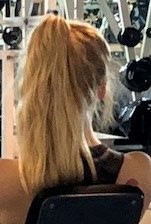
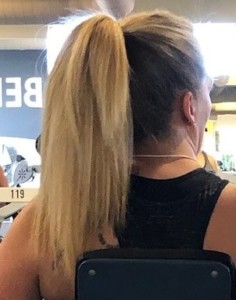
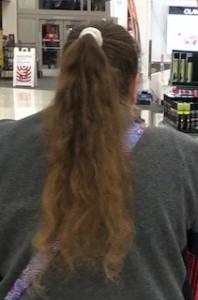
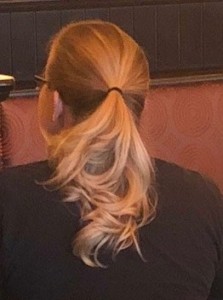
100 images of big badass ponytails — poofy, curly, wavy, silky — ALL KINDS of ponytails + tips on mechanical prevention of hair loss.
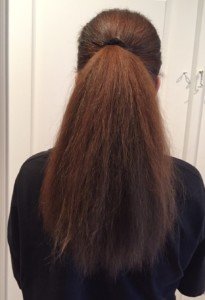
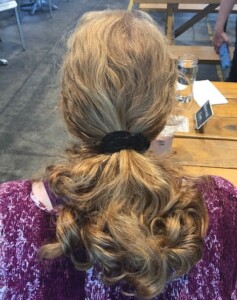
Many women desire a big thick ponytail and are envious of those who have this naturally. A badass ponytail comes in different varieties, from poofy and bushy to thick and wavy to curly, coiled and kinky. Check out the 100+ glorious big ponytails below. And along with these are great tips on how to minimize hair loss.
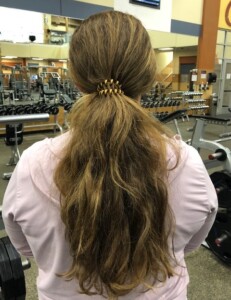


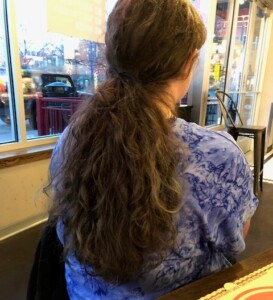
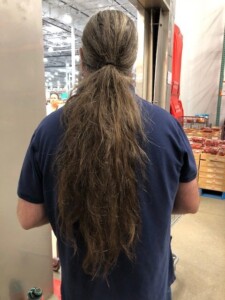
This glorious ponytail belongs to a man.
TIP: When washing your hair, use your fingertips rather than letting your nails dig into your scalp. When nails make contact with the scalp in a rubbing manner, this can rip strands out of their roots or weaken their hold.


Yes — that’s a man, with a magnificent ponytail.

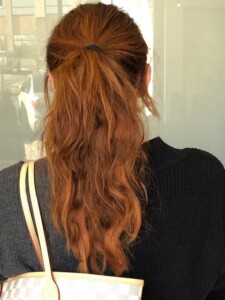


TIP: “A mistake some make is to tie the tail too tightly,” says Fae Norris of the Rock Paper Salon, who has 17+ years of professional hairstyling experience.
“This can lead to what’s called traction alopecia,” continues Norris. “A fancy name for ‘Why is my hair snapping off in bunches?’ It usually happens with the fine hairs at the hairline or the crown where the tail sits.
“So try and find that middle ground where the tie stays in place but doesn’t bind too tightly.”
Norris adds, “I’ve found that Invisibobble hair ties work best for no other reason than they don’t leave the tell-tale ‘bend’ in hair when they’re removed. Just shake and go.”
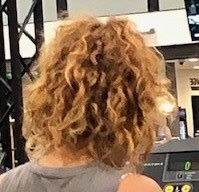
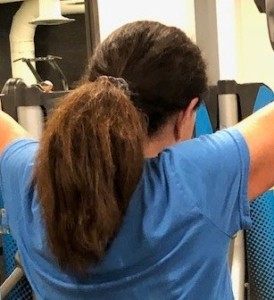
TIP: How do you remove a fastener without taking some hair with it? To minimize this kind of hair fall, gently lift up one of the fastener loops with a finger, making sure not to pull up strands of hair with it.
Once you’re clear of any strands, insert a toenail scissors right under the loop, then snip the loop. You can then gently disengage the band from the hair without uprooting any strands. Always have on hand a supply of fasteners.
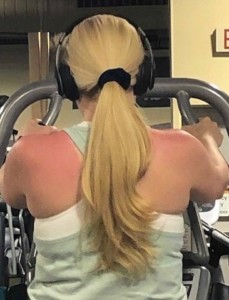


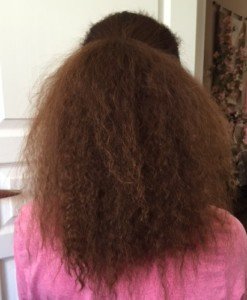
Caucasian women don’t always have “white” hair. If a white woman was born with “frizzy” hair, then that’s the right hair for her!
Not every woman was meant to wear her hair down. Maybe you were meant to rock giant ponytails! Embrace this destiny.
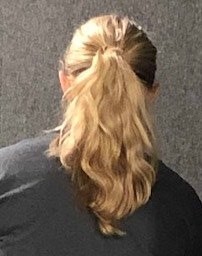

TIP: If an area of your scalp begins itching, do not scratch it with the typical rubbing action of a fingernail. This could dislodge strands from their follicles.
Instead, press the fingernail into the spot that’s itching and hold for a few seconds, then release. This should stop the itch. In fact, pressing the pad of your fingertip into the spot may actually do the trick as well.
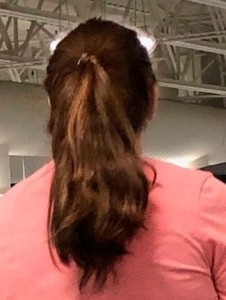
TIP: “Prepping your hair before you pull it up will pay off,” says Norris. “It’s important to have your hair mostly, if not fully, dry before pulling it up.
“Because it’s more elastic. wet hair always need to be handled carefully to avoid snapping. A dry oil will give shine along with protection, and following that with a dry shampoo provides texture and a good ‘grip’ without slip. Finish with an aerosol hairspray to smooth down any flyaways.”


TIP: Never remove bobby pins with a yanking motion, as this can tear strands of hair out of their roots.
Rather, gently and patiently disconnect the pin (or any type of clip for that matter) from your hair to help prevent hair loss.
Sometimes the pin or clip will entrap a strand or two. That may not sound like a lot, but over time this will add up in hair loss. Every bit of prevention helps.
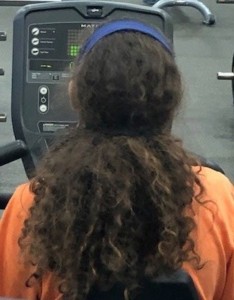
TIP: Another way to avoid needless hair fall is to avoid brushing or combing your hair while it’s in a ponytail. The hair will tend to get snagged in the bristles or teeth.
If you find a knot in your ponytail, just let it go until your hair is down to remedy it. However, to gently touch up a ponytail, use a clean (never used) toothbrush and reserve this toothbrush strictly for your hair.

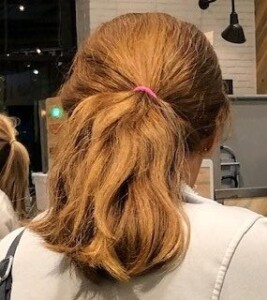
TIP: When doing pushups, make sure your hair is very clear of your fingers; no strands caught under them. Otherwise, as you push up, the trapped strands will pull out of their roots.
TIP: Always be gentle and slow-moving when putting your hair in a ponytail, even if you’re in a hurry. Slow movements mean less “hair fall.”
Before completing the double loop of the rubberband, make sure that there are no strands caught up in the second loop. Same thing if you’re going for a third loop (but as already mentioned, a tight band can stress the hair.)
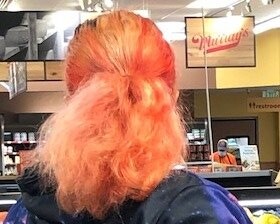

TIP: If you wash your hair in the kitchen sink, never abruptly lift your head up.
That’s because there could be some strands partially in the drain; if you abruptly raise your head, this might pull the hairs from their roots. It may be only a few strands, but over time, those strands count.
Solution: slowly lift your head; if you feel any strands being tugged, you can then gently correct the problem.


TIP: When squeezing suds or water out of your hair after washing, never apply the squeeze close to the scalp, as this will stress follicles and probably uproot some strands.
Instead gently hold your hair at a point a few inches from your scalp, then with the other hand squeeze the hair below your first hand to eliminate traction and tension to the scalp.
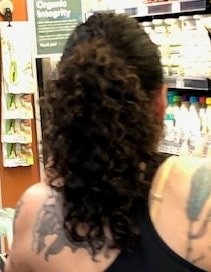
TIP: An exercise that could potentially catch some hair and rip strands out of the follicles is the back squat (as opposed to the front squat below).
Be careful of how your ponytail is being scrunched or yanked against the barbell as you position yourself under the metal – or under the padding if you use that.
Velcro from the padding might come in contact with your ponytail and rip out strands once you exit from under the bar after your set.
Another tactic for minimizing hair loss while working out is to be conscientious of how hard you tighten your ponytail before a big lift. This is a good-luck practice of some women.
Just be mindful that aggressive tightening of your ponytail could snag a few strands and weaken the follicles or even rip them out.



Don’t ever think of a ponytail as a lazy way to manage hair. A ponytail is a style in and of itself, and its versatility is no secret: from gym workouts to elegant affairs to shopping — the ponytail always works!
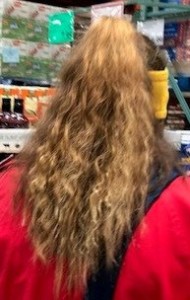
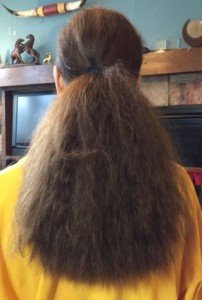

Is your hair just crazy all over the place when it’s down? Are you sick and tired of trying to “do” something with your hair when it’s down? Do you envy women who “can” wear their hair down?
Newsflash: Maybe your hair was meant to rock a badass ponytail!

TIP: When removing a sweatband, do so slowly, as it may have entrapped some random strands. If you quickly pull off the band, the trapped strands will likely come out of their roots, albeit negligible for that particular moment.
But enough moments like this added up over time will mean a contributor to hair loss that no woman needs.




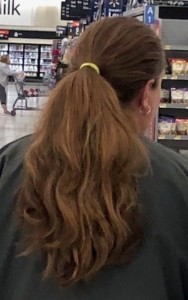
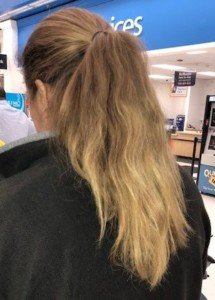
This does not look real. More than coincidentally, the two background photos show poofy ponytails, so I suspect this might be a hairpiece for a ponytail show. I even wonder if this is a mannequin; look at “her” right shoulder.
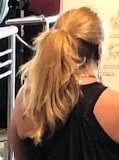

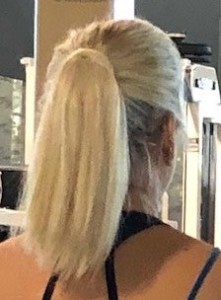


TIP: If you often get frustrated over managing your young daughter’s “wild” ringlets, maybe the problem is that you’ve been trying too hard to create a tame hair-down look. How about putting it in a ponytail? Let the ringlets naturally flow and bounce from the fastener!
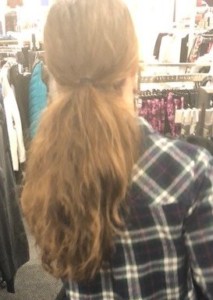


AND MORE BIG PONYTAILS…
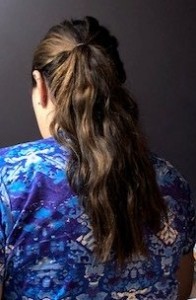
O M G !! Can you imagine the behemoth of a ponytail this magnificent hair would make?

This beast of a ponytail below belongs to a man.

Here’s another image…

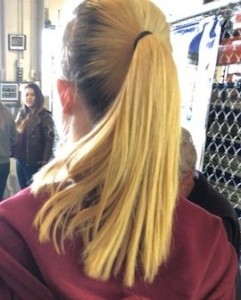

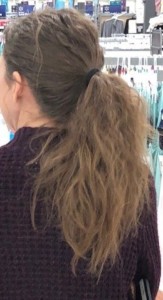
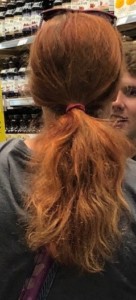
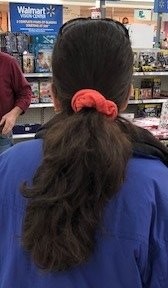
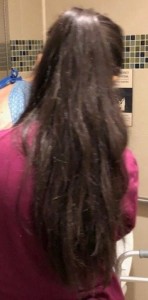



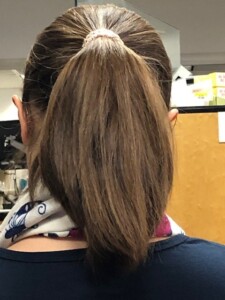


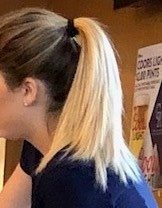


If you’re self-conscious about your plus-size body, a plus-size ponytail will detract from it.


 Lorra Garrick has been covering medical, fitness and cybersecurity topics for many years, having written thousands of articles for print magazines and websites, including as a ghostwriter. She’s also a former ACE-certified personal trainer.
Different Kinds of GERD Chest Pain Described by Doctor

The chest pain from GERD comes in a variety of flavors, and knowing the characteristics of the type of chest pain that acid reflux causes can help set your mind a bit more at ease if you’re always worrying that something is wrong with your heart. (more…)

Can Mucus in Toilet Bowl without Poops Be Caused by IBS?

Ever heard something plop in the toilet bowl but see only a glob of mucus but no poops?
If you have IBS you may have previously seen a lot of mucus coming out with your stools. (more…)

Can IBS Cause a Headache?

There’s a reason why it only SEEMS that irritable bowel syndrome can actually cause a headache or a migraine.
Certainly, there’s an association between IBS and headaches. (more…)
Does GERD Increase Hunger or Suppress Appetite?

You may believe that your GERD has made you hungrier than ever, while someone else swears that their acid reflux disease has decreased their appetite.
Can both patients be right? (more…)

Can GERD or Acid Reflux Cause Neck & Shoulder Pain?
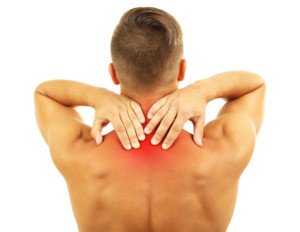
Neck and shoulder pain even when together can have quite a few causes, some life threatening.

Can GERD Cause Faint Feeling or Sensation of Passing Out ?

GERD can cause a lot of symptoms and if left untreated can raise the risk of esophageal cancer, and feeling faint or a feeling like you’re about to pass out is a symptom that many acid reflux sufferers wonder can also be caused by this condition.
GERD stands for gastroesophageal reflux disease and can cause numerous symptoms, and some of them are very uncomfortable such as chest pain and frequent coughing.
Some people who suffer from GERD may also, by chance, be experiencing an occasional or periodic feeling of faintness or feeling like they’re on the verge of passing out.
So they wonder if GERD can actually cause them to feel faint or make them actually pass out.
“Almost never,” says Dr. Brian Lacy, MD, of Dartmouth Hitchcock Med Center, who specializes in functional disorders of the gastrointestinal tract and is author of the book “Healing Heartburn.”
Here is what Dr. Lacy explains:
“Feeling faint can occur for a variety of reasons (low blood sugar, low blood pressure, not enough salt in the diet, medications, anxiety, heart problems, diabetes, kidney problems, other nerve problems).”
Most notably when heart problems cause feeling faint, the issue may be an arrhythmia or congestive heart failure.
Dr. Lacy continues, “Fainting (syncope) can also occur for a host of reasons. There are rare (almost reportable, because it is so uncommon) [cases] of GERD causing fainting.
“This typically happens if acid reflux occurs and then the esophagus has a severe spasm.
“This can occasionally cause a drop in pulse and blood pressure since the spasm is so severe, and causes pain, that it causes someone to faint.
“But this is so extremely rare (again, almost unheard of) that no one typically thinks of faintness or fainting, from acid reflux.”
What can you take away from this information?
That it’s extremely more likely that any fainting or feelings like you’re about to pass out is being caused by something other than GERD.
It’s not safe to assume, “I get lightheaded and sometimes feel faint due to my acid reflux.”
Furthermore, if you frequently feel faint – this frequent occurrence even more so points to a cause unrelated to gastroesophageal reflux disease.
So what should you do?
Assume that your feelings of getting close to passing out have nothing to do with your GERD.
Next, try to rule out the most serious possible cause. This would mean an exam by a cardiologist to check your heart and blood pressure.
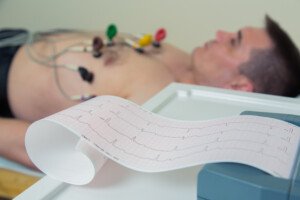
Shutterstock/Satyrenko
While you’re at it you should get a blood test to check for diabetes.
Then take it from there, working through the list until a cause is found.
Anxiety as a diagnosis should come only when all other possible causes are ruled out.
If your cardiologist declares your cardiovascular system in top condition, discuss the faint feelings with your primary care physician, as this symptom – again, is very unlikely (but not impossible) to be caused by GERD.
 Dr. Lacy combines his love of science, medicine and people to uncover the causes of symptoms like stomach pain, gas, bloating, diarrhea, constipation and regurgitation.
Lorra Garrick has been covering medical, fitness and cybersecurity topics for many years, having written thousands of articles for print magazines and websites, including as a ghostwriter. She’s also a former ACE-certified personal trainer.
.
Top image: ©Lorra Garrick






You See Entire Finger Move from Twitching: this Mean ALS ?

You can see your whole finger tremoring each time it twitches and are wondering if the jumping is more likely to mean ALS than if you didn’t see any movement.
Have you ever felt a finger twitching, then looked at it and discovered that the entire finger jumps or tremors with each twitching episode?
When this happens it’s often, perhaps usually, the index finger.
But this complaint — that of seeing the entire finger move (tremor, jump) — is also often of the thumb.
It can actually happen with any finger: pinky, ring, middle.
What typically happens is that you first FEEL the twitching or sudden little tremors that last briefly.
This makes you look at the finger.
Then it twitches or “tremors” again – and you see the whole thing moving. This makes you think of ALS because you can see the action.
The visible movement is described as either that of twitching, tremoring, jumping or jerking.
The visibility of it makes many people worry that it’s more likely ALS, when compared to twitching that cannot be seen.
When the visible jerking happens, the rest of the hand and other fingers remain still. It’s just that one finger doing its dance.
You continue watching for it to happen again, and sure enough, it does, and you can’t help but worry sick it’s ALS.
I have written many articles on the ALS fear, featuring a number of neurologists and other medical doctors answering my questions.
Anthony P. Geraci, MD, is one of those neurologists. He is associate professor of neurology at Donald & Barbara Zucker School of Medicine in New York.
I interviewed him for my article, “Visible Muscle Twitches: Why You Can See Them, What It Means.”
For that article Dr. Geraci explains, “A trap you don’t want to fall into is excessive worry simply because you can see a muscle twitch.”
Sure, you’ve heard the phrase, “Seeing is believing.” But there’s no such thing as “Seeing means higher likelihood of ALS.”
The phenomenon of an entire finger moving during twitching is not a sign of increased likelihood of ALS.
Dr. Geraci in the article also says, “Seeing a muscle twitch rather than feeling one has no meaning at all and is no cause for concern.”
But if you also feel it along with see it, that too, is no cause for alarm.
I’ve seen my entire index finger twitch. It’s like a tremoring – tiny little fast tremors.

Anthony Geraci, MD
Yet I continue being able to deadlift heavy amounts of weight, and believe me, anyone who’s ever deadlifted heavy barbells knows how crucial the use of an index – or any finger – is for this exercise.
Here is the entire article featuring Dr. Geraci.