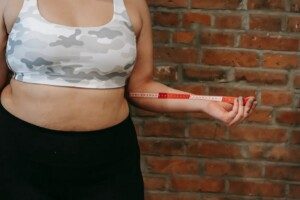
Some people think BMI is BS. What’s proven more telling about health is actually your waist circumference. Have you checked it lately?
Waist circumference may be a surprisingly useful way to spot obesity-related health risks, even when body weight doesn’t tell the whole story.
Research from Rutgers Health found that a tape measure around the waist can perform about as well as can a more complicated system using several body measurements.
The study, published in JAMA Network Open (2026), looked at whether simpler obesity screening methods could identify people with unhealthy levels of body fat.
You might be thinking, “Why not just use our eyes? How hard is it to see obesity?”
Many cases of obesity are obvious, but on the other hand, excess body fat can be more hidden and deceivingly out of sight. This is where waist circumference can be very useful — especially for those who are critical of the body mass index method.
Waist Measurement and Health Risks
The paper says that changes such as needing a looser belt or larger pants can be an early clue that body fat is increasing.
Clothing size isn’t a substitute for an actual waist measurement, but it may prompt someone to check.
Combining waist size with weight could help identify risks associated with diabetes, heart disease, stroke and some cancers sooner.
Researchers analyzed data from 1,900 U.S. adults 20 to 59 who participated in the National Health and Nutrition Examination Survey.
They compared several obesity screening approaches against a highly accurate method of measuring body fat.
Comparing Obesity Screening Methods
One newer framework combines BMI, waist circumference, waist-to-height ratio and waist-to-hip ratio.
It was designed by a multidisciplinary group of independent experts.
That approach found more people with excess body fat. However, the Rutgers researchers found that simpler approaches had similar accuracy.
BMI or the waist circumference offered a meaningful balance between detecting obesity and limiting false-positive results.
Waist circumference alone came close to the performance of those methods.
The simpler approach may also be easier to use in ordinary medical care.
Hip measurements aren’t routinely collected at many appointments, while waist measurements are easier to obtain and increasingly appear in clinical guidelines.
Why BMI Alone Can Miss Obesity

Both men weigh nearly the same; both are the same height; both have the same BMI: in the “obese” category. Yet the man on the left clearly has little excess fat, while the man on the right has very visible and significant surplus fat—along with untoned muscles.
The study also points to a weakness of using BMI by itself.
BMI missed a substantial number of people whose body-fat levels met criteria for obesity.
That’s not a new concern. BMI doesn’t show differences in body composition and doesn’t indicate where fat is concentrated.
Waist size can add information because the location of body fat is relevant to health.
Regular waist measurements could therefore provide a practical addition to obesity screening.
The researchers say the findings may help inform future obesity-screening recommendations and encourage more routine use of waist circumference in health care. This could make screening easier during regular checkups and give people useful information about body-fat distribution.