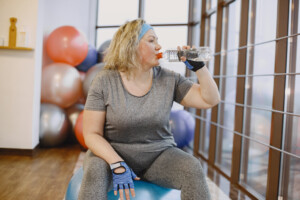
Some excess fat sits just under the skin, while another type builds up much deeper around internal organs in the abdomen.
That deeper fat is known as visceral fat, and researchers say it may be one of the more dangerous changes that happens as people get older.
Unlike softer fat under the skin, visceral fat has been strongly linked to problems like heart disease, insulin resistance and type 2 diabetes.
Researchers are now paying closer attention not just to how much fat people carry, but where that fat is stored.
The Difference Between Visceral Fat and Subcutaneous Fat
Subcutaneous fat is the kind most people can pinch with their fingers.
It sits directly beneath the skin and is generally considered less harmful. Visceral fat is different.
It surrounds organs deep inside the abdominal cavity and tends to become more common with aging.
Scientists believe hormones play a major role in this shift.
Aging is often associated with fat gradually moving away from safer storage areas and collecting around the abdomen instead.
Researchers say sex hormones, including testosterone, appear closely connected to how fat is distributed throughout the body.
Why Typical Weight Loss Can Backfire
A lot of weight loss plans focus only on reducing the number on the scale.
The problem is that rapid “starvation diet” weight loss can also reduce muscle mass along with fat.
That becomes especially important in older adults, where maintaining strength and mobility matters more with age.
Losing muscle can make balance, recovery and everyday movement harder over time.
Because of this, scientists are becoming more interested in body composition rather than just body weight alone.
A Study Looking at Testosterone and Fat Distribution
Researchers explored whether testosterone treatment could influence fat distribution in older women recovering from hip fractures.
The findings were published in the Obesity Pillars.
The study followed 66 women over age 65 during recovery from recent hip fractures.
Everyone participated in the same exercise program, but only one group received topical testosterone gel.
Body scans were performed before and after the study to measure detailed changes in fat and muscle.
After six months, total body fat looked fairly similar between both groups. But one major difference stood out.
Women using testosterone gel showed reductions in visceral fat, while the non-testosterone group experienced increases in visceral fat during recovery.
Exercise can offer some of the same hormonal benefits naturally.
Strength training temporarily boosts anabolic hormones involved in muscle repair and recovery, including testosterone and growth hormone.
Over time, resistance training can help improve body composition and reduce visceral fat levels.
Exercises using progressive overload — gradually increasing resistance or weight — produce the best long-term results.
Compound lifts like any form of chest pressing, any form of pulling, and leg work such as the leg press or the squat, are especially effective because they recruit large muscle groups at once and increase overall energy demand.
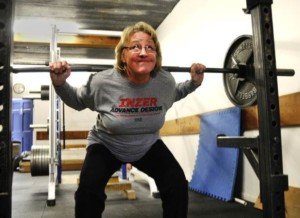
The back squat: great compound exercise.
Many adults over 50 regularly attend gyms, but fewer older women use free weight areas with barbells despite the major benefits for upper-body strength and long-term mobility.
Researchers continue finding that maintaining muscle may be one of the most important factors for healthy aging.