
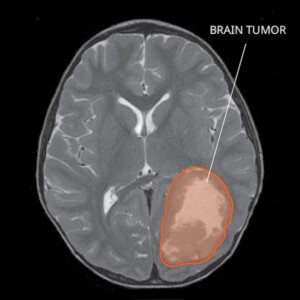
Two of the most frightening words anyone can hear is, “It’s back.”
This refers to a brain tumor that’s returned after having been surgically removed.
Other treatment would have involved targeted radiation, in which a beam is directed straight at the tumor to shrink it.
Stereotactic radiosurgery does not mechanically remove a brain tumor.
Instead, it damages the DNA of the cancerous cells, impairing their ability to reproduce. This shrinks the mass.
In some cases, the brain tumor is benign, but still poses a major threat to surrounding tissue.
Some brain tumors, however, are considered operable.
When a Brain Tumor Grows Back After Conventional Surgery
“Some brain tumors may be treated with surgical resection,” says Sumeer Sathi, MD, a neurosurgeon with NYU Langone Health, who treats brain tumors.
“The goal with surgical resection is to remove as much tumor as possible without injuring normal/eloquent areas of the brain.
“Different brain tumors may recur or ‘grow back.’ These tumors are considered to be more aggressive or malignant.
“Some cancers may have already been seeded (spread) to other areas of the brain and not yet detected on imaging.
“They may be detected on follow-up imaging (surveillance).”
We do not yet have the technology to detect micro-metastases elsewhere in the body or even within local range of the cancer.
So when a brain tumor “comes back” or “grows back,” this may simply be leftover and undetected malignant cells having a chance to proliferate to a mass big enough that is eventually seen on a follow-up image.
There may not be symptoms at this point. However, in other cases, the “new” mass may start causing symptoms before a scheduled surveillance imaging.
In the case of a benign tumor, if it grows back, that’s because a tiny portion was left behind.
This portion may not have been detected. In other cases, it may have been seen by the surgeon, but intentionally left in place, due to the danger of removing it.
A new mass may also be located far from where the primary malignant tumor was located – having already been seeded there at the time of the original diagnosis but – as mentioned – under the radar of current detection technology.
“Other treatment options may be recommended to help prevent this from happening such as chemotherapy or radiation treatment,” says Dr. Sathi.
-
-
-
- Appetite loss or increase
- Back pain
- Balance impairment
- Breast enlargement in men
- Breast milk production when not breastfeeding
- Concentration difficulties
- Drowsiness
- Erectile dysfunction
- Face: numbness or weakness, pain
- Fainting
- Fine motor control impairments
- Hearing loss
- Headaches
- Infertility
- Judgment impairment
- Loss of body hair
- Memory loss
- Mood or personality changes
- Pupil changes
- Reading difficulties
- Runny nose
- Seizures
- Smell or taste loss
- Speech difficulties
- Swallowing difficulties
- Tingling/numbness in a limb
- Vision problems, particularly in one eye
- Vomiting or nausea
- Walking difficulty
- Tingling or numbness in a limb
- Weakness or paralysis in a limb
- Weight loss or gain
- This list is not complete.
-
-
 Dr. Sathi’s expertise includes spine surgery and treating brain tumors including metastasis, gliomas, meningiomas and acoustic neuromas using gamma knife radiosurgery.
 Lorra Garrick has been covering medical, fitness and cybersecurity topics for many years, having written thousands of articles for print magazines and websites, including as a ghostwriter. She’s also a former ACE-certified personal trainer.
Related Posts

What Happens to Brain if Brain Dead Person Stays on Ventilator?
Can MRI Wrongly Show High Grade Glioma that’s Really Low Grade?

Can a 24/7 Headache for Several Months Be a Brain Tumor ?

Can Headaches Daily for Three Weeks Mean a Brain Tumor ?
One Eye Suddenly Turns Inward in Young Child: Brain Tumor?