How your excess body fat is distributed can speed up brain aging. Weight loss isn’t always about looks; it should be about keeping your brain young and vital.
You probably already know that obesity, in general, is bad for brain health.
The journal Radiology has a report showing that how the excess fat is distributed makes a big difference to the health of one’s brain.
Hidden fat patterns, like fat around the pancreas or the so-called “skinny fat” type, appear linked to faster brain aging and higher risk of cognitive decline.
Using MRI scans, the researchers pinpointed two fat distribution patterns that seem especially harmful to the brain.
Pancreatic Fat and Skinny Fat
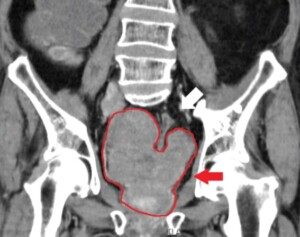
The first pattern, called “pancreatic predominant,” involves unusually high fat levels in the pancreas compared with the rest of the body.
The second pattern, “skinny fat,” shows up in people who don’t look obese or fat by traditional standards.
However, they carry a high proportion of body fat overall. Their bodies appear soft, flabby or “mushy,” despite not being big or rotund, such as in the image below.

Both of these types were linked to gray matter loss, accelerated brain aging and increased risk of neurological issues.
Past studies have already shown that obesity — particularly visceral fat around organs — can harm the brain.
But this research goes a step further by focusing on exactly where fat accumulates.
Dr. Kai Liu, one of the study’s coauthors, says in the paper that MRI scans allowed the team to classify fat patterns in a data-driven way rather than relying on subjective measures.
This revealed previously unrecognized fat types that carry neurological risk.
Big Data Imaging Makes It Clear
The researchers analyzed MRI and health data from nearly 26,000 participants in the UK Biobank.
This database links brain scans with physical measurements, medical history, lifestyle factors and more, giving a clear picture of how different fat patterns affect cognition.
The pancreatic-predominant and skinny fat profiles stood out. People with these fat distributions showed faster brain aging and higher chances of cognitive decline — regardless of gender, though some sex-specific differences were noted.
Once again, research supports the premise that a person can be “normal size” or even thin yet still unhealthy or at high risk for future ailments due to their body composition.
Obesity or being fat, on the other hand, is always unhealthy — a state of body-wide inflammation and higher risk for future disease: always.
Why Pancreatic Fat and Skinny Fat Are Bad
Individuals with the pancreatic-predominant pattern had about 30 percent fat in the pancreas, two to three times higher than other fat types.
Surprisingly, their liver fat wasn’t elevated, showing that brain risk isn’t just about fatty liver.
Skinny fat is different. People with this profile carry high fat throughout the body, especially around the abdomen, even if their BMI is in the clinically normal range — even if they fit into a size 8 or even 6 outfit or look lean in a suit.
Dr. Liu explains that the defining feature is a high fat-to-muscle ratio. These individuals may appear slim but still face significant neurological risk.
The study shows that brain health isn’t just about the number on the scale — it’s about fat distribution and body composition.
If you believe you’re skinny fat, here is how to correct this situation.
Or maybe you’re not sure if you have this type of body composition? Then here’s how to tell.