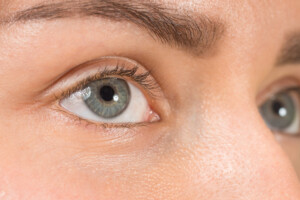
Autistic people use facial expressions differently than do neurotypicals. Who knew, right?
But research digs deeper into this fascinating difference between those on the autism spectrum and those who have “normal” brain wiring. A new study suggests that autistic and non-autistic people use their faces in different ways to show emotions.
These differences may help explain why emotional expressions are sometimes misunderstood between the two groups.
Researchers at the University of Birmingham mapped facial expressions linked to basic emotions like anger, happiness and sadness.
Using advanced facial motion tracking, they collected over 265 million data points, creating one of the most detailed libraries of emotional facial movements ever made.
How the Study Worked
The study included 25 autistic adults and 26 non-autistic adults. Together, participants made nearly 5,000 facial expressions.
Each person was asked to display anger, happiness and sadness in two ways: while matching facial movements to sounds, and while speaking.
Clear differences emerged between the two groups, with autistic participants showing a wider range of unique expressions.
For anger, autistic participants relied more on mouth movements and used their eyebrows less than did the non-autistic subjects. For happiness, autistic participants showed a more subtle smile.
This would explain why sometimes neurotypicals may interpret an autistic individual as not being interested in something that they should be or said they were — confusing the NT.
For sadness, those on the spectrum created a downturned expression by lifting the upper lip more than did non-autistic participants.
The researchers also looked at alexithymia, a subclinical condition common in autism that makes it harder to identify and describe one’s own emotions.
People with higher levels of alexithymia had less clearly defined expressions of anger and happiness, making those emotions seem more ambiguous.
Why Misunderstandings Happen
Ask a room full of autistic people if being misunderstood is the story of their life. You’ll see a room full of raised hands.
Dr. Connor Keating, who led the research, explains that the differences go beyond how expressions look.
“Our findings suggest autistic and non-autistic people differ not only in appearance of facial expressions,” says Dr. Keating, “but also in how smoothly these expressions are formed.”
These mismatches may explain why autistics often struggle to recognize neurotypical expressions (“reading faces”), and vice versa.
Emotional Expression Is a Two-Way Challenge
Professor Jennifer Cook, the study’s senior author, says that these differences aren’t deficits.
“Autistic and non-autistic people may express emotions in ways that are different — but equally meaningful — almost like speaking different languages.”
- Differently wired, atypical operating system
- Alternative software, not a processing error
What has sometimes been seen as difficulties for autistic people might actually reflect a two-way challenge in understanding each other’s expressions.
Neurotypicals usually have no problems reading facial expressions among each other.
Those with autism, likewise, typically have no difficulties reading each other’s facial language.
More research is planned. The study was published in Autism Research.