
Causes of Blue and Green Urine, and Solutions

Ever have blue or green urine?
Gee, what causes urine to be green or blue or blue-green?
I asked Dr. Courtenay Moore, MD, urologist in the Glickman Urological & Kidney Institute at Cleveland Clinic, about what can cause your flow to turn blue or green.
Dr. Moore explains: “Certain medications can cause blue urine. For example, IV administration of methylene blue can cause both urine and feces to be discolored in this manner.
“Other medications that can result in blue urine include: Urised, amitriptyline, indomethacin (Indocin), cimetidine (Tagamet), and phenergan.” Another medication is Trac Tabs.
Additional Medications that Can Turn Urine Blue
– Triamterene, a mild diuretic.
– Rinsapin, an antibiotic. This can also cause your excrement to turn green.
– Viagra
– Any other medication that has a blue dye in it.
Additional Causes of Blue Urine
Multivitamins, excess B vitamins, and food dyes. Best bet: avoid eating foods that contain dyes. The body does not need artificial colorings in it.
Medical Problems that Can Cause Blue Urine
– Dr. Moore says, “A medical condition called familial hypercalcemia, also known as blue diaper syndrome, because children with the disorder have blue urine, could also be the source of the discoloration.”
– Another medical condition, called indicanuria, can be a culprit.
– And yet another medical problem is infection by the bacterium called pseudomonas.
Specific Causes of Green Voiding
– Dr. Moore says, “The likely source of green urine is a food source, such as asparagus.”

Freepik.com, timolina
– Additional causes: propofol, an anesthetic;
– According to urinecolors.com, there are no known diseases that would cause green fluid output.
However, according to urology.stanford.edu/about/articles/abnormal_urine.html, green urine can, indeed, be caused by a medical problem: “…caused by bile when there is a fistula between the urinary tract the intestines.”
Nevertheless, the good news is that cancer does not cause green or blue excrement.
Best Way to Monitor Urine Color
Obviously, men can do this more conveniently than women. Women can view the color of their urine on tissue paper after they wipe themselves.
But don’t wait till then, however, especially if the tissue paper is colored or textured. Women can view their fluid-void by observing the voiding action.
Make sure the lighting is adequate and you are positioned in a way that allows a good view.
For best viewing for both men and women, void into a clear plastic cup.

If one is not available, make sure that the toilet bowl is clean and free of any cleaning agents that add color to the toilet bowl water.
Make sure the lighting is adequate.
Should you decide to seek medical consultation, see a urologist.
If your medical plan requires an initial visit with a primary care physician, ask for a referral to a urologist.
A doctor will perform tests to determine any medical causes of color changes.

Dr. Moore’s clinical interests include voiding dysfunction, incontinence, female reconstructive surgery and female sexual dysfunction.
 Lorra Garrick has been covering medical, health and personal security topics for many years, having written thousands of feature articles for a variety of print magazines and websites. She is also a former ACE-certified personal trainer.
.
Top image: Shutterstock/PORTRAIT IMAGES ASIA BY NONWARIT
Source: urology.stanford.edu/about/articles/abnormal_urine.html

What Blood in Urine Means

Red Urine Has Many Causes: Some Life Threatening, Some Harmless
Red urine sometimes means blood in the urine, but sometimes it doesn’t.
Either way, you need to find out the cause of red or rust colored urine.
Some causes of red/blood in the urine are serious, including cancer; while some causes are quite benign (harmless).
These include repeated jarring from exercise. This happened to me some years ago when I was pedaling super furiously on a stationary bike, jostling it around: equipment I normally didn’t use.
A visit to the restroom right after revealed blood stains on my panties, but no blood or red in the urine, nor any red staining after that visit.
“Any trauma, regardless of how seemingly trivial, may cause bleeding within the urinary tract,” says Andrew Stephenson, MD, Section Chief and Director, Urology Oncology; Professor (PAR), Department of Surgery, Division of Urology, Rush Medical College.
“Gross (visible) blood in the urine after trauma is a reason to seek medical attention.”
What do these symptoms really mean?
Dr. Stephenson explains, “Microscopic blood cells in the urine is very common and may not be associated with any disease process within the urinary tract — about 5-10 percent of patients with microscopic hematuria (blood in urine) will have an identifiable cause (e.g., kidney stone, bladder cancer, etc.).
“Gross [visible] blood in the urine is usually associated with urinary tract pathology (e.g., kidney, bladder or prostate disease) or stones or infection.

Visible blood in urine can cause a tea or cola color, as well as an orange-red color. Credit: James Heilman, MD/CreativeCommons
What percentage of people who have kidney/bladder/prostate cancer, have this symptom?
“Blood in the urine from prostate cancer is uncommon in the absence of advanced disease,” says Dr. Stephenson.
“Most patients with bladder or kidney cancer will have microscopic blood cells present in the urine.”
Is this a very rare, or very common (or some range in between) symptom of kidney/bladder/prostate cancer?
“Three to five red blood cells per high-powered field on microscopic examination of the urine on more than one occasion is an indication for further investigations.”
How often or what percentage of diabetics have the symptom?
“Very uncommon in the absence of infection.”
Is this a common symptom of kidney stones?
“Yes. Also, abdominal pain or flank pain will be present if the stone has passed from the kidney into the ureter.”
More Additional Causes
Red Color but no Blood
Porphyria — a skin and nervous system disease
Beets, blackberries, rhubarb pie
Ex-lax and other laxatives
Some prescription drugs including antipsychotics (Thorazine)
The anesthetic Diprivan
Chronic poisoning from mercury or lead

Urine color affected by beets. Jmarchn/CC BY-SA 3.0
Blood
Strenuous exercise in addition to fierce stationary bike pedaling, such as distance running and jumping drills.

Distance runners are most at risk, but those who do any strenuous exercise involving the lower body can have urinary bleeding.
Urinary tract infections
Cancer of the kidney or bladder (occasionally)
Visible hematuria in children can be caused by a kidney inflammation from a viral or bacterial infection.
See a doctor when:
1 Two or more incidents of the symptom occur, regardless of time lapse in between.
2 Visible hematuria lasting beyond 24 hours
3 Urine color changes are not triggered by medications, dyes or food.
 Dr. Stephenson’s clinical and research focus is the treatment of prostate, bladder, kidney and testes cancer. He has published over 100 articles in peer-reviewed journals.
Lorra Garrick has been covering medical, fitness and cybersecurity topics for many years, having written thousands of articles for print magazines and websites, including as a ghostwriter. She’s also a former ACE-certified personal trainer.
.
Top image: Shutterstock/Eag1eEyes

Brain Zaps from Cymbalta, Effexor and Paxil Explained

Brain zaps from Effexor, Cymbalta and other antidepressants are as follows:
“Electrical currents” or “shivers” that run through your brain when you try to get off Effexor, Cymbalta or Paxil, three commonly prescribed antidepressants, notorious for causing withdrawal brain zaps.
Ever wonder why, however, antidepressant drugs like Cymbalta, Effexor and Paxil create the brain zap sensation in the first place?
Brain zaps from trying to get off Effexor, Cymbalta and Paxil: What’s going on?

“There are no definitive answers to this question, only postulates or theories, so my answer is pretty short – as are the theory explanations in the literature,” explains Joe Wegmann, psychopharmacologist and licensed clinical social worker, author of Psychopharmacology: Straight Talk on Mental Health Medications.
“The so-called ‘brain zapping’ is most prevalent when antidepressants are abruptly discontinued without any tapering whatsoever, and is most common with the antidepressants that have the shortest ‘half-lives.
“Half-life is defined as the amount of time it takes for 50 percent of any drug molecule – from peak plasma levels – to be excreted from the system.
“With this in mind, brain zapping discontinuation syndrome would be most prevalent with Paxil, Effexor, Cymbalta, and to some extent Zoloft.
“There is little if any discontinuation effects with Prozac due to its very long half-life of seven days.
“My thinking is that when the aforementioned antidepressants are stopped, sudden decreases in norepinephrine, serotonin and possibly dopamine levels cause an interruption in signaling capabilities in the brain’s limbic system.
“This interruption in signaling causes a neuropathy of sorts, which manifests itself as shock sensations in the extremities (hands and feet in particular) as well as the brain zapping.
“These withdrawal effects are much worse upon abrupt discontinuation, but they also occur with tapering.”
Some people abruptly stop taking Effexor, Cymbalta and Paxil, often for side effects, and/or because these antidepressants didn’t relieve depression symptoms.
Such individuals should not be surprised, then, that they get brain zaps.
Though brain zaps can result even when tapering off Effexor, Cymbalta or Paxil, it’s possible that in some people, brain zaps would occur only from abruptly quitting these antidepressants, and not from a gradual tapering off.
When it’s time to go off the antidepressants Cymbalta, Effexor or Paxil, either due to side effects or because you believe you’ve conquered your major depression, consult with your prescribing physician (or new physician if your insurance plan changes) about tapering off to minimize brain zaps.
 Joseph Wegmannis a licensed clinical pharmacist and clinical social worker with more than 30 years of experience in the field of psychopharmacology.
Lorra Garrick has been covering medical, health and personal security topics for many years, having written thousands of feature articles for a variety of print magazines and websites. She is also a former ACE-certified personal trainer.

Calf Dents, Twitching Muscles Have You Worried?

Could a calf dent ever mean atrophy of ALS?
If you have clicked on this article, then you are most likely already deep within the agony of ALS fear originating from twitching muscles.
So fearful are you that maybe you have ALS, that you’ve begun checking your lower legs for atrophy and have discovered a calf dent.
Suddenly, the dent means ALS. Is this logical thinking, or is your mind playing tricks on you?
What’s really happening is that your mind is playing tricks on you, all because you probably googled twitching.
Though atrophy is the result of ALS, a dent in a calf is not a hallmark sign of atrophy. It’s muscle definition.
Here Is How this Whole Frightening Process Develops
1) Your calf muscle begins twitching
2) You do a Google search on muscle twitching.
3) ALS links show in the search results. You read up on this.
4) Panic strikes, and you visit all the ALS medical sites. The more you read about ALS, the more they’re you have ALS.
5) The twitching in the calf now becomes more pronounced. Maybe the twitching has “spread.”
6) You now begin visually inspecting your leg and discover dents in the calf.
7) You take to comparing the suspect leg to the other and notice differences, even using a tape measure. You may spend hours a day inspecting.
Calf Dents Are Normal As Long As They’re not Associated with Pain
It’s called definition. If you don’t believe me, open a fitness or bodybuilding magazine and look at the legs. They are full of dents.

One need not be a bodybuilder to have dents in their calves. Shutterstock/Joaquin Corbalan P
In fact, check out magazines on running or soccer. People with low body fat, and especially with toned muscles from running, athletics or weight exercises, all have calf dents.
As a former personal trainer, I have had clients who, upon discovering dents in their legs and arms, became ecstatic and pointed them out to me: “Look! I never had this before!”
Muscle definition fluctuates.
The body is NOT symmetrical.
One lower leg is often bigger than the other.
I see this ALL the time in someone walking ahead of me wearing shorts. Watch people wearing shorts; you’ll rarely see two calves the same size.
If you want to know what muscle atrophy REALLY looks like, look at the legs of someone in a wheelchair. If anything, their atrophied calves have NO dents!
Lorra Garrick has been covering medical, health and personal security topics for many years, having written thousands of feature articles for a variety of print magazines and websites. She is also a former ACE-certified personal trainer.
.
Sources:
mayoclinic.com/health/amyotrophic-lateral-sclerosis/DS00359
generalanxiety-disorder.com/causes-of-anxiety-disorder/muscle-twitching-causes/

Twitching Calf Muscle Strength Tests and ALS Obsession

Are your calf muscles twitching?
Are you scared it’s ALS?
How can you tell this isn’t ALS?
Even if you had a negative EMG, you may still not be reassured and may be continuing to obsess about twitching calf muscles.
If you’re scared you have ALS due to twitching calf muscles, here are strength tests that, if you pass, should be of reassurance.
Are your calf muscles twitching?
Are you scared it’s ALS?
Even if you had a negative EMG, you may still not be reassured and may be continuing to obsess about twitching calf muscles.
Or, worse yet, perhaps you have no medical insurance and can’t afford to pay out-of-pocket for an EMG.
Strength tests for muscles will help tremendously in dissolving fear of ALS.
If you struggle at all but ultimately complete the exercise, do NOT let the struggling cause panic.
When I was a personal trainer I deliberately had my gym clients perform exercise routines that made them struggle.
So if there’s struggling, it’s likely because of the exercise itself, plus anxiety and being out of shape.
If a person has a pathological foot drop, that individual will not be able to perform these exercises, period. (You probably already know how a “foot drop” relates to ALS.)
This test is not about a perfect, flawless performance. It’s about completing the exercises regardless of skill level.
A person will either complete them or won’t. Never mind how long it took, how many attempts it took or how difficult it was
Calf Strength Test #1
Stand at top of staircase (or any steps), but backwards. Walk down staircase backwards and very slowly, but with each step, place only the ball of foot on the stair. Do not place hands on anything for support.
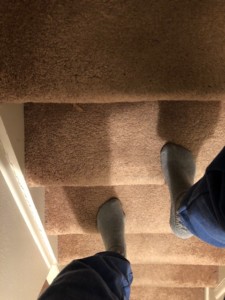
Each time you place foot on stair, hold position for three full seconds before proceeding down to next step. Expect some struggling; this requires agility.
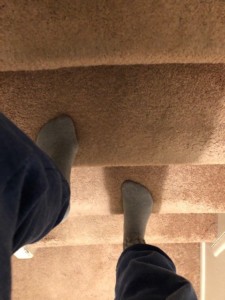
You’ll find it easy to imagine that a person with ALS affecting calf muscles will not even be able to support their down-coming weight as they place it on the ball of their foot; these muscles control this joint action, not foot muscles.
Expect balance challenges. But if you can make it down just one stair on the ball of your foot, backwards, consider this completion of the test, even though you might lose balance on all the other stairs.
Repeat this test, because the second time won’t be as tricky.
With enough repetitions of this calf muscle strength test, you will eventually make it down every step, on the balls of your feet, holding out for three seconds, without much struggle.
There will be a learning curve and progress, something you will not be able to imagine a person with ALS affecting their calf muscles will experience.
So if progress took half the day before you finally made it down all stairs without losing balance, consider yourself successful.
Calf Strength Test #2
Jump for one minute with a rope, or if one isn’t available, move your hands and arms as though you’re holding one.

Freepik.com
A healthy person will not detect an aberration with the suspect leg; instead, the healthy person’s foot will cooperate and will have the spring of the other foot.
If you feel exhausted after one minute, this means that more aerobic exercise is in order (your heart needs more training), and hence, there’s no reason to fear ALS over this particular feature.
If your calf muscles are burning after one minute, this is normal. A person without ALS affecting calf muscles should be able to jump rope cleanly, even if the calves burn.
Calf Strength Test #3
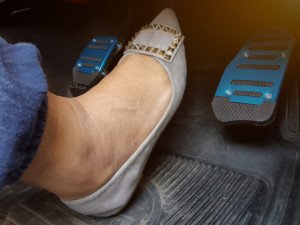
If it’s your right calf muscle twitching, ask yourself if you had any problems driving today.
Shutterstock/Electrical Engineer
Remember, movement of the foot down against an object, such as a car pedal, is controlled by calf muscles.
The foot must continuously alternate between pressing downward and then releasing the pedal.
This may seem simple and not even seem like a strength test, but calf muscles are working to control these precise gas pedal movements.
A healthy muscle can do this, and if yours did today, don’t panic about ALS.
Calf Strength Test #4
Stand only on the foot of the calf in question. Go up on toes, still just on this foot, while the other foot is off the floor.
Stay up for 10 seconds, then release. For extra reassurance, hold the up position for 30 seconds or stand on an unstable surface.

Shutterstock/Jacob Lund
Calf Strength Test #5
Hop across the room on one foot. A person without ALS foot drop will have no problem doing this.
In addition, “I would also include walking on your heels and toes (this is a part of the neurologic exam and is used to test strength),” advises Mitzi J. Williams, MD, clinical neurologist with Morehouse School of Medicine and clinical advisor for the Multiple Sclerosis Foundation.
“If you are concerned about new neurologic symptoms, seek medical attention,” adds Dr. Williams.

Dr. Williams is author of “MS Made Simple: The Essential Guide to Understanding Your Multiple Sclerosis Diagnosis,” available on Amazon. She is a member of the American Academy of Neurology.
Lorra Garrick is a former personal trainer certified by the American Council on Exercise. At Bally Total Fitness she trained clients of all ages for fat loss, muscle building, fitness and improved health.
Top image: Shutterstock/Anut21ng Photo
Sources.: mayoclinic.com/health/amyotrophic-lateral-sclerosis/DS00359; aboutbfs.com

Do You Fear ALS Because Your Muscles Are Twitching?

Muscle twitching is a terrifying topic for many people because twitching muscles is a symptom of a killer disease.
Muscle twitching is very common, affecting millions of people, but ALS, the disease in which muscle twitching is a symptom, is extremely rare.
Nevertheless, a person with twitching muscles may become vulnerable to a terrifying hypochondria in which he or she thinks they have fatal ALS whenever a muscle twitches.
But muscle twitching is a fact of life.
As I type this, my triceps muscle is twitching away. I pulled my sleeve up and watched. Boing, boing, boing, like there was a beating heart below my triceps muscle.
But am I scared I might have ALS?
No. It’s no coincidence that two days ago, I put my triceps muscles through a punishing weightlifting routine.
Two days out from grueling weight workouts often results in strange things, like muscle twitching.
If your muscles are twitching, ask yourself if one or two days ago, you worked that muscle at the gym.

Shutterstock/Jasminko Ibrakovic
“Above all, fatigue is the reason for the muscle twitching,” explains Kevin Plancher, MD, a leading sports orthopedist and sports medicine expert in the New York metropolitan area.
“The muscles are most likely overworked at this point. The nerves that send impulses to the muscles become fatigued as well, which can cause erratic firing of the muscles.”
He adds: “Cramping and twitching can result from increased amounts of sweating that follow exercise.”
The fact that you can see the twitching is NO cause for concern. Of COURSE you can see it; why wouldn’t you be able to see it?
And it could be a good thing.
You can train your mind to accept it, and then perceive it as cool — as in it feels neat when muscles twitch, especially fatigued muscles that are drained from exercise.
When my right hamstring was injured from sport, it would sometimes twitch after being exercised, and it sure felt good !
The twitching was like a little massage machine inside the hamstring, soothing it.
What makes muscles twitch?
Many things. But at the top of the list are two things:
Muscles will twitch even more if your anxiety is related to ALS.
People who suffer from this hypochondria will typically report that one day, a twitching muscle was becoming annoying.
So they googled muscle twitching and several ALS links came up.
The link descriptions clear-out say muscle twitching is a symptom. The person panics and suspects he or she has ALS.

Freepik.com, jcomp
They then visit the ALS site and read that muscle twitching is one of three chief ALS symptoms. The fear intensifies.
Convinced they might have ALS, the person becomes overwhelmed with anxiety, and within minutes, their localized muscle twitching has “spread” throughout their entire body.
Has this happened to you?
Realize that ALS does not instantly “spread.” Though muscle twitching is an ALS symptom, the ALS websites often fail to add a very crucial detail:
This symptom is preceded by, and then accompanied by, “clinical” muscle weakness.
A fearful person who hits a website that actually includes this detail, however, won’t necessarily be relieved, because once they read this, they’ll then suddenly feel “weakness” in a twitching part of their body.
They’ll stand up and test it out, and sure enough, suddenly the area feels weak. This experience is called perceived weakness.
This is how the mind works.
But ALS weakness is serious; it’s not just a feeling of weakness or a perceived weakness.
You can perceive weakness in your leg all you want, but you’ll still be able to trot up a flight of stairs or run across a parking lot.
If you have ALS weakness, those stairs will be impossible to climb without struggling.
Exercise ranks high on causes of muscle twitching because lactic acid collects in the exercised area, and lactic acid and other byproducts of exercise can cause nerves to spontaneously fire away.
In layman’s terms, the nerves are still buzzed from the exercise, and this buzzing can manifest itself one or two days after the exercise.
Anxiety causes twitching because fear signals to muscles to get ready for a battle.
The muscles rev up their engines and this causes twitching.
The muscles prepare for flight or a fight.
This natural neurological response helped humans survive during primitive times; ancient man’s muscles needed to react quickly to an urgent situation (hissing snake, approaching animal, unexpected chance to catch a rabbit for food, etc.).
Other causes of muscle twitching include electrolyte imbalance, calcium and magnesium deficiency, medications, Lyme disease and dehydration.
ALS ranks at the bottom of the list.
 Dr. Plancher is founder of Plancher Orthopaedics & Sports Medicine, and lectures globally on issues related to orthopedic procedures and sports injury management.
Lorra Garrick has been covering medical, health and personal security topics for many years, having written thousands of feature articles for a variety of print magazines and websites. She is also a former ACE-certified personal trainer.
.
Top image: Shutterstock/designer491
Sources:
mayoclinic.com/health/amyotrophic-lateral-sclerosis/DS00359
anxietycentre.com/anxiety-symptoms/muscle-twitching.shtml

Causes of Toe Twitching, and Solutions
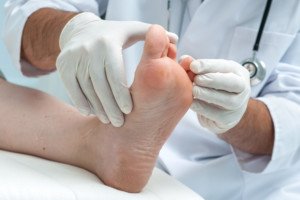
So, your toe is twitching.
Maybe it’s the big one only, or maybe it’s a few of the smaller ones, but nevertheless, the twitching is hard to ignore. Especially when you can actually see the toes jump under your socks.
When a toe twitches, it’s because of an electrical misfire in the motor neuron unit in the muscle, but this isn’t the cause per se; it’s only the mechanism.
Toe twitching is perfectly normal, but can have a variety of causes.
Sometimes, toe twitching can be caused by scrunching up the digits, which you may not be aware you’re doing. This actually causes twitching in the tiny muscles in some cases.
Because these muscles are so small, and the toe itself is such a small fixture of the body, it shouldn’t be any surprise that when it twitches, you can see it “jump.”
If two toes twitch in unison, this is nothing at all to be worried about. For example, the third and fourth ones may twitch together, in synch.
But this is perhaps due to the fact that in anything, these particular toes usually act in unison.
Try lifting the fourth one without the third one coming up, for instance. Twitching in these tiny muscles is completely normal and there is very little reason to fear you might have a disorder like ALS or MS.
The Key Point
“The key point with benign fasciculations is that, for whatever reason, they occur but do not represent an ominous underlying condition,” affirms Kristina Lafaye, MD, a board certified neurologist specializing in clinical neurophysiology and neuromuscular medicine with Tulane Doctors Neurosciences.
“Yes, some people with benign fasciculations could experience them 24/7 (or so they say; I’m a little skeptical of that), but if nothing else is wrong, then I wouldn’t probe further,” adds Dr. Lafaye.
“I don’t do any kind of a frequency count, because if a person doesn’t have evidence of denervation which, if present, would indicate a MND, myelopathy, or some other condition, then it doesn’t warrant any further neurologic evaluation.”
Causes of Toe Twitching
Tensing up the toes (anxiety, habit)
Improper footwear, especially a tight toe box
Exercise
Pressure on a nerve (shoes, foot position while seated or lying down)
Anxiety (not necessarily about what’s causing your toes to twitch, but anything that can cause apprehension)
Insufficient calcium and magnesium intake
Massage
Fatigue
Dehydration
Medication
Only in very rare cases is muscle twitching caused by a disease.
Perhaps while you were on the verge of falling asleep, your toe twitched. This isn’t the same kind of twitching that happens when you are wide awake.
This type of “twitch” is actually called a myoclonus: an involuntary jerking of a muscle. Myoclonus jerks as you drift to sleep occur in healthy people and rarely mean a problem.
More severe myoclonus may be brought on by medication or head trauma.
However, there is also a paranormal explanation for the causes of this kind of twitching, regardless of which muscles it occurs in; myoclonus occurs in different muscles.
The paranormal explanation is that your astral double has left your body (out of body experience) without you knowing this, and when it’s time to return, it re-enters rather abruptly, and you feel this as the myoclonus!

Dr. Lafaye is triple board certified: neurology, clinical neurophysiology and neuromuscular medicine from the American Board of Psychiatry and Neurology. Her expertise and leadership continue to make a significant impact on patient outcomes.
Lorra Garrick has been covering medical, fitness and cybersecurity topics for many years, having written thousands of articles for print magazines and websites, including as a ghostwriter. She’s also a former ACE-certified personal trainer.
Top image: Shutterstock/Alexander Raths
Source: mayoclinic.com/health/myoclonus/DS00754

Muscle Twitching in Fingers? ALS Fear? Strength Tests

Twitching muscles in the fingers can have some people fearing they have ALS, that incurable fatal disease that causes muscles to waste away.
People with twitching muscles who think they have ALS are prone to relentlessly performing muscle strength tests.
Those with muscle twitching are often never satisfied, however, if they “pass” one of their invented strength tests.
A certain percentage of people invariably google those key words, twitching muscles, which then brings them to ALS links.
The person may then start panicking he or she has ALS. However, ALS muscle twitching comes after muscle weakness, not before.
So the person then starts imagining he or she has muscle weakness — “perceived muscle weakness.”
In ALS, it’s called “clinical muscle weakness.”
The strength testing can become obsessive, yet unknown to those closest to the person, including those living in the same home.
So as a former personal trainer, I have come up with strength tests that, if you pass, you should have no reason to obsess about ALS.
Finger Muscle Strength Test
Piano and guitar playing, if you already play these instruments.
“If someone has ALS affecting the fingers, this would likely affect his or her ability to play a piano or guitar,” says Bonnie Gerecke, MD, director of the Neurology Center at Mercy in Baltimore.

So if you can get through your most difficult songs without a hitch, you should be reassured.
Though this requires no strength in the true sense, it still demands a degree of neurological skills that would be absent in ALS.
Index Finger and Thumb Strength Test
You’ll use a bottle of white-out (correction fluid), nail polish or other bottle with a small cap for this nifty strength test.
Using only your suspected thumb and index finger, screw cap on as tightly as you can. A neurologically impaired finger will struggle.

Shutterstock/Boris Bulychev
This test does not apply to those who’ve historically had trouble with tight cap screwing.
Now, with just thumb and index finger, unscrew this tight cap. If you’re having trouble unscrewing it, don’t fret.
Because this means you were strong enough to screw it on so tightly in the first place!
Additional Strength Tests
Screwing on lids of various food jars can be a good strength test if you, historically, have no problem unscrewing tight jar lids (some healthy people have always struggled with tight jar lids); so screw them on as tightly as possible.
An ALS weakness will prevent you from doing this. Now, unscrew them.
If you have difficulty unscrewing a lid that you just tightly screwed on, this does NOT mean muscle weakness.
It means muscle strength that was applied to tightly screwing the lid on.
Find a very thick encyclopedia or two moderately thick books. Place book(s) end-up on the floor.
With thumb on one side and fingers on the other, pick them up, without palm touching.
Clinical weakness will prevent you from doing this, or, if you’re able to despite actual ALS clinical weakness, you will immediately feel an uncharacteristic gripping deficit that’s very new to you.
“Patients with ALS who have hand weakness often have trouble picking up objects with their hands,” says Dr. Gerecke.
“When there is weakness in the thumb muscles, patients often have difficulty opposing their thumbs and other digits (grasping objects).
“They usually have difficulty holding objects in their hands.”
Use hand grip strength devices (shown below) – and compare hands…

If you have clinical weakness, the affected hand/fingers will be dramatically weaker (when previously they were not), not slightly weaker.

Dr. Gerecke has a special interest in ALS, myasthenia gravis, myopathy/muscular dystrophy, peripheral neuropathy and radiculopathy. She is board certified in general neurology and neuromuscular medicine.
Lorra Garrick has been covering medical, fitness and cybersecurity topics for many years, having written thousands of articles for print magazines and websites, including as a ghostwriter. She’s also a former ACE-certified personal trainer.
.
Top image: Shutterstock/Monster e
Source: mayoclinic.com/health/amyotrophic-lateral-sclerosis/DS00359

Perceived Weakness: Tips for Relief of ALS Fear

Perceived weakness is an awful thing to have, and it originates from the mind, when someone starts believing he or she has ALS due to muscle twitching.
Perceived weakness can disrupt a person’s life.
Perceived weakness, though, can be managed, and time passage has a nice way of putting it to rest.
A person who’s been dealing with a lot of muscle twitching may have been diagnosed with benign fasciculation syndrome, and despite the diagnosis, can’t get ALS out of his mind.
As long as ALS is living rent-free in his mind, he suffers from perceived weakness.
This is the mind playing tricks on you. You went and read the ALS sites after Googling “What causes muscle twitching?” and now you can’t help but wonder if every little sign of weakness might in fact be clinical rather than perceived.

Shutterstock/Pixel-Shot
Anxiety over this intensifies the muscle twitching, which then intensifies the fixation on ALS and doing strength tests to reassure yourself that the weakness is only perceived rather than pathological.
Realize that your senses are heightened.
You’ve always required a little “umph” to get out of that deep soft chair.
Now suddenly, your heightened senses perceive this as possible pathological weakness in your legs. No detail of your everyday movements gets missed.
You stumble a bit on the rug that’s always bunched up near the laundry room.
You now wonder if this is clinical weakness, even though you’ve stumbled on the rug hundreds of times over the past 10 years.
As time passage increases from the onset of muscle twitching, the power of perceived weakness diminishes.
Unfortunately, it often resurfaces when a new area of the body begins twitching.
This psychological phenomenon can apply to any body part including fingers, tongue, feet and calves.
Though people with benign fasciculation syndrome may have exercise intolerance, this isn’t the same as pathological weakness.
Ironically, people with benign fasciculation syndrome often engage in strength and balance tests that would wear out most people.

People with BFS often engage in strength and balance tests that would wear out most people. Shutterstock/Vagengeim
I once read about a man who repeatedly got up out of a chair on one leg.
As a former personal trainer, I’ve had my clients doing this (without cheating) —off of a bench or exercise stool — not as a strength test, but as a variation of squatting to shape, tone and strengthen the leg and buttocks muscles.
And it’s not easy. Only my fit clients were able to do this.
Yet this is a common strength test that people with benign fasciculation syndrome are drawn to.
Invariably, they tire quickly and become even more petrified.
Or, they fear the worst when one leg doesn’t perform as well as the other.
We all have a dominant leg. Of COURSE one side won’t perform as well as the other, but…it STILL performs, doesn’t it?
You have no reference point anyways, because you’ve never done these strength tests before, so how would you know that the “weaker” leg wasn’t ALWAYS weaker?
If perceived weakness in a spot has disappeared, but then it returns, ask yourself if the sensation is the same as it was before.
If the answer is yes, then remind yourself that, like before, it will fade away. ALS symptoms don’t come and go.
Lorra Garrick has been covering medical, health and personal security topics for many years, having written thousands of feature articles for a variety of print magazines and websites. She is also a former ACE-certified personal trainer who helped clients achieve fat loss, muscle growth, strength and improved fitness.
Top image: Shutterstock/9nong
Source: mayoclinic.com/health/amyotrophic-lateral-sclerosis/DS00359
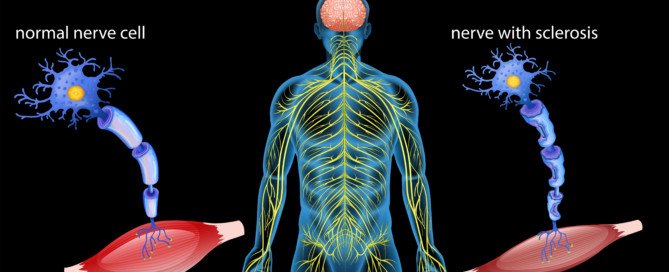
Twitching Muscle in the Thigh (Quadriceps): ALS or Benign?
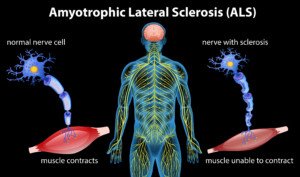
ALS sites have scared the pants off of you since muscle twitching comes up on them, and this is what’s been going on in your quadriceps or thigh.
You need loads of reassurance that you are probably not the few people in 100,000 who are diagnosed every year with ALS.
So muscle twitching can result from ALS. Why fixate on this very rare disease, when quad muscle twitching is far, far more likely to result from just plain stress and fatigue?
In fact, there’s often no known cause other than a muscle just doing what it was meant to do: twitch here and there, or sometimes even a lot.
Sometimes, it can be described as a thumping – a “thumper.”
The vast, vast, vast majority of all the people on this planet who experience quadriceps twitching will NOT be dead within 2-5 years from anything related to this phenomenon.
If anything, the extreme anxiety over this more likely to kill you!
Whether the perceived stress is physical (primitive man confronting a wild animal) or psychological (modern man being trapped in a traffic jam OR freaking over the possibility of ALS due to a quadriceps muscle twitch), the body responds the same way.
Gearing up for a Fight or Flight from a Perceived Threat = Twitching Muscles
The body preps itself for blood clotting in the event of a serious gash, so that you don’t bleed to death.
This came in very handy for cavemen; they were always getting gashed, lacerated and cut up.
They’d fight or flee their ancient dangers. This physical exertion produced hormones that cancelled out the stress hormones that thickened their blood.
Modern man doesn’t fight or flee. He sits and seethes, trembles and ruminates – over paying the bills and whether or not the creepy crawlies in his quadriceps mean ALS and how long he has to live.
No fight or flee means no physical exertion.
No physical exertion means the stress hormones PERSIST, which means that the blood STAYS thick and sticky.
Chronically sticky, thick blood means a much-increased risk of stroke or heart attack !
Wouldn’t it be ironic if while you’re stressing over ALS and muscle twitching in your thigh, you drop from a heart attack?

Shutterstock/Oleg Golovnev
“The key point with benign fasciculations is that, for whatever reason, they occur but do not represent an ominous underlying condition,” explains Kristina Lafaye, MD, a board certified neurologist specializing in clinical neurophysiology and neuromuscular medicine with Tulane Doctors Neurosciences.
“Yes, some people with benign fasciculations could experience them 24/7 (or so they say, I’m a little skeptical of that), but if nothing else is wrong, then I wouldn’t probe further,” continues Dr. Lafaye.
“I don’t do any kind of a frequency count, because if a person doesn’t have evidence of denervation which, if present, would indicate a MND, myelopathy, or some other condition, then it doesn’t warrant any further neurologic evaluation.”
Muscle twitching in ALS almost always comes after significant weakness.
Are you still able to run, dash up and down stairs and operate the pedals of your car without a hitch?
The weakness in ALS is not intermittent.
The weakness of ALS is not of a come and go nature.
It’s not something that flares up and subsides, flares up and subsides, like arthritis or dermatitis.
Once ALS weakness sets in, it stays. And gets worse. Does this describe you?
Thigh twitching can be caused by exercise, even the day before, plus inadequate calcium, magnesium, potassium and water intake. Anxiety often makes twitching spread throughout the body.
Have you noticed that your quad muscle twitches less when your mind gets taken away from it?
This is reassurance you’re probably just full of anxiety and nothing more.