
Biceps Exercises for Women: Tone, Strengthen Flabby Arms
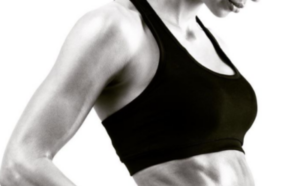
Biceps exercises help prevent saggy, crinkly and jiggly skin in the upper arms of women.
But few women really know the most effective way to tone the biceps via strength training.
This looks fancy to onlookers who don’t know better, and these onlookers then start inquiring about training from that trainer.
Biceps exercises that actually WORK do not involve difficult balance moves.
The most effective biceps exercises for women are simple to learn.
The perfect exercises do not involve “burning” from all those biceps curls or even sitting at arm machines.
Routines for Toning and Shaping the Upper Arms
Deadlifts with palms facing away from you.
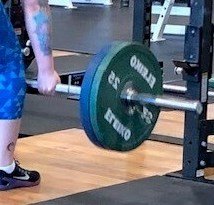
Chin-ups (keep trying and be persistant!)

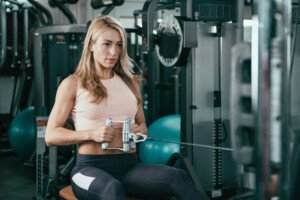
Seated rows with palms up. The image below shows the most common position, but a palms-up position will engage the biceps more.
Incline dumbbell curls (sit on an adjustable weightlifting bench with the back support slightly set back).
You must keep the upper arm immobile and vertical as the lower arm moves. This isolates the biceps muscles.

Everkinetic, CreativeCommons
Amount of Resistance
It should be challenging enough to make 8-12 repetitions difficult – while maintaining great form. If you can do more than 12 reps, the weight is too light.
Form is so important. I’ve seen women swinging their entire bodies into arm curls while they stand, whether using a barbell or dumbbell.
All too common are women who use a barbell that is way too light to induce much of an effect on their muscles.
You will not bulk up with heavier weights. In order to force your body to bulk up, you’d have to be curling something like 100 pounds.
Most women starting out will get a challenge with just a 30 pound barbell.
These routines should be done twice a week for optimal toning and strengthening effects on the biceps muscles.
Note: Working the BACK of the arms is also very important for women who want to tone and strengthen their entire arm.
 Lorra Garrick is a former personal trainer certified through the American Council on Exercise. At Bally Total Fitness she trained women and men of all ages for fat loss, muscle building, fitness and improved health.
.
Top image: Shutterstock/ Improvisor
Five Simple Steps to Stroke Prevention for Women and Men

Stroke doesn’t strike out of the blue; this condition, in large part, can be prevented by taking a handful of measures and sticking to them, says the American Heart Association/American Stroke Association guidelines.
Stroke is extremely common, striking nearly 800,000 Americans every year.
This third-leading cause of U.S. deaths is a leading cause of disability in adults.
The following prevention tactics don’t just apply to a full-blown stroke.
They also apply to transient ischemic attacks (TIAs).
TIAs are “mini strokes” and one out of three people who have a TIA will have a stroke within the year.
Guidelines for Stroke Prevention
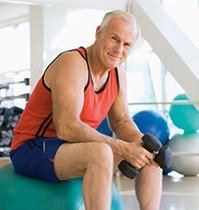
Exercise. The human body evolved to be on the move. Exercise should be both cardio-aerobic and weight-bearing in nature and done at least four times per week.
Weight management. “People with obesity have high cholesterol levels in their body,” says Sashini Seeni, MD, a family medicine practitioner with DoctorOnCall, an online doctor and pharmacy.
“Cholesterol levels that are too high will form a layer on the walls of blood vessels.
“As a result, blood vessels become narrow, making it difficult for blood cells to flow throughout the body.
“If blood flow is blocked, the risk of dangerous diseases such as stroke increases.”
Overweight people who exercise and eat lots of fruits and vegetables would be in better shape if they lost some fat.

Shutterstock/Kzenon
This also means that thin people who don’t exercise and eat a lot of junk would be much healthier if they exercised and ditched the junk food.
Don’t smoke. You already knew that. If you’ve never smoked, don’t start!
“Smoking and chewing tobacco can increase a person’s risk of having a stroke,” says Dr. Seeni.
“The reason is, the nicotine contained in tobacco can increase blood pressure to rise.
“Do not stop there: Cigarette smoke can also increase fat buildup in arteries.
“In addition, smoking and consuming tobacco can also make the blood clot and clot easily.”
Diet: Avoid bad fats (or at least, restrict them) and eat many fruits and vegetables.
Alcohol: Drink moderately if you must drink. What’s moderate? The standard recommendation by major medical establishments is one “glass” a day for women, and two for men. One “glass” is 4 ounces (half a cup).
Following the above guidelines will help prevent stroke as much as an impressive 80 percent.
The remainder of the stroke prevention measures are not dependent on the patient, but rather, on extraneous sources.
It’s been suggested that emergency room doctors identify people at high risk, and then initiate therapy for preventing stroke.
Another possibility is that of using stents to treat narrowed carotid arteries, but how useful this would be remains uncertain.
The carotid artery feeds blood to the brain. A narrowed carotid can choke off blood supply to the brain.
As for the daily aspirin for stroke prevention? This is something you need to discuss with your physician, since medical history would factor heavily into this.
 DoctorOnCall is the largest digital healthcare platform for citizens of Malaysia, allowing patients to consult doctors for advice, book appointments and place orders with local pharmacies.
 Lorra Garrick has been covering medical, fitness and cybersecurity topics for many years, having written thousands of articles for print magazines and websites, including as a ghostwriter. She’s also a former ACE-certified personal trainer.
.
Top image: Freepik.com pressfoto
Source: sciencedaily.com/releases/2010/12/101202161925.htm
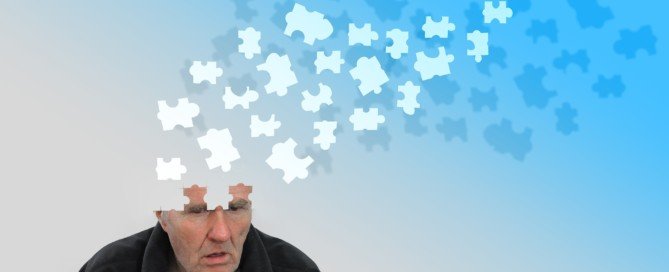
Exercise vs. Mental Activities for Dementia Prevention

So when it comes to preserving mental function in old age, which wins out between physical exercise and mind activities?
Brain shrinkage is associated with dementia or declining cognitive abilities, and exercise has been shown to prevent or delay brain shrinkage, even reverse it.
On the other hand, mental activities like crossword puzzles have been tied to lowering Alzheimer’s disease risk.
A study (Neurology, Oct. 23, 2012) gives the win to physical exercise — physical activity done in old age on a regular basis.
Exercise trumps mental workouts in guarding against brain shrinkage. Brain shrinkage can lead to memory problems and issues with thinking.
The three-year study by Gow, et al, showed that men and women in their 70s who exercised more had less brain shrinkage and other signs of aging when compared to less active people.
MRI scans showed that the size of their brains was not affected by mental exercises including socializing.
The study was small, following 638 people, all receiving an MRI brain scan at age 73.
Subjects reported their physical activities and mental/social habits. The physical activity habits ranged from sedentary (moving only when necessary) to heavy exercise or competitive sports participation several times weekly.
After the three years, the subjects who were the most physically active had less brain shrinkage (atrophy) than those who did minimal exercise.
Exercise Tips for Older Beginners
Though the younger you are, the better results you’ll get with exercise, the fact remains that it’s never too late for exercise to deliver benefits.

Freepik/pch.vector
So even if you’re old and get around with only a shuffle, nobody says you must sprint down a street for exercise.
Join a gym, have a seat and start pushing and pulling at weight. Work on your pushups at home. Try free weights too: dumbbells, kettlebells, weighted balls.
Consider hiring a personal trainer. However, you should be leery of personal trainers who have their clients lying or sitting on the floor for much of a session.
This is because activities of daily living take place while you’re on your feet (or seated in a chair) rather than seated or lying on a floor.
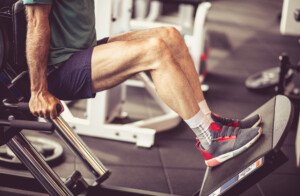
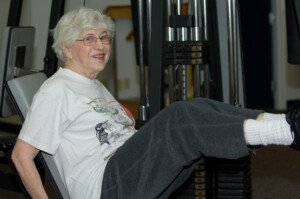
Put generous stock in leg exercises, such as those shown below.
Shutterstock/Mladen Zivkovic
Shutterstock/Wendy M. Simmons
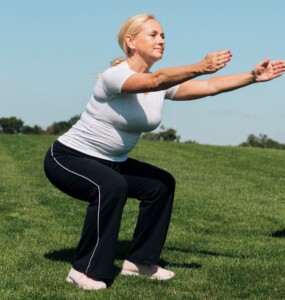
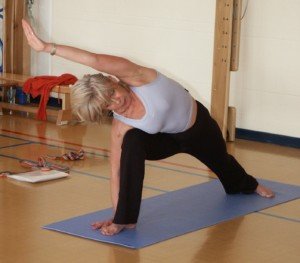
And of course, there’s always walking — either outdoors or on a treadmill. Below shows how you should walk on a treadmill: swinging the arms, good posture.

Shutterstock/Dmytro Zinkevych
I’ve always known, intuitively, that exercise has a profound impact on brain function, but it’s nice to see more studies showing this.
For a healthy brain, do not just rely on crossword puzzles or mingling with people.
The brain is an organ as much as the heart is an organ. It needs the increased blood flow from exercise to be at its best.
Nevertheless, it’s important to continue keeping the brain stimulated with mental tasks to help stave off dementia.
Lorra Garrick is a former personal trainer certified by the American Council on Exercise. At Bally Total Fitness she trained clients of all ages for fat loss, muscle building, fitness and improved health.
.
Source: sciencedaily.com/releases/2012/10/121022162331.htm
How You Can Prevent Height Loss As You Get Older

There are several things you can do to help prevent height loss as you get older.
“The best treatment for height loss prevention are these things: Stay active with weight bearing exercises,” begins Susan L. Besser, MD, with Mercy Medical Center, Baltimore; Diplomate, American Board of Obesity Medicine and board certified by the American Board of Family Medicine.
Dr. Besser continues, “Keep your weight in a normal range. Maintain good posture. Be sure your diet has protein, calcium and vitamin D.”
Additional Factors to Consider
There is an association between getting shorter with older age, and a cognitive decline in older age.
This is the conclusion of a study from the University of Southern California, Harvard University and Peking University.
For this investigation, 17,708 people were involved, starting at age 45.
Subjects who had lost the most height over the years were much more likely to do poorly on standard tests measuring cognitive abilities.
No causal effect was established, so it’s possible that whatever was causing height shrinkage was also causing cognitive decline.
If you’re still in high school, make sure to complete it, because this study also found that high school completion was associated with a one-centimeter LESS loss of height.
Causes of Loss of Height As We Age

- Decrease in bone mass
- Brittle porous bones
- Certain types of arthritis
- Smoking
Weight bearing exercise, as Dr. Besser mentioned, is a crucial factor in the prevention of height loss.
Lifting weights forces the muscles to pull on the bones (not the other way around).
This stresses the bones, forcing them to get stronger to adapt. This pulling doesn’t just affect the limb bones, but also the spinal bones — helping to prevent brittleness with age.
Weak brittle bones will collapse, causing that “old lady stoop” posture. This also happens to men who don’t strength train.
You may have read that overweight is protective against osteoporosis (weak porous bones).
If you’re overweight, you can still lose height and still have weak bones in older age.
A lean person who engages in serious strength training, along with taking the other preventive measures noted here, will have strong bones in older age — and hence, very little chance of height loss.
 Dr. Besser provides comprehensive family care, treating common and acute primary conditions like diabetes and hypertension. Her ongoing approach allows her the opportunity to provide accurate and critical diagnoses of more complex conditions and disorders.
Lorra Garrick has been covering medical, fitness and cybersecurity topics for many years, having written thousands of articles for print magazines and websites, including as a ghostwriter. She’s also a former ACE-certified personal trainer.
.
Source: sciencedaily.com/releases/2013/04/130401101017.htm
Major Cause of Osteoarthritis: No Exercise, Sedentary Lifestyle
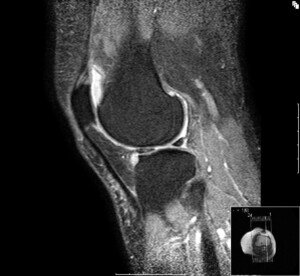
If you make excuses for your sedentary lifestyle, beware, because you’re setting yourself up for very probable osteoarthritis in the future:
Osteoarthritis is a degenerative joint process that most commonly strikes knees, hips and spine. (more…)

Home Based Boot Camp Workout: How to Maximize Results

As a personal trainer, I’ve advised clients on how to design a boot camp right in their home for workouts.
But you need to also know how to make the most of the equipment and exercises.
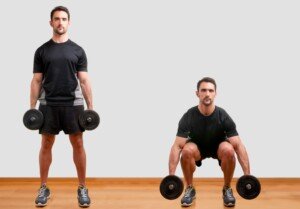
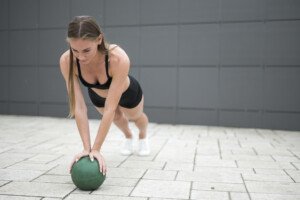
A boot camp workout can go for 30-60 minutes. Choose some exercises, then blast them out to exhaustion or near exhaustion (depending on the intensity level you thrive on and/or your goals).
Exercises can be done one at a time (brief rests in between), or doubled or tripled up consecutively: a series of doubles or triples with short rests (e.g., 45-60 seconds) in between.
Shutterstock/ruigsantos
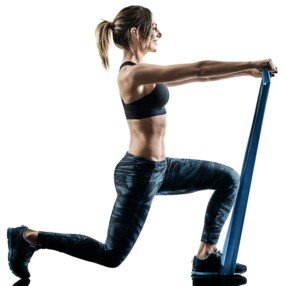
Any given exercise should not exceed 30-60 seconds. If you can go longer, then a modification must be made, such as an increase in speed, height, depth or resistance.
If you want exercise failure to be based on fatigue or repetitions, make sure that you reach your desired level of failure (exhaustion) within 30-60 seconds.
Shutterstock/OSTILL is Franck Camhi
Going longer means you’ll be entering into more of a pacing mode rather than performing all-out or near-all-out effort.
If you can execute an exercise for only 15 seconds, that’s fine too; as long as it’s your hardest effort.
Fifteen seconds of your best scissor jumps or weighted burpees are a real killer.

You can also line up, say, 10 exercises for consecutive work and execute each one with your fiercest effort for 30-60 seconds, immediately moving into the next exercise.
When the round is completed, march in place or pace slowly for 2-4 minutes, then repeat the round several more times.
The reasoning behind the brief rests (relative to the effort), is that this maximizes fat burning. Plus, it will generate tremendous cardiovascular benefits.
Maximizing Fat Burning
Short bursts of high intensity exercise create a stunning “after-burn,” or elevated resting metabolic rate-leading to fat loss that can’t be matched by long duration, pace-based cardio!
Freepik.com
This after-burn has been shown by numerous studies to last anywhere from several hours to 48 hours after the training session has ended.
For example, Schuenke et al, in the European Journal of Applied Physiology (March 2002), reports on a study in which the after-burn lasted 48 hours.
If maximizing fat loss is your chief goal, then engage in the schemes outlined here.
If you want a less strenuous workout but love the boot camp philosophy, increase the rest periods, modify the exercises so that they don’t leave you breathless, and/or extend the duration of some exercises.
Never underestimate what you can do with your bodyweight and a handful of simple tools!
Lorra Garrick has been covering medical, fitness and cybersecurity topics for many years, having written thousands of articles for print magazines and websites, including as a ghostwriter. She’s also a former ACE-certified personal trainer.
Why There’s No Such Thing as a Short Waist
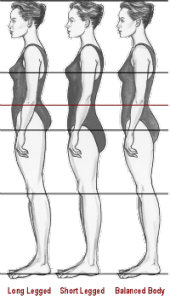
Do you think you’re “short waisted” (or “long waisted”)?
What you really mean is a short torso! As in, “short torsoed,” (though there’s no such word as “torsoed,” but at least “torsoed” makes anatomical sense.
When someone says they have a short waist, they’re referring to a brief distance between their waistline and shoulders.
This section of the body is the torso or trunk. When people talk about these proportions, it is almost always in reference to wardrobe/clothing, or exercise.
In either case, the very incorrect terminology of “short waisted” always comes up.
Think about this for a moment: A waist cannot be short. The waist goes around you; its dimension is that of circumference, not a length of point A to point B.
This is why the waistline is measured with a tape measure that can be easily wrapped around the circumference, rather than a ruler, that can be used to measure the distance from the waist/hip to the shoulder (for trunk or torso length).
Of course, no actual measurements are necessary; just look at yourself or someone and you can usually tell if they have a short torso/trunk or not (relative to the rest of their body).
The waist cannot be short or long. Remember, its dimension is in the form of circumference or girth.
Thus, a waist can be small, medium or big; skinny, plump or large; you get the picture. Sometimes the waist is referred to as tight or flat. But to refer to it as short or long is erroneous.
One time I was in a gym and a man nearby was studying his body in the mirror, chatting to another man.
The first man was motioning with his hands, the span between his midsection and shoulders. He was all legs. He told his buddy, “I’m so short waisted.”
I thought, “No, you’re short trunked.”
Google “short waist” and see what comes up. Link after link after link with this incorrect terminology. Of course, when you speak these words, most people will know what you mean, but maybe not all.
If you have short thighs (femurs), would you say, “I’m so short kneed?” or, “I have short knees”?
If you have long upper arms, would you say, “I have long elbows”?
It’s the exact same approach when you say “short/long waist” instead of “torso” or “trunk.”
So next time you want to describe vertical body length in the midsection, say torso or trunk.
Because there is no such thing as a short or long waist. The waist does not have length. It has girth, which is a different form of measurement.
Lorra Garrick has been covering medical, fitness and cybersecurity topics for many years, having written thousands of articles for print magazines and websites, including as a ghostwriter. She’s also a former ACE-certified personal trainer.
Surgery vs. Cortisone Injection for Torn Rotator Cuff

A torn rotator cuff doesn’t always cause pain, and severe pain from the rotator cuff doesn’t necessarily mean a tear.
Cortisone vs. surgery is not as absolute as you think.
“Rotator cuff tears are extremely common,” says John-Paul H. Rue, MD, orthopedic sports medicine surgeon with Orthopedics and Joint Replacement at Mercy Medical Center in Baltimore, MD.
“Not all rotator cuff tears are symptomatic and certainly not all tears need surgery,” continues Dr. Rue.
“A cortisone injection is often used to help determine if the pain that someone has is due to inflammation in the shoulder or truly from the rotator cuff tear.”
What exactly is the rotator cuff?
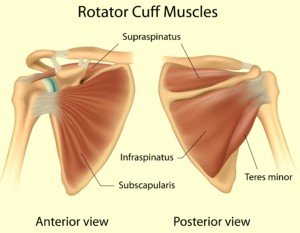
It’s comprised of four tendons and the muscles that they are attached to. The muscles are:
• Supraspinatus
• Subscapularis
• Teres minor
• Infraspinatus
Shutterstock/Alila Medical Media
These are small muscles and are not primary movers when it comes to force production.
For example, the medial deltoid muscle is the primary mover when you lift a dumbbell out to your side.
However, the supraspinatus and its tendon assist with this motion.
“In some cases you may have had a rotator cuff tear for some time without much difficulty or limitations from it, and then something happens, like a new injury or overuse activity, causing acute or sudden pain,” explains Dr. Rue.
“In these cases, a cortisone injection can be very useful to decrease the inflammation and allow you to rehabilitate your shoulder and hopefully get you back to where you were.
“If someone has continued pain despite a cortisone injection, or has severe weakness due to a tear, surgery to repair the rotator cuff tear may be required.”
 Dr. Rue specializes in prevention and treatment of sports and exercise injuries. His primary focuses are knee, shoulder and elbow injuries including ACL and cartilage injuries, rotator cuff injuries and overuse tendonitis.
Lorra Garrick is a former personal trainer certified through the American Council on Exercise. At Bally Total Fitness she trained women and men of all ages for fat loss, muscle building, fitness and improved health.
.
Top image: Shutterstock/xmee
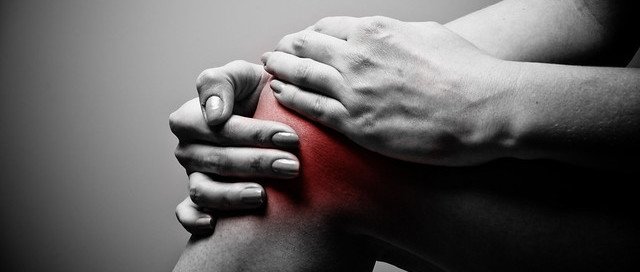
Knee Pain Only When Lying Down: Causes & Solutions

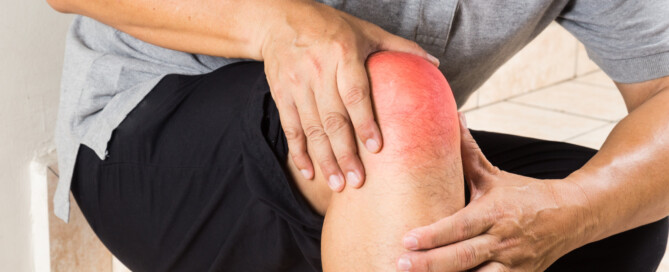
There are several conditions that can cause your knee to hurt only when lying down, and especially overnight after you’ve been in bed for several hours.
It seems odd that a knee would hurt mostly or even only when a person lies down.
After all, the human knee is subject to loads of pressure just from walking. We take that for granted.
The knee is actually the most unstable joint in the body. This is why self-defense classes teach students to “go for the knee” with any number of foot strikes.
A good strike by a 100 pound person to this inherently unstable joint can bring down a 300 pound brute.
If your knee hurts only when you lie down, or, chronic day pain gets notably worse overnight, there can be several reasons.
“Depending on the position of the knee, some inflammatory conditions such as tendinitis or bursitis may be worse when lying down,” says John-Paul H. Rue, MD, orthopedic sports medicine surgeon with Orthopedics and Joint Replacement at Mercy Medical Center in Baltimore, MD.
“Pain from osteoarthritis and rheumatoid arthritis may also worsen at night lying down as the muscles around the knee relax,” continues Dr. Rue.
“Other less common conditions such as ankylosing spondylitis may cause knee pain at night.”
Ankylosing spondylitis is a form of arthritis that primarily affects the spine, but can also affect other joints.
If you have this you probably already have back pain and stiffness.
“In general, placing the knee in a position with the support of additional pillows may lessen the pain associated with these conditions,” says Dr. Rue.
Experiment which positioning and pillow configuration works best for you.
Chances are pretty high that the best position will involve your knee bent at at least a 150 degree angle (a little more than midway between a straight leg and a leg bent at 90 degrees).
“Additionally, altering the medication timing for NSAIDS or other arthritis medications may help you get through the night,” says Dr. Rue.
“If you always find yourself waking up in the middle of the night with pain, modifying the time that you take your evening dose of medication may help extend the time of pain relief through the night.”
If this article provided you with helpful information or reassurance, please consider supporting my work through Ko-fi. Donations help me continue writing detailed medical content that’s easy to understand.
Dr. Rue specializes in prevention and treatment of sports and exercise injuries. His primary focuses are knee, shoulder and elbow injuries including ACL and cartilage injuries, rotator cuff injuries and overuse tendonitis.
Lorra Garrick has been covering medical, fitness and cybersecurity topics for many years, having written thousands of articles for print magazines and websites, including as a ghostwriter. She’s also a former ACE-certified personal trainer.
Top image: Shutterstock/Africa Studio

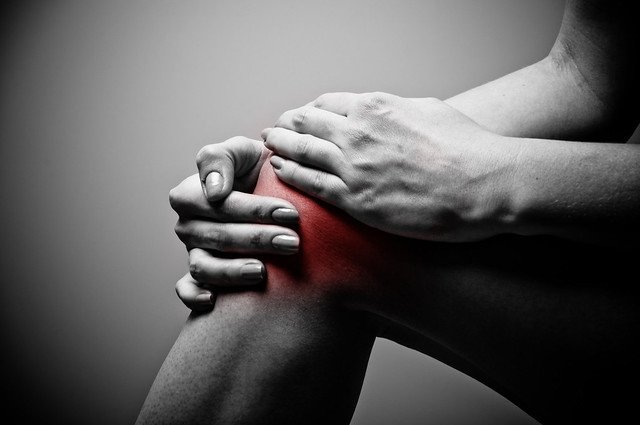
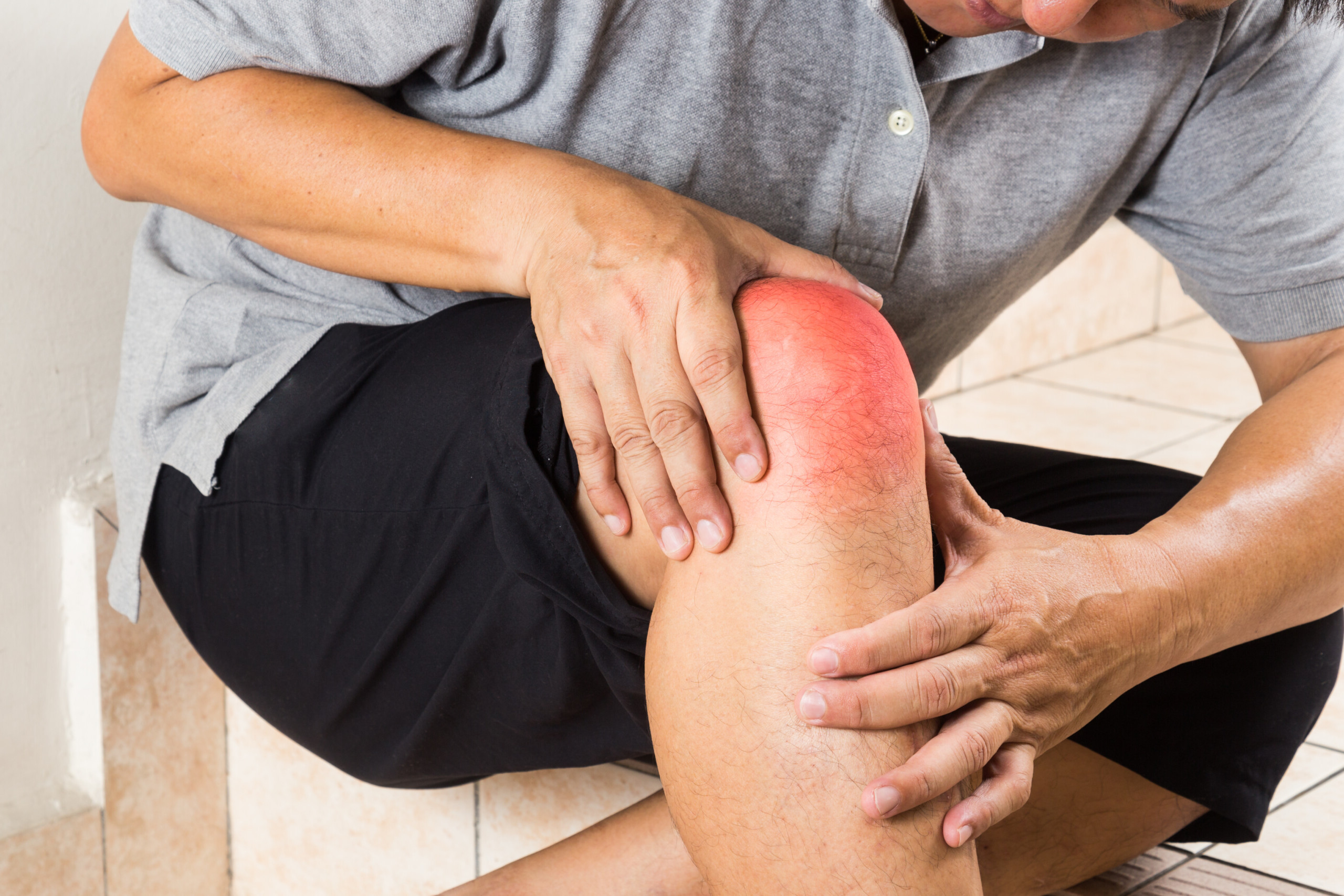
Can a Knee Injury Cause a Tumor?
Just what actually is going on when an X-ray for an injured knee shows a tumor?
First off, a tumor is a mass of body tissue. It can be malignant or benign. (more…)