Why the Standard American Diet May Be Killing You

The standard American Diet (SAD) is dropping people left and right. SAD is so bad for the heart.
If you eat what everyone else eats, why would you have a healthy diet?
Do you KNOW what everyone else eats? Or nearly everyone else?
The standard American diet.
This dinner looks healthy, doesn’t it?
Chicken breast
Broccoli florets
Wild rice
Lentil soup
Green salad with ranch dressing
Whole wheat roll
Don’t be fooled by the variety. If this meal was purchased in boxes, cans and bags, it may contain many, if not all, of the most toxic ingredients that are ubiquitous in the American food supply:
Added sugars including high fructose corn syrup
Trans fats
Sodium, potassium benzoate, BHT, BHA (preservatives)
Monosodium glutamate (MSG)
Food dyes and colorings
Nitrates (a carcinogen)
Toxins are everywhere in SAD: the standard American diet.
Even something as simple as Kroger’s bread crumbs are full of high fructose corn syrup, sugar, dough conditioners, trans fat and preservatives.
So if you think that cutting back on commercially baked goods like donuts is all it takes to “eat healthy,” you’re deeply mistaken.
What’s in your salad dressing could be contributing to plaque buildup in your arteries!
Standard American Diet = Disease
Just because 27 million Americans are living with heart disease, doesn’t mean that this killer has to be a part of growing old and can’t be prevented or minimized.
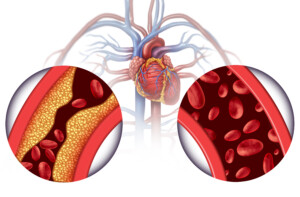
Shutterstock/Lightspring
Centers for Disease Control for the U.S.
• Almost 26 million have diagnosed diabetes, and tens of millions are prediabetic.
• About 31 percent have high blood pressure.
• About 795,000 new stroke cases occur every year.
• Over 65 percent of adults are either overweight or obese.
If that isn’t chilling enough, the American Cancer Society reports that one in three women, and one in two men, will be diagnosed with cancer.
The World Health Organization reports that processed foods (e.g., escalloped potato mix in a box, luncheon meats) are the culprit behind the accelerated levels of chronic disease and obesity worldwide.
According to a New England Journal of Medicine (2006) report of a Harvard study, avoiding white-flour based foods can significantly cut a woman’s risk of heart disease.
Heart disease and other killer diseases are rare among modern-day hunter-gatherers.
When hunter-gatherers adopt the standard American diet, their rate of disease soars and eventually matches those of long-time U.S. residents.
Heart Disease Teams up with the Standard American Diet
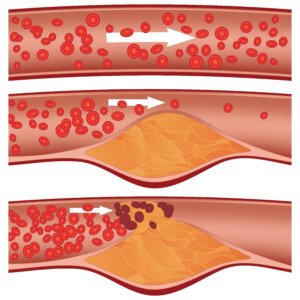
Atherosclerosis is arterial plaque buildup. “It starts with small deposits of cholesterol and fat in the artery’s inner wall that elicit an inflammatory response,” says Dr. Jonathan Fialkow, board certified cardiologist and certified by the American Board of Clinical Lipidology, whose experience includes being medical director of EKG, Stress Lab and Cardiac Rehabilitation for Baptist Cardiac and Vascular Institute.
Dr. Fialkow continues, “The inflammation eventually weakens the artery wall, which over time may lead to narrowing or disruption of the artery wall.”
Narrowing does lead to blockage, but “the real danger is when the vessel wall weakens and rips and a blood clot forms to block flow.”
Shutterstock/ Diamond_Images
This silent, stealthy process is decades in the making. “The speed with which it occurs depends on many factors, most notably genetics.”
As the saying goes, Genetics load the gun, but lifestyle habits pull the trigger.
“Certain people will more readily deposit fat and cholesterol in the arteries as a response to diet, activity, stresses and environmental factors than others,” says Dr. Fialkow.
You don’t know which category you fall into, so why play Russian roulette with the standard American diet?
Maybe you are destined to develop life-threatening heart disease late in life rather than earlier, and Dr. Fialkow explains, “You may have taken longer to reach this level of disease because you may have led a relatively healthier lifestyle than others.
“But, over 80 years, the accumulative exposure to dietary stressors led to this disease, which progressed while you were unaware.”
Standard American Diet Foods that Are Marketed As Healthy
Salad dressing. Essentially, name-brand salad dressings are pourable candy!
“Yes, read the labels, and sugars are on the top of the list…or there are several sugars throughout the product making sweeteners the biggest ingredient,” says Carolyn Dean, MD and also naturopathic doctor (ND) and clinical nutritionist; medical director, Nutritional Magnesium Association.
Luncheon/deli meats. Many people think these are redeeming when in chicken or turkey form. Dr. Dean warns, “Processed meats have dye, nitrates, BHT, BHA and MSG.”
They often also contain high fructose corn syrup and are sky-high in sodium. Nitrate-free deli meats are not the solution.
Canned soups. Not only is the sodium content off the charts, but these often contain benzoates and artificial sweeteners. Some brands contain manmade sugars.
Fiber-added cereals. Most cereal is full of white sugar and various forms of syrup. Many contain chemical dyes, preservatives and artificial flavoring.
Many cereals, though marketed as breakfast food, score as bona fide junk food. So if you don’t think you have a junk food diet, take a look at your cereal choices.
Canned vegetables. “Foodstuffs have to be sterilized to be canned so no organisms survive to contaminate the food,” says Dr. Dean.
“Sterilizing means high enough temperatures to kill all the enzymes in the food, meaning you are eating dead food. The body does not thrive or even survive on dead food.”
Whole grain bread. Wait a minute—aren’t whole grains supposed to be healthful?
Well, sure—but whole grains mixed with preservatives, dough conditioners and sugar means you’re still picking up a snake.
“The taste, texture and durability of a product all seem to require a handful of chemicals that add up to toxins that our liver and immune system have to deal with,” says Dr. Dean.
Ditching the Standard American Diet Needn’t Mean Obsessing with Food Labels
Once you find an all-natural brand that tastes good, you no longer have to read ingredients!
This conversion process is faster than you think.
Furthermore, nearly all commercially baked goods have synthetic chemicals and trans fat; no reading necessary—just outright avoid buying anything in the bakery/bread department of a conventional grocery store!
Is the Standard American Diet Harmful to Thin People?
Dr. Fialkow explains, “One can have what we call ‘metabolic obesity’ which is the dyslipidemia (excess blood fat) of an overweight person without the abdominal weight gain.
“Sometimes these are genetic disorders leading to elevated triglycerides. Generally, if you are gaining weight mostly in the belly, its a carb problem.
“If you are thin and have abnormal cholesterol particles, then again, it may be due to carb metabolism.”
Carb metabolism?
“Inflammation is a broad process, used best by our bodies as the means to fight infection and foreign substances, such as a splinter in the foot,” says Dr. Fialkow.
“When the cholesterol/fat gets into the artery wall where it doesn’t belong, the body elicits the inflammatory response to fight the foreign substance.”
This goes on for decades as long as the standard American diet is at work.
“Part of the inflammatory response is destruction of tissue, and part is deposit of scar-like tissue and calcium to try and stabilize the destroyed tissue,” continues Dr. Fialkow.
“This can be picked up with blood tests like the c-reactive protein (CRP) or with calcium scans that look for the results of inflammation in the arteries in hopes of discovering it long before a heart attack happens or stent is needed, or death.”
By luck of the genetic draw, some people escape the ravages of the standard American diet and live into their 90s with barely a runny nose, much less heart attack or type 2 diabetes.
But there is no test that determines who wins genetic lotteries. Sure, we’re all going to die anyways, but death by standard American diet is an awful way to go.
 Dr. Fialkow has been a principal investigator in numerous major clinical trials in the cardiology arena and has analyzed the effectiveness of countless popular diet plans and ways of eating.

Dr. Dean, in practice for 35+ years and author of “The Magnesium Miracle,” is also a naturopath, nutritionist, herbalist, acupuncturist, lecturer and consultant.
 Lorra Garrick has been covering medical, fitness and cybersecurity topics for many years, having written thousands of articles for print magazines and websites, including as a ghostwriter. She’s also a former ACE-certified personal trainer.
How to Overcome Obsessing About Your Blood Pressure Readings

Do you check your blood pressure tons of times every day, always thinking about that BP monitor, disrupting your concentration at work?
Does even a systolic reading of 152 send you into panic mode, even though you know this reading is the result of all the stress you’re putting yourself through? (more…)
You Can’t just “Think” Yourself Healthy in Body if You’re Obese

There’s more to being healthy than having normal blood sugar and pressure; obesity cannot be any healthier than is smoking.
A clinically obese woman may be able to train for a 5K or go on lengthy hikes every weekend, and she’s definitely in better shape than if she were sedentary. (more…)

Angina vs. Atypical Angina: Is Atypical Heart Related?

The term angina refers to chest pain brought on by a heart problem—specifically, ischemia or a shortage of oxygen due to restricted blood flow through the coronary arteries. (more…)
What Is the Worst Cancer a Child Can Get?

Cancer can be deadly to any child if not caught early enough.
But the worst cancer that a child can get is a particular type that no matter how early it’s caught, it will always kill the patient.
This cancer in children has a 100 percent fatality rate, though some kids have been known to survive it for three or four years following diagnosis.
“Diffuse intrinsic pontine glioma (DIPG) is arguably the most aggressive tumor in children,” says Jonathan Stegall, MD, an integrative oncologist and medical director for The Center for Advanced Medicine, an adult cancer treatment center in Alpharetta, GA.
“It is also very difficult to treat, as it occurs in the brainstem and can thus affect vital functions including breathing, heart rate and blood pressure.”
Diffuse Intrinsic Pontine Glioma
Sometimes, “intrinsic” is replaced with “infiltrating.” The common reference is DIPG.
There are many cancers that are nothing short of devastating to children and their parents, but even then, with those (such as osteosarcoma and lymphoma) there’s hope for a long-term survival – even well into adulthood.
But DIPG?
This is truly a monster for which treatment has not improved in over 40 years.
This is the worst cancer that a child can get when you consider survival odds and no advancements in treatment for decades.
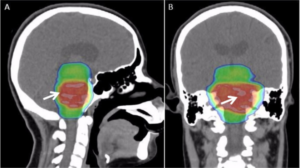
DIPG. Source: Sison J, Tran H, Margol A, et al
What Is DIPG?
“This type of cancer is rare, occurring in roughly 300 children each year in the United States,” says Dr. Stegall.
However, over three times more U.S. children are killed every year by this lethal brain tumor than the average number of adults killed by terrorist attacks every year – between 1975 and 2015!
If we include the 9/11 attacks in the total number of U.S. citizens murdered by terrorists since 1975, that annual average comes out to 74.
Meanwhile, about 200 to 400 kids every year are diagnosed with DIPG. And this cancer WILL kill them.
DIPG Facts
• 10% of kids with DIPG are still alive two years after diagnosis.
• After five years it’s one percent.
• No adult walking this earth was diagnosed with DIPG as a young child.
• In very rare cases, within the rarity of this disease, some diagnoses are made on older teens and people in their early 20s and even 30s.
With that said, nobody age 40 who’s alive was ever diagnosed with DIPG.
• Average survival after diagnosis is nine to 12 months — when radiation treatment is given.
• No matter how early it’s caught, this doesn’t change the terminal nature.
• There is no such thing as “beating this thing” as a result of prayers, a warrior attitude or keeping one’s spirits up. DIPG is what it is: a ruthless killer that backs down to nothing (yet).
The Perfect Killer
When many people visualize a brain tumor, they think of a spherical or blob-shaped mass setting amid the brain matter, especially since tumor size is often compared to a golf ball, ping pong ball or tennis ball.
But extracting a DIPG surgically is not like plucking a golf ball out of brain tissue.
In the case of the worst cancer that a child can be diagnosed with, DIPG grows and sets diffusely within brain cells.
It cannot just be plucked out with surgical instruments. Imagine putting some shredded printing paper (symbolic of healthy brain tissue) into a bowl.
Add in wet tissue paper (symbolic of cancer). Now mix it up. Now see if you can pluck out the tissue paper without “damaging” the printing paper.
DIPG is inoperable for this reason – it’s diffusely amid brainstem tissue, rather than setting in there like a golf ball as a solid mass that can just be lifted out.
Initially most DIPG tumors respond to radiation by retracting, but at some point they “learn” to fight back and are unstoppable.
Chemotherapy never works.
The worst cancer that can strike a child may be exceptionally rare, but the statistics don’t matter to the parents.
Furthermore, if medical science could figure out a way to destroy DIPG, or at least cripple it enough to give patients many more years, imagine how this discovery would carry over to other cancers, especially adult brain tumors.
More Facts on the Worst Cancer for Children
• DIPG destroys everything (ability to move, eat, talk) except the ability to know what’s going on; kids at the educable age know what’s happening to them.
• Radiation is not a treatment per se; it’s a time-buyer – usually just three months.
• Proton beam therapy will not work; imagine trying to zap out all that wet tissue paper mixed in with the printing paper by using a pinpointed beam – without hitting any of the printing paper.
• The cause is not known and apparently not related to lifestyle or diet.
Wouldn’t it be great if next time you tuned into CNN, you saw a panel of analysts covering the latest advancements by world leaders – unified by a common goal – to wipe out DIPG and other cancers?
A discovery of how to combat it would open the doors to more effectively conquering other kinds of cancer in all age groups.
Let’s give this one more dose of perspective. When a U.S. commercial airliner crashes and kills all 250 people on board, headlines ripple for weeks while there is a massive and aggressive governmental investigation. And there should be.
About the same number of kids die every year from DIPG. Where is the massive and aggressive governmental investigation?
As one mother of a child with DIPG once said, “We live in an age where we spend billions of dollars to send satellites into space, and we don’t even get upset when they get lost! But 250 children die every year from a brain tumor, and we allow that to go on.”
 Jonathan Stegall, MD, provides a long-awaited remedy for our cancer problem. Having a successful integrative oncology practice in Atlanta, GA, he’s seen firsthand what works and what doesn’t with cancer treatment. Dr. Stegall is the creator of the Cancer Secrets Podcast and author of “Cancer Secrets,” available on Amazon.
 Lorra Garrick has been covering medical, fitness and cybersecurity topics for many years, having written thousands of articles for print magazines and websites, including as a ghostwriter. She’s also a former ACE-certified personal trainer.
.
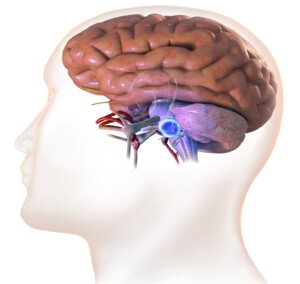
Top image: Shutterstock/MelashaCat
Sources:
defeatdipg.org/dipg-facts/overview/what-is-the-prognosis-for-a-child-diagnosed-with-dipg/
defeatdipg.org/dipg-facts/overview/what-is-dipg/
businessinsider.com/death-risk-statistics-terrorism-disease-accidents-2017-1
meyercancer.weill.cornell.edu/news/2015-07-01/new-angle-for-DIPG-brain-cancer
Can Melanoma Be Yellow?

Every time you see a picture of a melanoma, it’s either black, grey, some shade of brown, magenta, red, bluish, purple or pink, but never yellow.
However, the color of yellow is absolutely possible in a melanoma. (more…)
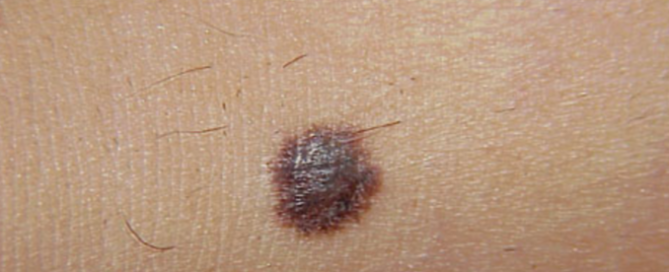
Can a Melanoma Be Smaller than Six Millimeters?
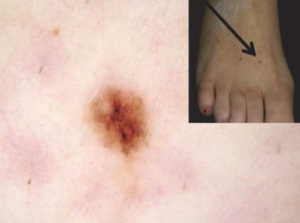
Though six millimeters is the measurement that often comes up in the “signs to look for” lists for melanoma, it can be the size of a pinpoint.
The picture above shows a four millimeter tumor. (more…)

Can Getting Lightheaded when Standing Harm Your Brain?

Ever rise from a chair after sitting for a while and feel lightheaded or that the room is blacking out? Could this eventually harm your brain?
You then must pause in your tracks with your head down until the feeling passes.
The experience is described several different ways: feeling faint, feeling like one is about to pass out, feeling dizzy or seeing the room go dark.
“This is diagnosed by a drop in systolic blood pressure of over 20 mmHg when standing up from a sitting or lying position,” says Dr. David Beatty, MD, a retired general practitioner with 30+ years of experience and an instructor of general medicine for 20+ years.
“Most people will begin to feel lightheaded if the systolic pressure is below 80 mmHg.
“On standing, blood drains to the feet, and there’s a short-term lack of blood to the brain.”
And this begs the question: Can repeated episodes of standing up and getting faint eventually harm one’s brain — as in — causing a cognitive problem?
Oxygen and the Brain
A study found a link between this common phenomenon in middle age and the development of dementia 20 years later.
A change in position that causes blood pressure to drop is called orthostatic hypotension.
The research comes from the Johns Hopkins Bloomberg School of Public Health.
• The study began in 1987 involving 11,503 people between 45 and 64.
• The participants did not have a history of heart disease or stroke.
• They lied down for 20 minutes, then upon standing their blood pressure was recorded.
• 703 of the subjects had orthostatic hypotension.
• The subjects were followed for 20+ years.
• Those who had shown orthostatic hypotension at the initial visit were 40 percent more likely to develop dementia than were subjects who had not.
However, the researchers were not able to establish cause and effect; only an association.
Two explanations exist for the association.
One, the condition indicates the presence of another disease process that ultimately leads to dementia.
Two, the orthostatic hypotension itself leads to dementia – because the brief episodes of deprived blood flow to the brain have a cumulative effect.
There may be a third — but yet unknown — explanation for the association.
Study Limitations
• It’s not known if the subjects went on to have continued bouts with orthostatic hypotension in the ensuing years.
• Other factors were not adjusted for such as exercise habits and well-known risk factors for cognitive decline.
How to Prevent Orthostatic Hypotension
“Get up slowly,” says Dr. Beatty. “This is probably all most people need to do — especially when getting out of bed in the morning.
“Get the legs moving while still lying down.
“Slowly move to a sitting position and hold that for a while, still moving the feet and bending the knees. Gradually stand.
“Keep well-hydrated.
“Occasionally increasing the dietary salt might be needed, but discuss this with your doctor first.
“Compression stockings may reduce blood pooling in the legs, and this might be particularly helpful with bad varicose veins.
“Compression stockings would not be a good idea in someone with peripheral vascular disease.
“If you have any cause of blood loss, such as heavy periods, a blood test to exclude anemia might be worthwhile.
“If the lightheaded feeling persists it’s best to sit, or preferably lie down.
“Raise the legs and move the muscles of the legs to pump blood back to the core of the body.”
Another trick is to clench the fists for 30 seconds before you stand up and keep them clenched while your blood pressure is adjusting to the change in position.
Are you already on a medication?
“If you are on tablets that lower blood pressure discuss the postural hypotension with your doctor,” says Dr. Beatty.
“People usually take blood pressure tablets in the morning.
“If you take two or more tablets for this they may be having an additive and maximal effect late morning, causing the blood pressure to drop too much at that time. Sometimes staggering the doses helps this.
“The ACE inhibitors can have a ‘first dose effect’ when the BP is drastically lowered after the first exposure to the drug.
“The initial dose of these drugs is usually best taken when lying down at night.
“In extreme cases a tablet, such as fludrocortisone, is used to keep the BP from dropping.”
 Dr. Beatty has worked in primary medicine, surgery, accident and emergency, OBGYN, pediatrics and chronic disease management. He is the Doctor of Medicine for Strong Home Gym.
Lorra Garrick has been covering medical, fitness and cybersecurity topics for many years, having written thousands of articles for print magazines and websites, including as a ghostwriter. She’s also a former ACE-certified personal trainer.
.
Top image: Brain Freepik.com/kjpargeter
Source: jhsph.edu/news/news-releases/2017/rapid-blood-pressure-drops-in-middle-age-linked-to-dementia-in-old-age.html
Ingenious Way to Reduce LASIK Starbursts when Night Driving

You will kick yourself for not having thought of this brilliant solution to reducing LASIK starbursts when you drive at night.
I had a Eureka! moment when I was staring out my kitchen window at night, eyes affixed to the dandelion-fuzz-like starbursts of streetlights in the distance.
Thirteen months prior I’d had LASIK. I’d had starbursts while night driving since then, though they’ve gotten better (I don’t know at what point though).
I’ve been driving at night all this time, having habituated to what I consider to be a mild degree of starbursting — which is much more pronounced in the distance, and oddly, pretty much clears up as vehicles become closer.
After six months post-LASIK I had resigned to the fact that this side effect was permanent.
• Average diopter for both eyes: -8
• Astigmatism
• 8.5 mm pupils at max dilation
Inspiration for Ingenious Solution to Reducing Nighttime Driving Starbursts
One evening I was diving along a lengthy and winding mountain road for which there was no barrier or median separating oncoming traffic; it was simply in the next lane.
It was intimidating due to the starbursts which were much worse at that time, as that had been four months out from the procedure.
I was driving my elderly parents and brother home from a college volleyball match featuring his daughter.
He wanted me to drive so that he could enjoy some pre-trip drinks.
I wanted to drive, too, because I’m protective of my elderly parents.
Nobody other than the LASIK surgeon and his optometrist know that I see starbursts at night. My mother would have a fit if she knew and would never sleep the same again.
My brother would feel safer driving after five drinks than by a sober person with post-LASIK starbursts.
This trip will be repeated in a few months when my niece comes out here for a volleyball match against the same college.
I was thinking about having to drive again under those circumstances.
So there I was, staring out the kitchen window at the dandelion lights at night (distant street lights are the worst), while inside my home was dark.
I then flipped on the dimmer switch for some low lighting and instantly saw the starbursts shrink.
I increased the lighting, and the starbursts shrunk more.
I turned the dimmer all the way up and the distant street lights now actually looked like normal lights.
Eureka!
After spending inordinate amounts of time searching for solutions online – Alphagan drops, anti-glare glasses, pinhole glasses, “over minus” glasses, macrolenses (are you kidding me?!) and enhancement surgery – it dawned on me:
Mount a flashlight in my car and point it towards my face!
Now I don’t mean directly – but from below chest level and somewhat to the side, so that it’s not a direct shine into the face.
This solves the problem of nighttime starbursts when driving because the illumination of my face forces continuous constriction of my pupils.
Again, do not have the flashlight shining directly into your eyes. It must be in your peripheral vision, aiming at your face. It will not “blind” you if it’s set up just right.
I need to point out that this technique may not diminish starbursts in severely affected people enough to make night driving possible again.
But for those with a milder degree of starbursting, I’m betting you’ll be overjoyed.
My initial experiment involved just holding the flashlight at varying points about the car while I drove, and immediately it worked.
The challenge was then to mount it somehow in the perfect spot. So next day I went to Home Depot and purchased industrial strength sticky pads.
It took some time before I was able to figure out just where to mount the flashlight, and by golly, this son-of-a-gun hack is ingenious!
Make sure it’s a bright flashlight. The one I purchased did not say how many lumens it is, but it’s pretty bright.
Experiment with various positions. I am confident that, at least for those who can still drive despite starbursts, this solution will work wonders.
UPDATE: Nighttime starbursts have diminished; I no longer use a flashlight and feel quite confident driving at night no matter how many oncoming headlights there are.
Lorra Garrick has been covering medical, fitness and cybersecurity topics for many years, having written thousands of articles for print magazines and websites, including as a ghostwriter. She’s also a former ACE-certified personal trainer.
.
Top image: Freepik.com/ ikatod



What Percentage of Acoustic Neuromas Are Malignant?