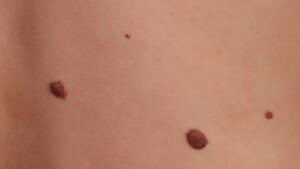
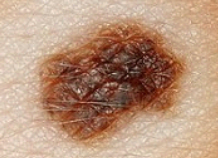
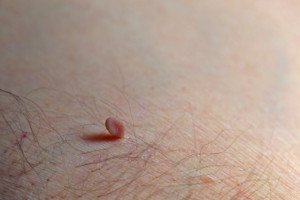
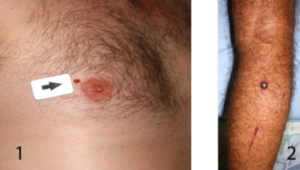
Tiny Mole Growing Larger but Still Looks Normal: Self-Exams
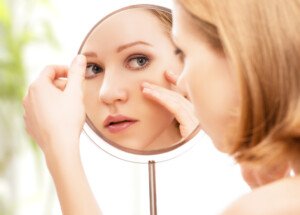
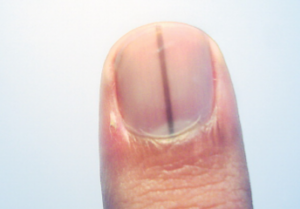
What if you had a very tiny mole and one day, realized it was no longer tiny – yet everything else about it looked perfectly normal?
As you probably already know, one of the guidelines for melanoma surveillance is the “E” in the ABCDEs: evolution. (more…)

3-Year-Old Bites Nails: Causes & Solutions

It’s tough to get a three-year-old to stop biting his or her nails.
Parents will use many tactics in an attempt to get their older child to stop this form of self-mutilation, including bribes with money.
But a three-year-old nail biter?
That’s a lot harder to tackle. What could cause a three-year-old to begin nibbling at their nails anyways?
“What causes a three-year-old to be anxious?” asks Dr. John Huber, a clinical forensic psychologist and chairman for Mainstream Mental Health, a nonprofit organization that brings positive change to the lives of those with mental illness.
“It probably has something to do with the communication between the parent and child. It may also have something to do with potty training.
“The reason why is because there are demands being placed on the child by society and their parents versus their natural proclivity to potty train when they’re ready. So anxiety is possible among young kids.”
Many parents think that a child so young can’t possibly know what anxiety is. Preschoolers don’t have bills to worry about, for instance.
But three-year-olds may indeed feel a lot of anxiety simply because their little brains aren’t developed enough to process the true nature of their sometimes bewildering environment.
Could a young child who feels very secure, safe and sound actually develop a nail biting habit? It’s just not likely.
I once told my three-year-old nephew, a nail biter, “Stop biting your nails,” when he had his fingers in his mouth.
He immediately withdrew them as I added, “Or nobody’s going to want to shake your hand.” I spoke in a matter-of-fact voice.
I said this more for his nearby mother to get the hint that she needs to be persistent in getting her son to stop the habit.
I had previously discussed it with her, and she had told me she and my brother had tried everything to get their son to stop biting his nails, including applying bitter tasting solution to his fingertips. “He just bit right through it,” she had said.
Of course, three is too young to make any sense out of “Or nobody’s going to want to shake your hand.”
So how can parents get a three-year-old to stop biting their nails? Unfortunately, there’s no easy answer.
What parents CAN do is enforce a rule of no biting when they’re in the presence of the child.
But we all know what will happen once the parents are out of range. This includes when the preschooler is in the bathroom alone, in his crib or bed, or at preschool.
If parents enforce a no nail biting rule at the table during meal times, this should work like a charm, what with the parents right there by the child.
Same with at church (parents are present) or at any time when the parents are with the child.
Maybe these restrictions will some day carry over to locations where the parents aren’t within visual range of the child. It’s worth a shot.
Don’t Give up on Your Very Young Nail Biter
My sister-in-law and brother have given up. This is a big mistake. The longer the boy engages in the habit, the harder it will be to stop. His fingers are frequently in his mouth.
If I perform the motion of removing my hand from my mouth, he immediately removes his fingers from his mouth.
That’s how easy it truly is to get him to stop munching his nails – at least while I’m watching him, of course.
Nail biting may seem like a low-ranking issue , but it should be a top priority rather than tossed under the rug.
The boy’s fingertips are red and raw looking, and as he gets older, the bitten nails will become even more obvious. The habit could have negative consequences in his future.
There really are people who do not want to shake the hand of a nail biter, not knowing where that individual’s fingertips were just seconds before the greeting.
The teen nail biter may have a difficult time finding employment; many teens seek jobs working with food, and there are employers who will not hire even the most eager teen due to unsightly chewed fingertips.
Additional Solutions
If your three-year-old or older child bites their nails, try the harmless bitter chemical. But taping the fingertips won’t work. Tape can easily be removed.
Distracting him or her with candy or suckers won’t work; they can’t have a mouth full of sugar 24/7.
For girls, see if painting the nails with bright colors might be a deterrent.
NEVER yell at, threaten or hit your child. This may stop him or her from biting their nails in your presence, but it will be very ineffective outside of your presence, and will only fuel the habit (remember the anxiety factor?).
 A mental health professional for 20+ years, Dr. Huber has appeared on over 300 top-tier radio shows (NBC Radio, CBS, Fox News Radio) and 30 national TV programs (ABC, NBC, Spectrum News).
 Lorra Garrick has been covering medical, fitness and cybersecurity topics for many years, having written thousands of articles for print magazines and websites, including as a ghostwriter. She’s also a former ACE-certified personal trainer.
.
Top image: Shutterstock/Kostyazar

Does Adult ADHD Even Exist? If It’s Not ADHD, What Is It?

Many adults want to know if ADHD is actually a child’s disorder or if, indeed, adults can have it.
If we look at what “ADHD” stands for – attention deficit hyperactivity disorder – certainly we can easily come up with at least a few names of adults we know who are definitely hyperactive or impulsive in the way they go about life – or at least for specific situations.
And maybe these same people tend to have wandering attention spans or get easily distracted or disorganized, even if it’s only in specific environments.
To say that ADHD doesn’t exist in adults is to say that there’s no such thing as an adult who’s easily distracted, forgetful or “spacey,” nor who tends to be jumpy, fidgety, struggles with working memory or is seemingly unable to physically relax.
There are definitely adults who fit these descriptors.
But something needs to be made clear.
Just what is “ADHD” in terms of a single entity?
“Adult ADHD is a descriptor of behaviors that are emitted by an individual,” says Dr. John Huber, a clinical forensic psychologist and chairman for Mainstream Mental Health, a nonprofit organization that brings positive change to the lives of those with mental illness.
“It’s not a reason for those behaviors. It is typically a tallying list of behaviors, and they can be caused by a lot of things that include sleep deprivation. Depression is another one.”
In other words, the symptom set of ADHD overlaps with numerous other conditions.
However, ADHD (and inattentive ADHD) is recognized as a lifelong neurodevelopmental disorder by the DSM-5, the diagnostic tool for U.S. mental health specialists.
Untreated sleep apnea, too, can lead to ADHD symptoms. Merely having the symptoms doesn’t automatically mean that an adult has the actual neurodevelopmental condition (which they would have had since early childhood).
Attention deficit hyperactivity disorder is a four-word term that refers to a particular group of behaviors or symptoms.
Dr. Huber continues, “Does this individual as an adult all of a sudden manifest some neurological deficits that show up as ADHD — I would argue probably not, as ADHD needs to be present before the age of six” for a proper diagnosis.
“Can adults exhibit the behaviors similar to ADHD? Yes. However, the causes are different.”
Nevertheless, there are adults with a new diagnosis of ADHD or inattentive ADHD who, for all their lives, beginning in early childhood, have struggled with various issues that are the hallmarks of this condition.
These include struggling with focus, frequently losing things, often making careless mistakes, and difficulty with following instructions or completing tasks.
There may have also been excessive “fidgeting” throughout childhood, that the adult has taught themselves to suppress when around other people.
Autism Misdiagnosed As ADHD
This is possible. It’s also relatively common for autism to be misdiagnosed as only ADHD.
If it seems that there’s more going on in the adult with an ADHD diagnosis, an autism assessment should be considered. Autism often comes with ADHD (“AuDHD”).
A mental health professional for 20+ years, Dr. Huber has appeared on over 300 top-tier radio shows (NBC Radio, CBS, Fox News Radio) and 30 national TV programs (ABC, NBC, Spectrum News).
Lorra Garrick has been covering medical, fitness and cybersecurity topics for many years, having written thousands of articles for print magazines and websites, including as a ghostwriter. She’s also a former ACE-certified personal trainer.
.
Top image: Freepik.com/ senivpetro
Can a Victim of Childhood Bullying Become Workplace Bully?

It’s been said that the workplace bully must have been quite the tyrant during their young school years, but it’s entirely possible that many workplace bullies were victimized by their peers.
And they couldn’t fight back – not because they were smaller than their tormentors, but because they had no fight inside them.
And this includes psychological.
They just didn’t have it in them to wield some power, and instead gave it up to the bullies.
It didn’t help if these victims had critical parents who only contributed to making them feel small and helpless.
The Workplace: Prime Opportunity for Victim of Childhood Bullying to Turn the Tables!
“Someone who was bullied as a child got that way because of some kind of weakness (or perceived weakness),” says Dr. John Huber, a clinical forensic psychologist and chairman for Mainstream Mental Health, a nonprofit organization that brings positive change to the lives of those with mental illness.
“The child who has been bullied doesn’t have any other type of leadership skills or training — is going to go with what they know.
“If they’ve been bullied and been forced to do things they didn’t want to do, that can transition into a workplace situation where they force their employees to do similar things (such as manipulating them into doing tasks faster for example).
“The reason why is because this is what a grownup child of bullying knows and this transformation can occur quite easily.”
Dynamics of Workplace Bullying vs. School Bullying
A school bully doesn’t have to worry about getting fired from a job if he or she harasses classmates.

Shutterstock/igor kisselev
In fact, school bullies know they can often get away with stuffing their victims in lockers, throwing food at them, tripping them, etc.
The victim, stripped of power, eventually lands an office job as an adult, perhaps after completing four years of college. And the bullydom is brewing inside.
This person doesn’t necessarily set out to be a bully in the workplace.
But the opportunity might just land on his or her shoulders like a butterfly: The former victim of childhood bullying is now promoted to supervisor!
That supervisor, manager or foreman would never, outside the job setting, harass a subordinate, but inside the workplace, they become a whole new animal.
They know they’d lose a physical fight with any of their targets, but that’s okay, because they know that their targets will put up with the bullying to keep their job.
Occasionally, though, a subordinate will bite back. The bully takes this chance, because he or she knows that the majority will be submissive out of fear of getting fired.
Think of the “power going to his head” phenomenon as a do-over of a tormented childhood.
Problem is, the do-over never really occurs, because the workplace victims are not the actual school bullies.
There’s no true feeling of revenge, so the workplace tyrant is never satisfied and continues harassing select employees.
This gives the bully, once a helpless victim earlier in life, a surge of power that requires daily fixes to maintain.
Ironically, school bullying is far more tolerated than that at the workplace.
Kids are often told to “just ignore” the harassment, while adults are encouraged to bring lawsuits against the company. Go figure.
A mental health professional for 20+ years, Dr. Huber has appeared on over 300 top-tier radio shows (NBC Radio, CBS, Fox News Radio) and 30 national TV programs (ABC, NBC, Spectrum News).
 Lorra Garrick has been covering medical, fitness and cybersecurity topics for many years, having written thousands of articles for print magazines and websites, including as a ghostwriter. She’s also a former ACE-certified personal trainer.
.
Top image: Shutterstock/nito
Does Your Heart Pound and You Think It’s Caused by GERD?
Bad news for those who’re trying to convince themselves that their pounding heartbeat is caused by GERD and GERD alone:
It very most probably isn’t. (more…)
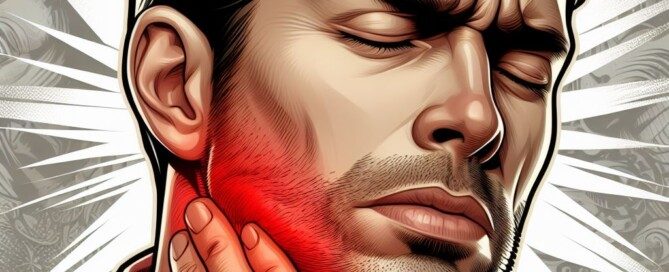
Jaw Pain from GERD or Acid Reflux or from Your Heart?
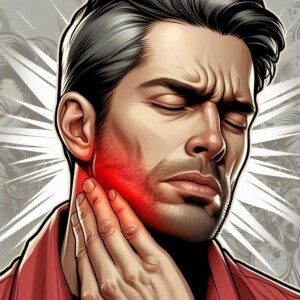
Jaw pain can have many causes including cancer, but GERD or acid reflux, as well as clogged heart arteries, can cause pain in the jaw.
If you’re experiencing pain in the jaw, you need to determine if it’s associated with any particular activities.
• Does it hurt only when you chew or yawn?
• How about only when you physically exert yourself — which would suggest an atypical symptom of blocked heart arteries?
• Maybe it occurs within a certain period after eating large meals.
• Or maybe it just happens for no known reason.
Jaw pain is strongly associated with two conditions:
Cardiac Problem: Heart Disease or Heart Attack
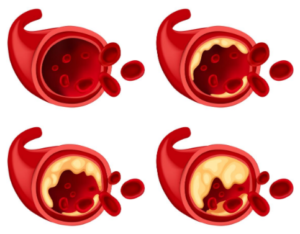
Coronary artery disease over time; plaque buildup inside the blood vessel. Source: vecteezy.com
Reduced blood flow from coronary artery disease or a heart attack can refer pain to the jaw due to shared nerve pathways.
TMJ Disorder (jaw joint problem)
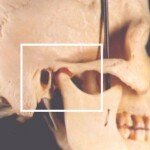
Jose Larena/CreativeCommons
The temporomandibular joint is the hinge connecting the jawbone to the skull, allowing you to chew and speak.
A lesser-known cause of jaw pain is GERD or acid reflux.
Acid reflux, also known as gastroesophageal reflux disease, occurs when stomach acid frequently flows back into the esophagus.
This backflow happens because the lower esophageal sphincter, a muscle that acts as a valve between the esophagus and stomach, becomes weakened or relaxes inappropriately.
When this muscle fails to close properly, acid from the stomach can escape into the esophagus, leading to irritation and inflammation
“Chest pain that radiates to the left arm or jaw should be seriously investigated by a heart doctor to rule out angina or a heart attack,” says Hugh Mai, MD, a gastroenterology and internal medicine specialist in Baltimore, MD.
“Once a cardiac cause is eliminated, acid suppression should be tried.
“This can involve taking antacids or taking a medication that suppresses gastric acid.
“If either of these is successful in relieving the jaw pain, then the jaw pain may be associated with acid reflux as a referred pain pathway in atypical GERD.”
 Hugh Mai, MD, has 35+ years of experience and is well-versed in the endoscopic treatment of GERD. His areas of focus include interventional endoscopy, metabolic endoscopy and gut health.
Lorra Garrick has been covering medical, fitness and cybersecurity topics for many years, having written thousands of articles for print magazines and websites, including as a ghostwriter. She’s also a former ACE-certified personal trainer.
.
Top image: ©Lorra Garrick
Vomiting Thick Mucus After Eating Beef, Rice and Sauces

What are the causes and prevention of vomiting a thick mucus after eating foods like beef, rice and sauces? (more…)
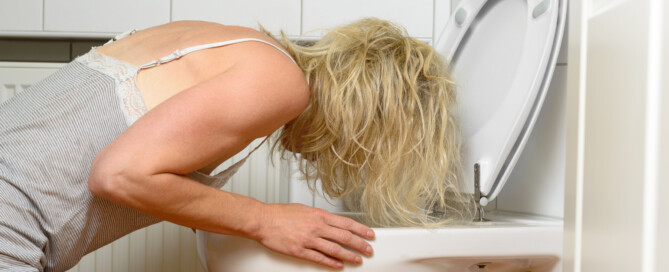
Can Acid Reflux Make You Throw Up Foamy Bile and Other Yuck?
Ewww, you awaken having to “throw up” foamy gunk (bile? acid? mucus?) and it tastes as bad as it looks. Is this acid reflux? (more…)
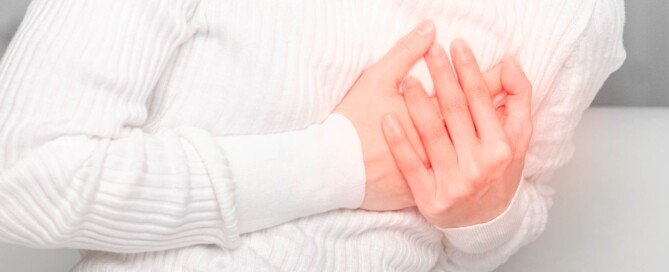
Can GERD Cause an Electric Sensation in the Chest?
Sometimes a person will experience chest pain they describe as feeling “electrical” or “like electricity running through” and think it’s GERD at work.
However, there is no condition that literally causes electric currents to run through the chest or upper torso.
Not even a heart attack or ruptured aneurysm causes this sensation.
So if you’re feeling electrical sensations in your chest, it only seems like it’s electrical in origin.
Could the electrical sensation in your chest be from GERD?
“If a person has esophageal erosions or ulcerations, acid reflux can cause sharp pain which is sometimes described as a pinprick sensation,” says Hugh Mai, MD, a gastroenterology and internal medicine specialist in Baltimore, MD.
“Otherwise, the most likely atypical referred sensation could be due to reflux-reflex response.
“A reflux-reflex response involving GERD means the brain is trying to stop the acid from getting into the larynx and the lungs by telling the muscle in the esophagus to squeeze tightly.
“That can lead to esophageal spasms (non-acid chest pain) and spasms of the bronchioles causing asthma, wheezing or dry cough reflex to clear the throat.
“If taking a strong acid suppressor does not relieve the sensation, further evaluation is needed because the sensation may not be related to acid reflux after all.” It can be heart related.
But remember, it’s not actual electrical currents running through your chest causing this feeling — even if the cause is cardiac in origin.
How Acid Reflux Can Make the Chest Feel
• Pain, sometimes severe. It can mimic that of a heart attack.
• A burning or abrasive feeling (a.k.a. heartburn).
• A feeling of heaviness.
• A dull, medium or strong ache.
• Upper abdominal burning or discomfort may also be present.
• A feeling of something stuck in the chest or esophagus.
Hugh Mai, MD, has 35+ years of experience and is well-versed in the endoscopic treatment of GERD. His areas of focus include interventional endoscopy, metabolic endoscopy and gut health.
Lorra Garrick has been covering medical, fitness and cybersecurity topics for many years, having written thousands of articles for print magazines and websites, including as a ghostwriter. She’s also a former ACE-certified personal trainer.
.
Top image: Shutterstock/ ANN PATCHANAN
Why Does GERD Cause Pain Between the Shoulder Blades?
GERD does not directly cause pain between your shoulder blades, but the pain between your shoulder blades can be a result of GERD.
It can also mean a heart problem. (more…)