
Like all organs, the brain changes for the worse with age. But there’s a way to eat to help slow the loss of crucial brain tissue.
A diet that combines Mediterranean-style eating with foods that are linked to lower blood pressure may help slow some of the physical changes that happen in the brain with age.
Research in the Journal of Neurology Neurosurgery & Psychiatry (2026) found that people who followed the MIND diet more closely experienced less loss of brain tissue over time.
The association was especially noticeable in grey matter, which is involved in memory, learning, decision-making and processing information.
People with higher MIND diet scores also had less enlargement of the brain’s ventricles, the fluid-filled spaces that become larger as brain tissue decreases.
What Is the MIND Diet?
The MIND diet stands for Mediterranean-DASH diet intervention for neurodegenerative delay.
It combines features of the Mediterranean diet and the DASH diet.
The diet encourages green leafy vegetables, other vegetables, berries, nuts, whole grains, fish, beans, olive oil and poultry.
Of note: You’ll want to eat vegetables fresh from the produce section rather than in canned form.
As for nuts, this doesn’t mean cashews coated in sugary chocolate or chocolate-covered peanut clusters. Ideally this means nuts in unprocessed form, or at least, minimally salted.
MIND also calls for limiting butter and margarine, cheese, red meat, pastries, sweets and fried fast food.
As discouraging as these rules sound, keep in mind that you can still eat your favorite “bad” foods — but make a point to LIMIT them.
Earlier studies have linked the MIND diet with better cognitive health.
Its connection with actual physical changes in brain structure has been less clear in those past studies.
Researchers Followed Brain Changes
The researchers studied 1,647 middle-age and older adults from the Framingham Heart Study Offspring cohort.
Participants were an average of 60 when the study began. They received health evaluations every four to eight years and began having MRI brain scans in 1999.
The scans were repeated every two to six years, allowing researchers to follow changes in brain structure over time.
Diet information came from food frequency questionnaires completed during health examinations between 1991 and 2001.
Each participant had at least two MRI assessments between 1999 and 2019.
None had evidence of stroke or dementia when their first MRI was performed.
The average MIND score was just under 7 out of 15. A higher score indicated closer adherence to the diet.
- People with the highest scores were more likely to be women and college graduates.
- They were also less likely to smoke or be obese.
They had lower rates of several health conditions associated with brain health, including type 2 diabetes, high blood pressure and cardiovascular disease.
Higher MIND Scores and Brain Volume
Over an average follow-up of 12 years, participants experienced the brain changes normally associated with aging.
Total brain volume, grey matter, white matter and hippocampal volume decreased.
Meanwhile, cerebrospinal fluid and ventricular volumes increased.
White matter hyperintensities, which appear as bright areas on MRI scans and can reflect tissue damage, also increased.
However, people with higher MIND diet scores showed slower grey matter loss.
For every three-point increase in the MIND score, grey matter loss was 0.279 cm³ per year slower.
The researchers calculated this as about 20% less age-related decline, equivalent to approximately 2.5 years of delayed brain aging.
Ventricular enlargement was also slower. A three-point increase in MIND score was associated with 0.071 cm³ per year less ventricular expansion.
The researchers estimated that this represented about 8% less tissue loss, or approximately one year of delayed brain aging.
Berries and Poultry
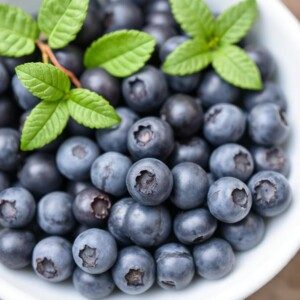
Eating more berries was associated with slower increases in ventricular volume.
Poultry was also linked with slower ventricular enlargement and slower grey matter loss.
Sweets showed the opposite pattern. Higher consumption was associated with faster ventricular enlargement and greater loss of hippocampal volume.
Fried fast foods were also associated with a larger decrease in hippocampal volume.
The researchers suggest that antioxidant-rich foods such as berries could help reduce oxidative stress, while protein sources such as poultry may help limit neuronal damage.
They also point out that fried fast foods often contain unhealthy fats and other compounds that may contribute to inflammation and vascular damage.
Not Every Finding Fit the Pattern
Higher whole-grain consumption was associated with faster grey matter and hippocampal volume loss, as well as faster ventricular enlargement.
Cheese produced a different result.
People who ate more cheese had slower declines in grey matter and hippocampal volume. They also had less ventricular enlargement and fewer white matter hyperintensities.
The researchers say these findings show that individual foods do not necessarily behave exactly as expected based on the overall diet pattern.
Older Adults Showed Stronger Associations
The overall relationship between MIND diet adherence and brain structure remained after additional analyses.
The associations were stronger among older participants.
That could mean the diet is particularly relevant for people whose brains may be more vulnerable to faster age-related atrophy.
The associations were also stronger among people who were physically active and those who were not overweight.
The paper says this raises the possibility that diet and other healthy lifestyle habits may work together in supporting brain health.
The Study Has Limitations
This was an observational study, so it can’t prove that following the MIND diet directly caused slower brain aging.
Diet was measured with food frequency questionnaires, which depend on participants accurately remembering what they ate.
The researchers also could not completely rule out mild cognitive impairment at the first MRI assessment.
Changes in eating habits over the years and genetic factors could also have affected the results.
Nevertheless, the researchers say the findings add to evidence that the MIND diet may be a useful brain-healthy eating pattern and could have a role in efforts to slow some of the brain changes associated with aging.