
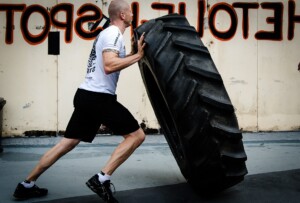
Of all the strength exercises that gym-goers think about form, the tire flip isn’t at the top of the list. But it should be.
While it may look simple, poor technique can increase injury risk and reduce the effectiveness of the movement.
Avoiding common mistakes can help you perform tire flips more safely and efficiently.
Trying to Lift With Your Back
One of the biggest tire flip mistakes is treating the exercise like a deadlift performed with a rounded back.
This can place excessive stress on the lower back and reduce power output.
Instead, keep your chest up, bend at the hips and knees, and use your legs to drive the tire upward.
Starting With a Tire That’s Too Heavy
Many people are eager to challenge themselves and immediately choose an extremely heavy tire.
This often leads to poor form and incomplete repetitions.
Learn the movement with a manageable tire before progressing to heavier loads.
Standing Too Far Away From the Tire
Proper setup is important. Standing too far from the tire can force you into an awkward position and make it harder to generate power.
Position yourself close enough that you can get your hands securely underneath the tire while maintaining a strong athletic stance.
Pulling Instead of Driving
The tire flip is not simply an upper-body pulling exercise.
The movement should be powered primarily by the legs and hips.
Think about driving through the ground and extending your hips forcefully as you lift the tire.
Failing to Transition Properly
Many injuries occur during the transition phase when the tire reaches knee or waist height.
Some people attempt to continue lifting instead of switching to a pushing motion.
As the tire rises, quickly reposition your hands and drive the tire forward to complete the flip.
Letting Your Head and Neck Drift Forward
Looking down excessively or leading with the neck can create unnecessary strain.
Keep your head in a neutral position and focus on maintaining good body alignment throughout the exercise.
Skipping Warming Up
Tire flips place demands on the legs, hips, back, shoulders, and grip.
Jumping straight into heavy sets without preparation can increase the risk of strains.
Perform a thorough warmup and a few lighter practice repetitions before tackling challenging tires.