Nobody “taught” me to hate obesity. I think independently and actually challenge many societal norms.
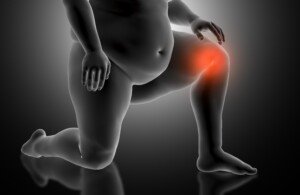
Aside from the endless health issues for which obesity has been directly linked to, I also simply just don’t like the way it looks.
I wasn’t taught this. I didn’t learn it from anywhere. To attribute my aversion to fatness as a byproduct of a “fatphobic” society is to presume I’m incapable of thinking for myself.
It’s a presumption of incompetence that many women who promote obesity ascribe to any individual who wants to lose weight or takes measures to prevent weight gain.
Some human beings, including women, can actually think independently — and this is something that the fat acceptance cult can’t come to terms with.
A woman left a comment on one of my articles explaining that it’s impossible for my viewpoints to have been unaffected by society.
Hardwiring, not Brainwashing
When I was five or six I began drawing people. I had natural talent; I never had a stick figure phase; I went straight to drawing actual bodies right from the start.
They were always thin or straight size. That’s because I had a natural or innate gravitation towards a thinner look. I didn’t “learn” this. Nobody “taught” me this. I was only five!
Just HOW would a child of five or six learn from society that fat on a body is bad? No, my parents never told me this. In fact, they’ve told me many things that I chose not to believe in.
I was raised often hearing my mother announce, “The men in this house are waited on.”
I never subscribed to that line of thinking, even though I heard it enough. At no point in my childhood or adulthood have I ever believed that boys should be exempt from housework.
With that said, I’m using this as an example to show that hearing opinions — even poured on thick — doesn’t necessarily make you think that way.
Yet that’s what influencers who promote obesity want you to believe. However, as mentioned, I never heard “fat is bad” as a young child.
Do you really think the reason my drawings were thin out of the gate was because gee, I must’ve witnessed someone getting congratulated for losing a hundred pounds?
At such a young age, I certainly wasn’t perusing through women’s magazines full of advertisements using only thin models. The only doll at this point that I’d ever had was a bit chubby — and I had no problem with her plump arms, legs and tubular middle. I never wanted this toy to be skinny. I never wanted my teddy bear to be thin, either.
But none of my drawings were fat. Why?
Because I was innately drawn to the lean or straight-size look.
There’s also the possibility that when a child begins drawing, it’s easier to make the figures thin than to add realistic girth.
Nevertheless, I liked the way my figures looked. I didn’t feel a need to make them rotund or to be more “representative.”
When I was in college I took illustration classes for which a model posed nude in various positions.
Darbi was a bone-thin model who regularly appeared for the classes.
I’d always thicken her up a bit by adding muscle. Did this mean I was thinphobic?
There was another model who was on the chubby side. I’d slim her down, but nowhere near like Darbi. I wanted athleticism and some muscle.
So the phobia applies only in certain situations, right?
By the time I was in college, I thought that the most attractive body type for a woman was muscular.
I thought that tennis champion Martina Navratilova had killer arms and legs.
This is proof that society’s beauty standards had NO effect on me, despite what that very narrow minded woman commented on my article.
When I was in high school, I thought that muscularity in a woman looked so COOL.
Yet at that time, it was considered “gross.” I brought a photo of a female bodybuilder to homeroom one morning.
By today’s standards, she would never place in a women’s bodybuilding contest.
But back then, it drew gasps and “Eeeuuuw” from several classmates. One guy said, “THAT’S a woman?”
I thought she looked great, while her body didn’t go over too well with classmates.
This shows how I can think independently of what the norm considers attractive, which back then were waif bodies such as Kate Jackson’s, Farrah Fawcett’s and Heather Locklear’s — rather than this chiseled woman with biceps and “capped” shoulders.
It’s entirely possible for a teen girl to decide — without the influence of her culture’s media — what she perceives as appealing when it comes to the human body.
- I was never taught to hate fat bodies.
- Instead, I simply naturally have always disliked this look.
This isn’t because all the fashion illustrations on my mother’s sewing pattern packets were stick figures.
I thought those were unbecoming, too.
As my drawing skills “grew” with my age, I gave my figures an athletic look — with small waists — because that’s what I thought looked the most attractive.
I was told I should go into fashion illustration. This had zero appeal because the norm for fashion illustration was stick figures with weird-azz proportions.
Darbi was 5’11 and weighed a sickly 130 pounds (yes, she told me).
This body type was strongly promoted by the fashion industry — yet I thought it looked terrible.
She looked like she could easily get beaten up by a tough junior high school girl. Who’d want to look like that? Not ME!
This is more evidence that I was never influenced by “beauty standards.” To accuse me of such is an insult to my intelligence.
The fat activism community won’t call me thinphobic for adding meat to Darbi’s bones in my illustrations of her.
But this sinister faction of body positivity will call me fatphobic if I admit that I find obesity unappealing.
If this article provided you with helpful information or reassurance, please consider supporting my work through Ko-fi. Donations help me continue writing detailed medical content that’s easy to understand.