
Eccentric training can be paired with very hard lifting, but it doesn’t have to be intense to work.
So what happens when you focus mostly on eccentric movements at a moderate level instead of doing heavy workouts with standard negative phases?
Research from Edith Cowan University suggests this less-demanding approach can still build significant strength.
The idea that exercise has to leave you exhausted may actually discourage some people from exercising consistently.
Some people love brutal workouts. Others simply don’t. The good news is that you don’t need to destroy yourself in the gym to make progress.
What Is Eccentric Training?
Eccentric is a training term for the part of an exercise where a muscle lengthens while controlling a weight.
It’s also called negative training, pronounced E-centric.
Rather than emphasizing the muscle contraction, or positive phase, eccentric training concentrates on the release.
With a bench press, pushing the bar upward is the concentric portion. Lowering it toward your chest is the eccentric portion.
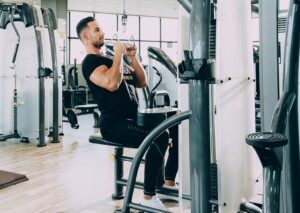
During a biceps curl, slowly straightening your arm is eccentric. With a lat pulldown, it’s the controlled return of the bar upward.
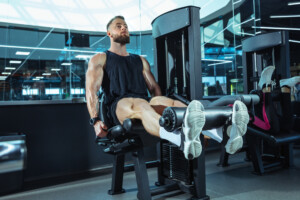
For a leg extension, it’s the lowering of your legs.
Freepik/master1305
Eccentric training makes that lowering phase slower, keeping the muscle under tension longer. A negative might last two to five seconds.
Think about a leg press. Instead of allowing the sled to drop quickly, take five seconds to lower it before pressing it back up.
Why Eccentric Exercise Works
Muscles can produce more force during lengthening movements while using less energy.
You may have seen someone lower a very heavy leg press load, then use their hands to help get the sled moving upward again.
That’s one way to keep training the muscle after the positive movement becomes too difficult.
Normally, a set ends when you can’t complete another positive repetition. But your muscles may still have plenty left for the eccentric portion.
With exercises that allow assistance during the positive phase, you can continue challenging the muscle after reaching failure.
Examples include assisted curls, triceps extensions, seated dips, single-leg extensions and machine chest presses.
This can be useful for anyone who struggles with extremely demanding workouts.
You don’t have to finish a workout feeling completely wrecked to get stronger.
That doesn’t mean intense training is useless. If you enjoy hard workouts, there’s no reason to abandon them.
But if extreme intensity causes you to skip workouts, eccentric training offers another option.
You can gain strength and improve performance without ending every session feeling like you can barely move.
Some soreness may occur, especially when you’re new to eccentric exercise, but soreness isn’t necessary for getting results.
Simple Eccentric Exercises
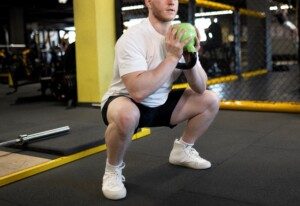
Try slowly lowering yourself into a bodyweight squat, or while holding a weight, then standing normally. Aim for eight to 12 repetitions.
If you’re less conditioned, use a chair. Slowly lower yourself onto it, then stand back up for eight to 12 reps.
You can use the same idea with stationary or walking lunges, with or without weights.
Even walking downstairs can become eccentric training. Control the movement between steps instead of rushing downward.
Eccentric vs. Traditional Training
Neither approach is automatically the winner. Both intense conventional resistance training and eccentric training can improve strength, fitness and muscle development.
And you don’t necessarily need long workouts. Even five minutes of eccentric exercise each day may help improve strength and overall health.
