Yes, sitting a long on the toilet and reading can cause sciatica, says a spine doctor.
It may seem benign — sitting on the toilet for extended periods and reading, talking on the phone, texting, what-have-you — but this can lead to sciatica, says Dr. Michael Perry, MD, member of the North American Spine Society and American College of Sports Medicine.
In sciatica, the sciatic nerve is irritated. One cause of irritation is pressure against the nerve.
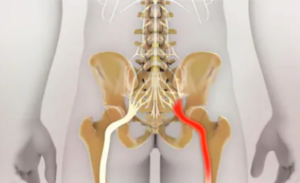
Sciatic nerve. Shutterstock/Nathan Devery
This can easily be caused by extended time sitting on a toilet, especially if the seat is hard — which it typically is.
The leaned-forward position that most people assume adds even more pressure on this major nerve.
Have you ever developed a numbness and tingling along your hamstring group after sitting on a toilet for a while? That’s the sciatic nerve being imposed upon.
“When you are sitting down, whether it is on a toilet or in a chair, you are applying more pressure to your discs than when in any other position,” says Dr. Perry.
“Some people tend to pull out a newspaper or a magazine while leaning forward on the hard toilet seat for an extended period of time.
“If that person also has an underlying disc abnormality, this significant and extended pressure can cause further deterioration.
“You may begin to experience shooting pain, electrical shocking pain or numbness because of this increased pressure while sitting in this position.
“If someone has a disc abnormality and they do feel this pressure and increased sciatica symptoms, it should be treated.
They should remain cautious and alert of sitting on the toilet for an extended period of time.”
If you cannot help but spend a lengthy amount of time on the toilet due to a major bowel movement or constipation, then try your best to periodically lift the affected leg off the seat to help relieve some of the pressure on the sciatic nerve.
 Dr. Perry is chief medical director and co-founder of USA Spine Care & Orthopedics, and is frequently sought out for his minimally invasive spine surgery expertise.
 Lorra Garrick has been covering medical, fitness and cybersecurity topics for many years, having written thousands of articles for print magazines and websites, including as a ghostwriter. She’s also a former ACE-certified personal trainer.