My Teen Has Tons of Moles: Should I Worry?

Skin cancer surgeon Dr. Monica Halem comments about teens with many moles.
Have you looked at your teen’s skin lately for moles? Are you even aware of how many moles your teen has?
My nephew at 14 had quite a few pigment spots all over his back, and some on his neck and arms.
He’s older now but they’re still there: not pinpoint moles, either. Many are almost pencil eraser diameter.
His parents were never concerned their teen had a lot of moles, and having many is a significant risk factor for deadly melanoma skin cancer.
But if your teen has a lot of moles, what could you possibly do?
After all, it’s not advisable to have the spots removed as a “just in case” measure.
But there IS something that parents can do if their teens have a ton of moles: Educate them about the dangers of excessive sun exposure. This can’t be said enough.
And the education should come early in life, long before kids hit their teen years, though in early life, they will most likely not have so many moles — most develop after birth and before age 20.
Waiting until a child is a sun-worshipping teen to educate about healthy skin is not a smart move. When my bronzed nephew was 14, I noticed his back while we were on a boat.
As a teen he’d spent every summer doing lake activities such as tubing, water skiing, wakeboarding and jet-skiing.
Furthermore, he spent a lot of time on the boat: a lot of sun exposure.
He also golfed: more sun galore. He obviously never wore much sunscreen, as he was very tanned whenever I saw him.
On the boat when he was 14, I got a close-up of all this teen boy’s back moles. I concluded that his well-meaning (and very tanned) parents didn’t feel concerned.
Though melanoma is extremely rare among teens, it is on the rise among teens.
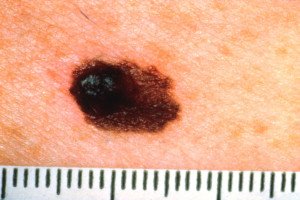
Melanoma
Furthermore, the melanoma that a person gets in his 40s, 50s or 60s, might very well be the result of lots of sun tanning during the teen years!
It can take decades for melanoma to develop. The “seeds” for melanoma can be planted during childhood and teen sun exposure.
“Any teen who spends time in the sun is at risk for developing skin cancer, especially melanoma,” says Dr. Monica Halem, MD, a dermatologic surgeon who specializes in skin cancer surgery, laser and cosmetic surgery.
My nephew’s mother had always been on top of getting her son checkups during his teen years for his acne.
But she was out of the loop regarding all the sun that his many moles had gotten year after year.
Dr. Halem continues: “Teens with an increased number of moles are particularly susceptible. The presence of moles is alone an increased risk factor for skin cancer.
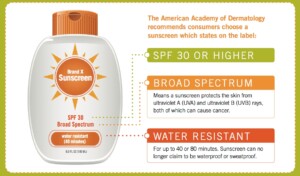
“To add sun exposure on top of that makes things worse. Anyone with several moles should get a yearly exam by a dermatologist and should wear sunscreen daily with an SPF of 30 or higher.”
 Dr. Halem, Founder and Medical Director of The New York Dermatologic Surgery Cosmetic Laser Center, has devoted a decade to clinical research, conducting trials that have advanced cosmetic and surgical dermatology.
 Lorra Garrick has been covering medical, health and cybersecurity topics for many years, having written thousands of feature articles for a variety of print magazines and websites. She is also a former ACE-certified personal trainer.
.
Top image: Shutterstock/Pixel-Shot
Red Dots on Skin: 19 Causes, Some Serious

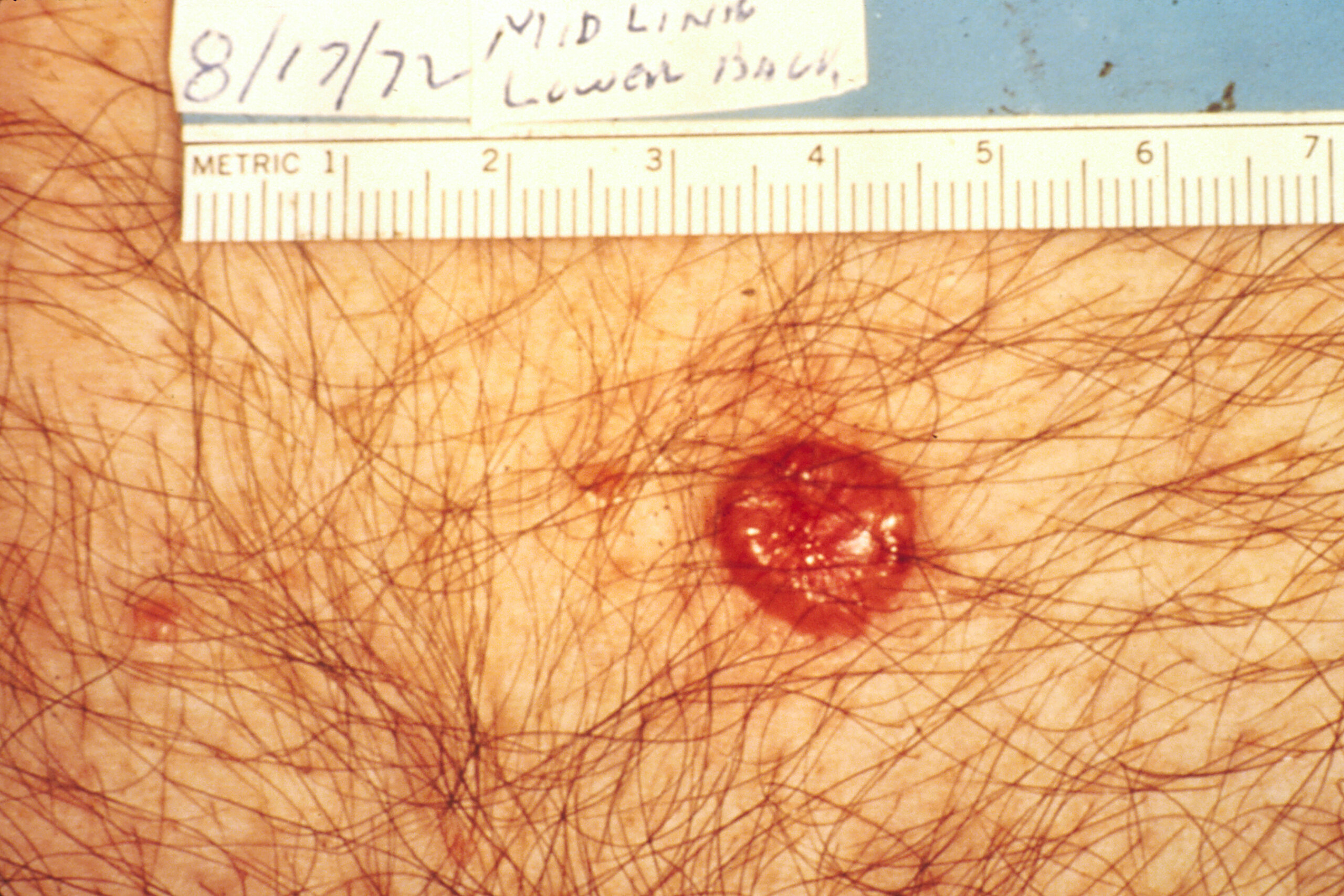
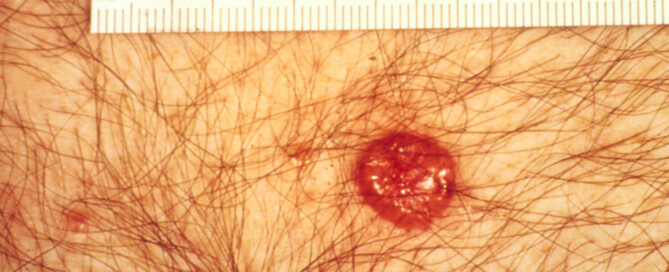
Basal cell carcinoma. Source: cancer.gov
Red dots on the skin usually don’t mean cancer – usually.
But you should get acquainted with your skin and what is normal for it versus not normal, so that if you start seeing reddish dots, you’ll know whether to immediately see a doctor, or just relax and not worry.
Joshua L. Fox, MD, F.A.A.D., Director and Founding Physician of Advanced Dermatology, PC, explains.
What could possibly cause red dots on the skin?
Many things can cause this, and some of those causes are cancer.
Dr. Fox says that red dots have many causes from a variety of skin conditions. Here is a list of the most common:
– Red bumps – can be pus-filled over the face, chest and back: acne
– Reddish raised flat sores: allergic reaction, irritant or allergic contact dermatitis, herpes, malaria, heat rash
– Reddish dome-shaped bumps, appears sprinkled randomly and itchy: insect bites
– Small red dot, larger or bruise-like spots that appear after taking a medicine: allergic purpura
– Red, raised strawberry like appearance: hemangiomas (scary-sounding name, but very harmless; also called angiomas).

Angiomas. Shutterstock/Timonina
Other Causes
– Reddish & flushed appearance around cheeks, chin, forehead and nose: rosacea
– Red, itchy rash that affects the groin area: jock itch, yeast infection, diaper rash in infants
– Expanding, red and slightly itchy rashes over the chest and abdomen: pityriasis rosea
– Scattered pink and red dots when a patient is feeling under the weather: viral infection.
When It Means Skin Cancer…
– Red, scaly, crusted unusual growth on the lip, chin or anywhere on the face: basal or squamous cell carcinoma (below).
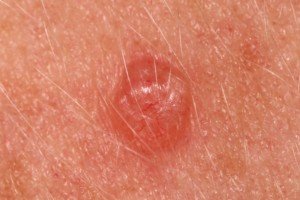
Basal cell carcinoma. Shutterstock/Dermatology11
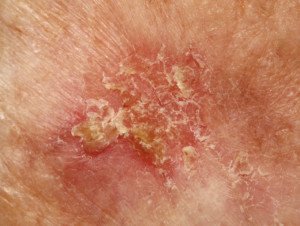
Squamous cell carcinoma. Shutterstock/Dermatology11
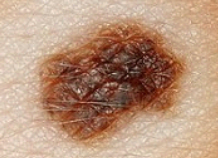
– Reddish, irregular shape and colors: amelanotic melanoma (below)

Melanoma
– Reddish, purplish, dark or black raised spots anywhere that keep growing: Kaposi’s sarcoma
– Rarely a skin cancer can present as this: molluscum
If you are not sure what the red dots on your skin can mean, see a dermatologist immediately. Skin cancer needs to be treated immediately.
Don’t assume the growth is basal cell carcinoma, the “best” kind of cancer to have, since it never metastasizes.
To the layman, a single melanoma (deadliest skin cancer) speck can pass for a basal cell carcinoma.
To play safe, have a dermatologist examine you from head to toe once a year.

In 1987 Dr. Fox founded the AAD Melanoma and Skin Cancer Prevention Program in Queens, NY. He has been chief of dermatology of several major teaching hospitals including Mt. Sinai Hospital of Queens.
Lorra Garrick has been covering medical, health and personal security topics for many years, having written thousands of feature articles for a variety of print magazines and websites. She is also a former ACE-certified personal trainer.

How Does Anxiety Cause Dry Mouth?

Don’t confuse thirst with dry mouth, even if you suffer from anxiety.
Don’t confuse thirst with dry mouth, even if you suffer from anxiety. It’s easy to cast off a case of dry mouth to dehydration.
I have had two bouts of dry mouth and was interested in knowing what physiological mechanism triggered these events, especially since the second episode occurred soon after my mother was admitted to the cardiac wing after complaining of chest pains.
My first case of dry mouth happened spontaneously, with no undue anxiety present.
My dentist said that sometimes the condition develops because mineral deposits block the salivary glands.
On the third day of this annoyance, I placed a lemon rind bit in my mouth, stimulating salivation, and the increased salivation washed away the mineral deposits.
However, my second bout of dry mouth, which lasted only several hours, was obviously linked to extreme anxiety.
I doubt that mineral deposits would have blocked my salivary glands for only several hours.
This time I didn’t use a lemon rind; I was at the hospital. I wasn’t breathing with my mouth open, either. But the dry mouth developed. The anxiety was very pronounced.
Stacey Silvers, MD
“Anxiety and stress wreak havoc on the body,” begins Dr. Stacey Silvers, MD, of Madison ENT & Facial Plastic Surgery in NYC, who is board certified in otolaryngology; one of her specialties is sinus surgery.
“There is an increased amount of stomach acid as a result of stress and anxiety.
“Testing, including my own office tests, has shown acid reflux to make it as high as into the back of the nose.
“Stomach acid is a pH of 2 and can kill off some of the healthy bacteria that we count on to keep our oral cavity healthy and hydrated.”
True dry mouth does not feel like thirst or that “parched” feeling you get when working in the hot sun.
It feels like cotton is in your mouth, and you can drink all the chilled water you want, and your oral cavity will still feel dry, as though the inside of it is lined with cotton. It’s a weird sensation.
Nevertheless, Dr. Silvers explains, “Dehydration and poor nasal breathing are other contributing factors.
“I have many patients who have chronic nasal obstruction due to severe allergies or deviated septum.
“Oral breathing is common and often worse at night. It is easy to get dehydrated and suffer with oral complaints when not breathing well through the nose.”
Is there a way to tell the difference between true dry mouth and thirst?
I believe so. Just imagine a tall glass of your favorite icy cold beverage.
If it excites you, you’re thirsty. If it does nothing for you, you have dry mouth.
However, a person with true dry mouth can also become thirsty.
If after guzzling your favorite beverage, you still have that strange cottony feeling in your oral cavity, you probably have dry mouth, which can be a symptom of Sjogren’s syndrome, as well as a side effect from some medications, including, says Dr. Silvers, sleep aids, antihistamines, antidepressants/anti-anxiety, anti-convulsants, prescription painkillers and diuretics, among others.
 An NYC expert in ear, nose and throat care, Dr. Silvers has been named among America’s Top Physicians and Surgeons in facial plastic surgery and otolaryngology numerous times since 2003. Dr. Silvers is an expert in the field of minimally invasive rhinology, resolving patients’ breathing and sinus problems with simple in-office procedures.
Lorra Garrick has been covering medical, fitness and cybersecurity topics for many years, having written thousands of articles for print magazines and websites, including as a ghostwriter. She’s also a former ACE-certified personal trainer.
.
Top image: ©Lorra Garrick

Sphenoid Sinusitis Headache Symptoms vs. Aneurysm Headache

A most severe headache can be caused by a ruptured aneurysm as well as from sinusitis, particularly the sphenoid type.
A ruptured aneurysm, and sinusitis, are unrelated medical conditions, though a person by sheer coincidence can suffer from both maladies at the same time.
A ruptured aneurysm will almost always cause a horrible headache.
But the “worst headache of your life” can also result from sphenoid sinusitis.
Does the leaking/ruptured aneurysm headache differ from one caused by sinusitis?
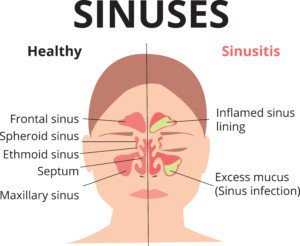
“An acute infection can cause a debilitating headache on the top of the head,” says Dr. Stacey Silvers, MD, of Madison ENT & Facial Plastic Surgery in NYC, who is board certified in otolaryngology; one of her specialties is sinus surgery.
This is the typical location of the sinusitis pain.
Shutterstock/Ekaterina Siubarova
Depending on the sinuses that are affected, the pain can also be over the cheeks, between the eyes and over the forehead.
Dr. Silvers continues, “Patients have been admitted to the emergency room and often observed in the hospital for testing to rule out an aneurysm” that has ruptured.
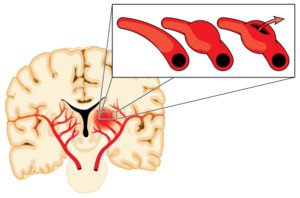
Depiction of an aneurysm. Shutterstock/Blamb
A head pain arising from a burst aneurysm is often described as “thunderclap,” and is usually sudden in onset.
I say usually, because a slowly leaking aneurysm can also cause a less severe headache.
“Patients will have an MRI and MRA, and while (ruptured) aneurysm is often ruled out, the only finding on the MRI may be inflammation of one or both of the sphenoid sinuses,” says Dr. Silvers.
So one thing to keep in mind, regarding a ruptured aneurysm headache, is that it is almost always sudden, hence the term “thunderclap.”
However, how often is a headache the only symptom of a ruptured or leaking aneurysm?
In the case of a ruptured aneurysm, the headache (which is typically of alarming proportions) may be “associated with change in mental status, loss of consciousness, seizures or other focal neurological deficits,” depending on location, explains Carol Redillas, MD, founder of Crescent City Headache and Neurology Center.
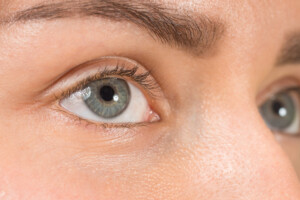
Depending on a leaking aneurysm’s location, a condition called ptosis (drooping eyelids) will occur. Sinusitis can also cause eyelid ptosis.

Ptosis: drooping eyelid
Another telltale sign of a possible (note: possible, not definite) ruptured aneurysm is if the headache suddenly slams you in the midst of physical exertion (especially while holding one’s breath).
But a physical exertion headache isn’t necessarily a ruptured aneurysm. Another condition of the eye, called miosis, can result from a leaking aneurysm.
Sinusitis will not cause this, however. An aneurysm will typically leak before it ruptures, says Dr. Redillas.
Dr. Redillas says that a ruptured aneurysm is suspected when a headache is sudden, severe, and unprecedented, and especially if it’s associated with ptosis, miosis and/or neck stiffness, along with cognitive impairment.
This life-threatening condition needs to be immediately ruled out by medical tests when a thunderclap headache occurs.
“If an MRA or a 4 vessel angiogram is negative for an aneurysm and the same headache recurs,” says Dr. Redillas, “then you can be rest assured that your headache is most likely benign.”
A telltale sign (but not always) of the sinusitis headache is that it moves with you as you change position; or, to put it another way, it worsens when you lean or stoop over, squat, do jumping jacks or even milder aerobics, trot down some steps, etc.
It may also be accompanied by nasal congestion or fever, but sometimes the pain stands alone.
Do Not Attempt to Self-Diagnose Headaches
… but do keep a detailed journal of when they occur, any precipitating factors, character of the pain, caliber of the pain, location, etc., so that you can present this information to a doctor.
In the event of sinusitis, Dr. Silvers explains that decongestants and antibiotics are used to relieve the symptoms.
She says, “When the medical management fails, it may be necessary to open the door of the sinus through endoscopes to improve the natural opening in the sinus, culture the sinus drainage, and flush out the infection.”
An NYC expert in ear, nose and throat care, Dr. Silvers has been named among America’s Top Physicians and Surgeons in facial plastic surgery and otolaryngology numerous times since 2003.
Dr. Redillas served as the head of the headache division at Ochsner Medical Center for over 10 years. In addition to headaches, she also treats a variety of other neurological conditions.
Lorra Garrick has been covering medical, fitness and cybersecurity topics for many years, having written thousands of articles for print magazines and websites, including as a ghostwriter. She’s also a former ACE-certified personal trainer.

Metal Taste in Mouth: Every Cause, Every Solution

Is a metal taste in your mouth driving you mad?
A metal taste in the mouth is no laughing matter, as it can sometimes seem as though you’ve been sucking on a block of iron.
Though a metallic taste in the mouth can sometimes easily be explained by a recent nosebleed, there are other instances of metal taste in the mouth that have no apparent cause, and thus, no apparent solution.
All the Possible Causes — and There Are Many — of a Metallic Taste in Your Mouth
Once you know what’s causing this very unpleasant situation with your mouth, you’ll know what the solutions are.
For starters, medications can cause a metallic taste in the mouth, says Steven Y. Park, MD, Clinical Assistant Professor of Otolaryngology (ear, nose and throat) at New York Medical College.
“One of the most common medications is azithromycin or clarithromycin, or any of the macrolide antibiotics,” says Dr. Park, author of the book, “Sleep, Interrupted: A physician reveals the #1 reason why so many of us are sick and tired.”
Dr. Park adds, “Chemotherapy and anesthesia medications can do this as well.”
Can nutritional supplements be a culprit?
“Certain vitamins, especially those containing calcium or iron, can cause a metallic taste.”
What is the most serious disease that a metal flavor in the mouth can be a symptom?
Dr. Park explains, “Any systemic medical condition that upsets your body’s state of balance can cause you to have a metallic taste, just like weakness, headache, or pain.
“Think of the bad taste as a form of mild pain or a distorted sensation of the taste buds.
“If your nerve endings are hypersensitive (due to stress or illness), then they’ll over-react or react inappropriately.
“The same goes with the tongue, since it has three types of nerve endings: taste, sensation, motor.
“There are theories that propose that the perception of a bad/metallic taste is actually your brain’s misperception, kind of like ringing in the ear.”
What is the most common cause for this most annoying situation?
“I’m not aware of any studies rank ordering this condition, as it’s not a very well studied condition.”
How long would the metallic taste in the mouth have to persist before you recommend the person see a physician?
Dr. Park says, “A few months, at most.”
Can metal taste in mouth be caused by cancer?

Shutterstock/pathdoc
Dr. Park explains, “Any type of growth or trauma can irritate, displace, distort or grow into the nerve bundle that supplies taste. Even benign growths can do this too.
“There also can be general medical issues such as neurologic conditions, either in the tongue or even the brain, that can cause these symptoms.
“Just like pain, fever, or nausea, a metallic taste is not indicative of any specific medical condition.
“It’s only a symptom that can arise from various medical conditions.
“Overall, the chances that it’s due to cancer is very small. This is why a thorough history and upper airway exam is very important.”
Can food allergies cause this?
“Nothing in particular, but anything that upsets the body’s balance can bring on this symptom.
“B type vitamin deficiency has also been implicated. In severe cases, the metallic taste can turn into pain.”
Atlantadentist.com lists the following as possible causes for a metal taste in the mouth:
Gingivitis
Periodontitis
Tooth infections
Peptic ulcer
Lead poisoning
Bleeding gums
Too much dietary iron
Kidney disease
Copper overdose
Selenium toxicity
Iodine intoxication
Mercury poisoning
Atlantadentist.com also states: “When two types of metals are used in two different dental fillings a battery can be created. Some believe that it’s due to the mercury leakage from dental silver/mercury fillings. High protein diets can cause benign dietary ketosis.
“This has also been associated with a metal taste. It has also been associated with B 12 deficiency, zinc deficiency, Bell’s palsy, Strep throat and Sjogren’s disease.”
A cranial cerebral spinal fluid leak can also cause a metal taste in the mouth.
If the cause of the metallic taste hasn’t been figured out, what should a person do?
Dr. Park explains, “There isn’t one reason for metallic taste. A number of different conditions (including dental) can cause it.
“In general, you need to look over your entire medical history and overall state of health.
“It’s also important to make sure you’re sleeping well, as poor sleep can aggravate these type of conditions.
“Checking for any nasal or sinus conditions is also important. Acid reflux is another common condition that can alter your sensation.”
Keep in mind that a metallic sensation in your mouth is not a permanent situation, and it will likely resolve within a few months, if not a few weeks or even several days, especially if you’ve pinpointed the cause.
More on cerebrospinal fluid leak.
 Dr. Park practices integrative medicine and surgery, and has helped thousands of people breathe better and sleep better.
Lorra Garrick has been covering medical, fitness and cybersecurity topics for many years, having written thousands of articles for print magazines and websites, including as a ghostwriter. She’s also a former ACE-certified personal trainer.
Sources: atlantadentist.com; cedars-sinai.edu/Patients/Health-Conditions/Cerebrospinal-Fluid-CSF-Leak.aspx

Hoarse Voice in the Morning: Causes and Solutions

Is your voice hoarse when you wake up in the morning?
Why doesn’t drinking fluids get rid of the morning hoarseness?
Don’t believe what you see on TV: People speaking in a crisp, clear voice the moment they awaken.
Few people, if any, have this gift. Awakening with a hoarse voice is human nature and everyone’s voice sound crummy first thing in the morning.
There are several causes of a hoarse voice upon awakening from an extended sleep.
These include a very long “nap” or a sleep cycle that takes place during daylight for nightshift workers.
I asked two ear, nose and throat (ENT) doctors about this annoying phenomenon.
But first of all, we all know that the more you talk immediately after awakening, the quicker the hoarseness in your voice dissipates.
And if you don’t talk at all, the hoarseness will still eventually disappear — if your first words come a few hours later, the hoarseness will almost always be absent.
My question to both physicians applied to healthy people who do not have infections, colds, vocal cord nodules, reflux, other illness, and who are not heavy smokers or have some other medical condition that causes a hoarse voice.
Steven Y. Park, MD, explains that the hoarse morning voice is caused by stomach juices bathing the throat.
“The simplest way to prevent this or lessen the severity is to eat dinner early (go to bed no earlier than 3-4 hours after eating.),” says Dr. Park, author of the book, “Sleep, Interrupted: A Physician Reveals The #1 Reason Why So Many Of Us Are Sick And Tired.”
Dr. Park continues: “Residual stomach juices can leak up into the throat while sleeping.
“Also, the same applies to alcohol, since alcohol relaxes your muscles, and your juices can come up more easily.
“It also relaxes your tongue muscles, which can cause you to stop breathing and wake up, which not only causes poor sleep, but also forcefully suctions your stomach juices up into your throat.
“All humans are susceptible to this phenomenon to various degrees.”
And that’s not all when it comes to voice hoarseness.
“Morning hoarseness may be caused by mucus accumulation on the vocal cords, and drying of the mucosa (lining) of the vocal cords,” explains Mark Persky, MD, Professor and Chairman, Department of Otolaryngology-Head and Neck Surgery, Beth Israel Medical Center.
What’s ironic is that, before I even questioned the doctors, I had speculated that the chief cause of a morning hoarse voice was “mucus coating the vocal cords.” My mother is right: I should have been a doctor!
Dr. Persky adds that the situation “may be made worse by snoring and during dry weather conditions.”
Now, why doesn’t drinking fluids help ease the hoarse voice?
Many people may think this is an obvious solution, but it won’t have immediate effects “because the swallowing anatomy is separate from the airway where the vocal cords are located,” says Dr. Persky.
However, he continues, “Eventually, fluids absorbed by the body will help hoarseness if it is secondary to drying of the mucosa, although the response will be delayed.”
Can awakening with a hoarse voice be outright prevented?
No. But it can be minimized by using a humidifier in the room to help prevent vocal cords from drying.
Dr. Persky, like Dr. Park, agrees that alcohol should be avoided in the several hours preceding sleep, but also because alcohol is a diuretic and causes the body to lose fluids, which will promote drying.
Dr. Persky says this rule also applies to caffeine.
So upon awakening, what can a person do to get rid of the hoarse voice?
Dr. Persky explains, “Gently clearing the throat of any mucus accumulation will help and well as taking fluids, which will eventually ease vocal dryness.”
The reason fluid intake is still a good idea is that the liquids will get absorbed throughout the body, and this will moisten up the dried vocal cords.
But an immediate response from fluid intake will not happen: Remember, the airway for swallowing fluids does not include the vocal cords.
Finally, “Gargling with a mild saltwater solution will also sooth the throat and help to clear mucus.”
Dr. Park practices integrative medicine and surgery, and has helped thousands of people breathe better and sleep better.
 Dr. Persky’s specializations and clinical interests include cancer and tumors of the head and neck, and skull base, plus vascular tumors.
Lorra Garrick has been covering medical, fitness and cybersecurity topics for many years, having written thousands of articles for print magazines and websites, including as a ghostwriter. She’s also a former ACE-certified personal trainer.
Top image: Shutterstock/Marius Pirvu

Salty Taste in Mouth: Causes, Solutions

A salty taste in your mouth has a very interesting and likely cause.
Many people are bothered by a salty taste in their mouth, in the absence of having eaten any spicy foods, and this strange sensation may be persistent, on and off, or more of an occasional issue.
Nevertheless, a mysterious salty taste in the mouth is very annoying, and many people are affected by it.
If you have a salty taste in your mouth, you are not imagining this.
Something really IS causing this experience.
“Patients can have a salty taste in their mouth from a postnasal drip,” begins Jordan S. Josephson, MD, FACS, ear, nose and throat specialist; director of the New York Nasal and Sinus Center, and author of “Sinus Relief Now.”
Dr. Josephson continues, “Typically a person has one to two liters of mucus that they produce in their nose and sinuses, which gets passed into their throat and then swallowed each day.
“The mucus is part of the filtration system of the nose and sinuses and cleans the air that we breathe of bacteria, virus, fungus, pollutants and chemicals.
“So everyone has a postnasal drip and this is an important protective mechanism.”
And amazingly, normal people don’t even realize that they are swallowing a liter to two of mucus.
However, when allergies, infection or inflammation occur, the mucus changes consistency and becomes thick.
Plus, the pH changes and that is when the problems start and the patient notices the drip.
And this can be the cause of the salty taste in your mouth, states Dr. Josephson.

“In this circumstance the salty mucus coats their taste buds, causing them a salty taste.”
So now you see how this problem has nothing to do with what you’ve been eating or drinking.
Dr. Josephson continues: “The salty taste is most likely secondary to allergy and/or sinus problems. These are the most common causes, and if you suffer from this symptom you are not alone.
“Sinus problems are very common and over 40 million people in the United States suffer from chronic sinusitis.
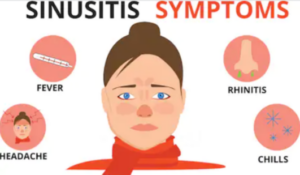
Image: Kaia Ugan
“Worse, there are many people who are debilitated with sinus problems.”
Another cause of drainage into the sinus cavity is a CSF leak, which can cause a salty taste.
Solution to Salty Taste in the Mouth
“The treatment consists of making an accurate diagnosis to the reason causing the change in the mucus (postnasal drip) and then formulating a targeted treatment plan to return the mucus to near-normal consistency,” says Dr. Josephson.
“The problem may not be as straightforward and simple as one may think.
“It is important for the patient with this problem to get to a physician who is thorough in his/her history taking and physical examination.
“You should see a board certified otolaryngologist (ENT doc) who is well versed in taste and smell and sinus issues.”

Dr. Josephson has taught hundreds of physicians the technique of functional endoscopic sinus and nasal surgery, and was an instructor on the faculty at the Johns Hopkins Medical Center.
Lorra Garrick has been covering medical, health and personal security topics for many years, having written thousands of feature articles for a variety of print magazines and websites. She is also a former ACE-certified personal trainer.

Why You Smell Phantom Cigarette Smoke When Nobody’s Smoking

Nobody around is smoking, so why do you smell cigarette smoke?
Is this crazy or what? There are some explanations for this phenomenon.
“There are many reasons that cause people to have phantom smells and/or bad smells (known as parosmia),” explains Jordan S. Josephson, MD, FACS, ear, nose and throat specialist; director of the New York Nasal and Sinus Center, and author of “Sinus Relief Now.”
Unfortunately, some causes of smelling cigarette smoke when nobody is smoking are very serious.
“These phantom smells can be caused by damage to the olfactory nerve by chemicals, or infection with a virus or bacteria, or trauma.
“A tumor of the brain or the olfactory nerve can also cause phantom smells. Or it can be caused by the infection itself.
“And the resulting sensation is then confused in the brain with the smell of cigarette smoke.”
More About Parosmia
Dr. Josephson notes, “The bottom line is that many people may get this sensation at one time or another. If it comes and goes, then again, there is probably nothing to worry about.
“However, there are a few conditions that can cause parosmia, and this lasts longer than a fleeting moment, or recurs more frequently, and this is something that needs to be looked at carefully.”
Why is cigarette smoke usually the phantom smell?

Shutterstock/Slava Dumchev
“The parosmia is often described like the smell of smoke or cigarette smoke or like something that is burning,” says Dr. Josephson.
“Overall this symptom is poorly understood and we don’t know why people relate this to cigarette smoke.
“It may be that the neurologic signals sent to the brain by the damage is closest to what we have learned is the smell of cigarette smoke or something burning.”
If one has parosmia, when should he seek medical attention?
“If the parosmia lingers, worsens and does not get better or it occurs with increasing frequency, you should probably see a board certified otolaryngologist and a neurologist and get studies to evaluate the cause of this problem.
“The good news is there most likely is a solution for most of these sufferers.”
What is it about phantom cigarette smoke and being alone in a car and nobody’s been puffing tobacco?
“Many people report that this sensation of parosmia is brought on by dry heated air. That is probably why many people report this to occur in the car because of the heating system in the car blowing dry air.
“Boiling water and forced hot air from a furnace have also been reported by many patients to induce this sensation as well.
“It is probably that there was damage to the nerve, and the heat causes the nerve to fire and cause this sensation of parosmia. However, this is not well understood.”
Other causes of smelling cigarette smoke are infections that can invade the sinuses or throat — such as COVID -19. These can harm the nerves that pick up scents.
Dr. Josephson explains, “This is usually following a sinus infection or an upper respiratory tract infection.”
He continues, “If it is a bacterial sinusitis it needs to be treated with antibiotics, irrigation with saline and topical steroid sprays.
“Furthermore, viruses that attack the olfactory nerve or taste nerve can lead to this sense of something burning.
“Migraines can also be related to an aura that brings on the sensation of something burning or a smell described like there is cigarette smoke when there is none.”
If you continue to smell cigarette smoke, Dr. Josephson urges a comprehensive workup which includes a smell test and CAT scan.
“Then appropriate treatment has to be instituted. And the cause may be multifactorial and therefore the treatment may need to be multifaceted.”
Unfortunately, another cause could be neurological conditions including stroke.
Dr. Josephson has taught hundreds of physicians the technique of functional endoscopic sinus and nasal surgery, and was an instructor on the faculty at the Johns Hopkins Medical Center.
 Lorra Garrick has been covering medical, fitness and cybersecurity topics for many years, having written thousands of articles for print magazines and websites, including as a ghostwriter. She’s also a former ACE-certified personal trainer.

Sweet Taste in Mouth: Causes and Solutions

A sweet taste in the mouth that won’t go away can have one of several serious causes.
This ongoing sensation can leave a person quite unsettled when there’s been no drink or sugary candy to explain it.
“Sweet taste in the mouth can be caused by various medical problems,” says Jordan S. Josephson, MD, FACS, ear, nose and throat specialist; director of the New York Nasal and Sinus Center, and author of “Sinus Relief Now.”
For instance, various metabolic problems can cause a sweet taste in your mouth; for example, diabetes can cause this.
Overall this symptom is poorly understood. We know that diabetes can give a patient a sensation of sweet taste in the mouth.”
The list doesn’t stop there.
Dr. Josephson continues, “Neurologic problems such as a stroke, seizure disorder or epilepsy can cause this problem.
“The patient may not even be aware that they are having a seizure, epilepsy or a stroke because this may be the only symptom.
“Furthermore, virus that attack the olfactory nerve or taste nerve can lead to this sweet taste.
“On the other hand, infection in the sinuses, nose and/or throat, especially with the bacteria pseudomonas, can give you a sweet taste or smell.”
Pseudomonas infection can get extremely serious and even be fatal, but before you get alarmed, understand that this type of infection is rare in healthy individuals.
Another cause is GERD: gastroesophageal reflux disease (heartburn).
In fact, GERD can cause an assortment of symptoms that can trick a person into thinking that something completely unrelated is going on with their body.

GERD. Shutterstock/solar22
GERD is often misdiagnosed as other illnesses, and serious conditions can be mistaken for GERD, such as a looming heart attack.
If this oddball symptom of a sweet taste in your mouth goes unexplained, this is a reason to seek a consultation with a doctor, and to be agreeable to giving a complete medical history and having some exams.
“Together this should provide your physician with the information to determine the exact cause of the sweet taste and thus lead them to the treatment solution that is appropriate for you,” says Dr. Josephson.
An intermittent sweet taste in the mouth is most probably a benign issue, says Dr. Josephson.
It’s when it’s of a persistent nature, and especially if it worsens, that a person should schedule a medical evaluation with a board certified ear, nose and throat specialist.
An appointment should also be made to see a neurologist, so that both physicians can perform a complete workup.
Dr. Josephson has taught hundreds of physicians the technique of functional endoscopic sinus and nasal surgery, and was an instructor on the faculty at the Johns Hopkins Medical Center.
Lorra Garrick has been covering medical, health and cybersecurity topics for many years, having written thousands of feature articles for a variety of print magazines and websites. She is also a former ACE-certified personal trainer.
.
Top image: Freepik/azerbaijan_stockers
Source: emedicine.medscape.com/article/226748-overview
Sore Tongue: The Many Causes and Solutions
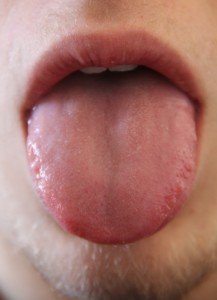
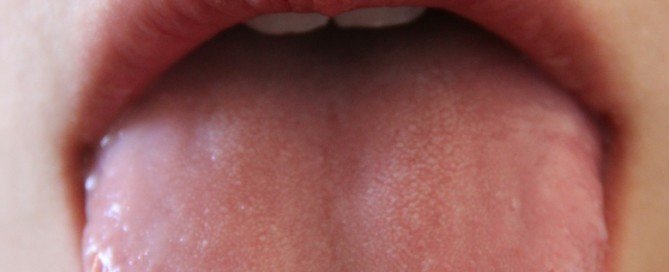
If your tongue has been sore lately, there are many possible causes, some serious.
The first thing to consider, when suffering from a sore tongue, is to see if you’ve recently cut it with sharp food, your teeth, or burned it with hot food or beverages.
However, this kind of tongue soreness should be gone in a few days.
There are quite a few conditions that can cause a sore tongue, says Jordan S. Josephson, MD, FACS, ear, nose and throat specialist; director of the New York Nasal and Sinus Center, and author of “Sinus Relief Now.”
Conditions Causing a Sore Tongue
According to Dr. Josephson, here are just a few possible causes for a sore tongue: a bacterial, viral or fungal (thrush) infection; allergies; and tumors. Thrush can cause white plaque to coat the tongue.
“Sinus infection can lead to oral infection with the same bacteria,” he says.
“Apthous stomatitis can cause irritation, pain and ulcers on the tongue.”
Inflammation of the tongue can be caused by many viruses, and can result in swollen taste buds and ulcers.
Another cause of sore tongue is the herpes virus; this infection will manifest as lesions on the tongue.
If your tongue is sore, have you been subconsciously “chewing” on it?
Perhaps the soreness is related to TMJ, or bruxism: teeth grinding at night.
A sore tongue might mean a person has diabetes or nasal obstruction, the latter leading to breathing through the mouth, which can cause discomfort to the tongue.
Tumors
“Tumors, benign and cancerous, can cause sore tongue and need to be diagnosed early because squamous cell carcinoma, if found at a late stage, has a deleterious prognosis and can metastasize,” says Dr. Josephson.
“Cancer of the tongue is seen more often in smokers and alcohol drinkers.”
Certain foods can even cause a sore tongue, such as citrus and coffee, which contain compounds that can irritate the tongue and taste buds.
Smoking is another possible culprit as far as irritation.
Dr. Josephson explains, “If your tongue is sore and it does not go away, then you need to see a board certified otolaryngologist — head and neck surgeon, as soon as possible to work up the cause and to treat it successfully.
“If you bit your tongue and the soreness goes away in a couple of days, then you probably need not worry.”
Dr. Josephson has taught hundreds of physicians the technique of functional endoscopic sinus and nasal surgery, and was an instructor on the faculty at the Johns Hopkins Medical Center.
Lorra Garrick has been covering medical, health and personal security topics for many years, having written thousands of feature articles for a variety of print magazines and websites. She is also a former ACE-certified personal trainer.