Can Martial Arts Encourage Bullying?

If a child or teen takes martial arts lessons, might this encourage him or her to start bullying other kids?
A parent might think that as a child progresses in martial arts training, they will use their new-found physical abilities to go around bullying classmates or kids in the neighborhood.
In other words, somehow, someway, learning the side kick or upper block will turn young Emma into Evil Emma.
Master Dan Vigil, a former martial arts instructor, was on the receiving end of bullying during childhood.
Vigil knows all about childhood bullying; he was the victim of bullies himself — not one bully here and there, but many classmates on an ongoing basis.
And only when he discovered the discipline and dynamics of the martial arts was he able to put an end to the bullying (without using physical aggression) and go on to develop a healthy self-esteem.
Can martial arts make a bully meaner or turn a nice kid into a mean one?
“It’s possible, but not likely,” says Vigil. “It’s much more likely the reverse will happen. A good martial arts instructor will instill a sense of responsibility for the proper use of their physical skills.”
Bullying behavior is never tolerated in a quality martial arts school.
Kids are taught an art form, a form of self-discipline.
They are not taught to be more psychologically, let alone physically, aggressive.
Even whispering while an instructor is talking is not tolerated.
Students must bow in and out of the dojo (classroom).
They must bow to each other before partner-training, and bow at the conclusion of the drill.
A bully will have no choice but to learn how to work with other kids (and adults) without behaving like a tyrant. He or she will be humbled.
Martial arts training provides an incredible physical outlet for a bully to channel their restless energy.
One hundred kicks, 30 pushups and 50 sit-ups — as a warmup to a class — will go a long way in mellowing out a mean-spirited individual.
The bully may become quite passionate about perfecting the tornado kick, and will be too mentally preoccupied with this to bother with harassing the bookworm in his class.
And the “nerd” who takes up martial arts will certainly learn to walk with more confidence and stand up to the mean kids, but this doesn’t mean they themselves will convert to bully-dom.
“Parents whose children suffer from chemical imbalance or deep emotional issues should speak to their physician prior to engaging in martial arts training,” says Vigil.
“For these parents, it is vitally important they select a school with experience dealing with these kinds of issues.
“You don’t want to arm a child with a violent predisposition with advanced fighting skill.”
Top image: ©Lorra Garrick
 Lorra Garrick has been covering medical, fitness and cybersecurity topics for many years, having written thousands of articles for print magazines and websites, including as a ghostwriter. She’s also a former ACE-certified personal trainer.


Can Martial Arts Change a Bully’s Behavior?

Just what is the cure for bullying behavior?
It just may very well be enrollment in a high-quality martial arts program, especially if the bully’s behavior is for the most part learned.
“It’s possible, yes,” says Master Dan Vigil of the former Dan Vigil’s Academy of Taekwondo in Northville, Mich.
Vigil knows all about childhood bullying; he was the victim of bullies himself — not one bully here and there, but many classmates on an ongoing basis — and only when he discovered martial arts was he able to reverse the bullying (without physical aggression) and develop healthy self-esteem.
“The right martial arts teacher will instill students with more than self-defense. They will teach values like respect, empathy, confidence and restraint.
“Like Uncle Ben told Peter Parker in Spiderman, “With great power comes great responsibility.”
I myself have years of experience in the martial arts. I’ve seen how this art form produces self-restraint and self-containment in very young children.
I’ve witnessed what this does for older kids who’ve been training for several years.
Martial Arts Teaches the Following

Freepik.com
-Respect for others; tolerance for those who are “different.”
This is evident when obese or disabled students are treated with kindness rather than snickering, even if they struggle with their training.
There are few places other than a martial arts classroom where an obese student will struggle due to their size, without a single chuckle or sneer from other kids in the room.
-A quality martial arts instructor will not tolerate arrogant or taunting behavior in students, yet at the same time, will utilize a controlled temperament to prevent this kind of behavior: a calm yet authoritative approach.
-Kids as young as five or six are trained to stop fidgeting and sit still and listen as the instructor speaks.
-Kids with higher ranks are required to take newcomers under their wing; this develops empathy.
-The school is a sanctuary; for bullies who come from dysfunctional homes, the martial arts setting is a place they can feel at ease and not feel they must be mean to prove themselves or feel in control.
-When a child wins a tournament trophy that’s almost as big as he or she is, they get an ego boost that no amount of bullying of weaker classmates can produce.
Martial arts tournaments are all about showing respect to the judges and maintaining self-control.
And don’t be led astray by movies in which bullies know karate, such as in “The Karate Kid.”
Of course the bullies in movies know martial arts; this makes the movie more entertaining.
If your child is a bully, or you fear he or she is at risk for this, do not hesitate to enroll your child in a high-quality martial arts school.
Do your homework very carefully, as some schools are “black belt factories” and promise black belts in 90 days.
You can’t master martial arts in 90 days any more than a novice can master tennis in 90 days.
“One thing is for certain; training in martial arts will never create a bully,” says Vigil.
Lorra Garrick has been covering medical, fitness and cybersecurity topics for many years, having written thousands of articles for print magazines and websites, including as a ghostwriter. She’s also a former ACE-certified personal trainer.

Why Do Some Teachers Take the Bully’s Side?

Some victims of intense bullying are simply never believed by their teachers, even though they’ve complained several times.
The psychological harm of bullying is bad enough without having it compounded by a teacher refusing to believe the victim when the victim reports the problem.
I was inspired to write this article after reading a blog in which a girl kept complaining to her teacher that a boy kept jabbing her with a sharpened pencil.
The teacher kept replying something like, “Oh come on, Jack’s too nice to do something like that!”
This type of scenario has also happened to parents of the victims. When the parent brings it to the teacher’s attention, the teacher says something like, “Jennifer’s too nice of a girl to ever do something like that.
“I’m sure there’s some kind of misunderstanding. Everyone likes Jennifer. She’s so sweet to all the teachers!”
The Jacks and Jennifers are never caught in the act by the teachers. Or are they, and ignored?
“Bullying often occurs in areas with little supervision, when teachers are not able to witness it,” says Rashmi Shetgiri, MD, MSHS, medical director at Pediatric Primary Care Clinic in Los Angeles whose research interests include bullying and youth violence prevention.
Thus, the teacher may not be aware. But then again, this doesn’t explain why the teacher turns a blind eye when the problem is brought to their attention.
It’s one thing for a teacher to tell the bully victim or the parents, “Gee, I’m surprised that John’s behaving that way, but I’m going to keep a very close watch on him from now on, and if I see anything suspicious, I will intervene.”
And it’s another thing for a teacher to insist, “John? A bully? No way! He’s one of the most polite students I’ve ever had! I think you’re just being a little over-reactive.”

“Bullies are also a very heterogeneous group,” continues Dr. Shetgiri. “Some bullies are aggressive, or may lack empathy for their victims, whereas others have high self-esteem and highly developed social skills and interact very well with adults, including teachers.”
And if the bully is one of the school’s football heroes, well, this certainly plays much in their favor.
“Studies also show that provocative or aggressive victims can be impulsive, more anxious and less popular than bullies,” says Dr. Shetgiri. “They may have poor social skills and may be less well-liked by peers and teachers.”
Imagine that a popular, bubbly girl who’s on the cheerleading squad and soccer team, with attractive cascading hair and a pretty face, a cute figure and stylish clothes, reports being bullied to a teacher.
Now imagine that a frumpy-looking, loner-type girl who eats by herself during lunch and has no involvement in extra-curriculars, complains of bullying.
The same teacher may believe both, but whom is the teacher more likely to take seriously and assist?
 Dr. Shetgiri is particularly interested in prevention of violence among Latino youth, the implementation of primary-care-based bullying and violence prevention strategies, and health outcomes for children exposed to violence and abuse.
Lorra Garrick has been covering medical, fitness and cybersecurity topics for many years, having written thousands of articles for print magazines and websites, including as a ghostwriter. She’s also a former ACE-certified personal trainer.
.
Top image: ©Lorra Garrick

The Harm of Non-Physical Bullying: Truth or Hype?

Is there really harm from verbal or non-physical bullying, or is this just a lot of hype and overreaction?
It’s funny how the people, who sneer at the complaints by victims, often were either:
1) once bullied themselves but one day punched out the bully and any subsequent one, or
2) were never bullied and instead were either the bully or were neither victim nor perpetrator.
Relentless, ongoing harassment is not the same as occasional “teasing.”
Nor does chronic rejection and insults from one’s classmates toughen up the victim and make them a better person — even though some victims, in adulthood, claim that all the bullying taught them how to be more compassionate towards others.
“There are significant negative short- and long-term consequences for bullies and victims,” says Rashmi Shetgiri, MD, MSHS, medical director at Pediatric Primary Care Clinic in Los Angeles whose research interests include bullying and youth violence prevention.
“Victims of bullying may experience anxiety, depression, poor school performance, school avoidance, and complaints such as headaches, abdominal pain, bedwetting, and difficulty sleeping.”
Things that happen to someone in childhood (which includes the high school years) can literally shape the brain and permanently impact the mind and thought processes, including how that person feels towards other human beings.
“Long-term consequences may include low self-esteem, dropping out of school, and psychosocial problems as adults,” says Dr. Shetgiri.
Why is this so difficult for some people to understand?
Think about it: During your formative years, when your psyche is being constructed, you’re continuously exposed to classmates who taunt you, say ugly things to you, exclude you, laugh at you, complain when you’re assigned to work with them in a group, etc.
By the time you graduate, you’ll be feeling like a total loser.
Now how is this going to motivate you to reach out to other human beings?
The fear of being despised for just sharing the same room with someone will constantly be looming.
Years of asking yourself, “Why does everyone make fun of me?” has a way of permanently damaging one’s self-esteem and social skills.
If you still believe that the negative impact of non-physical bullying is way overblown, imagine trying to adjust to a workplace in which many of your coworkers are constantly heckling you about your clothes, religion, skin color, body type, the way you walk, talk, etc.
Imagine that every time you slip up on the job, several coworkers loudly jeer at you and call you foul names. You wouldn’t last there a week and you know it. Or, you’d sue!
“One study of school shootings in the 1990s found that almost 20% of perpetrators of these shootings had been bullied,” says Dr. Shetgiri.
If just one racial slur on the job in the adult workplace should not be tolerated, how dare anybody insist that years of being mistreated in the school setting is just a normal part of growing up?
It’s the “bully-victims, children who are both bullied and bully others, who are at the greatest risk for problems that may include depression, anxiety, substance use, and disengagement from school,” says Dr. Shetgiri.
Dr. Shetgiri is particularly interested in prevention of violence among Latino youth, the implementation of primary-care-based bullying and violence prevention strategies, and health outcomes for children exposed to violence and abuse.
Lorra Garrick has been covering medical, fitness and cybersecurity topics for many years, having written thousands of articles for print magazines and websites, including as a ghostwriter. She’s also a former ACE-certified personal trainer.
.
Top image: Freepik.com/ pch.vector

Is the Deadlift Safe for Kids?

Should kids perform deadlifts or is this dangerous?
The better question is: Is there anything intrinsic about the motion of deadlifting that would make it harmful to a child’s body?
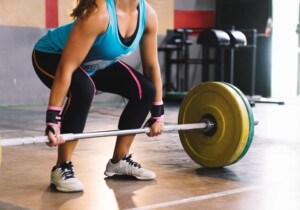
The answer to that question is NO. There is nothing inherent about the deadlift exercise that makes it unsafe for kids.
However, what’s unsafe is if kids perform deadlifts without supervision and proper instruction.
This rule applies to any physical activity that they participate in, including bowling, golf and archery, all of which offer potential for serious injury.
Kids have a way of getting into trouble when not supervised. But this doesn’t automatically bar them from doing a multi-joint strength-training exercise.
Kids can get injured doing household tasks such as hauling around heavy garbage bags; they can strain the lower back or injure a shoulder.
A child can throw his back out lifting the family dog or giving piggy back rides to friends. These activities are often done without supervision.
But when it comes to the deadlift, parents perceive this as dangerous for kids because the adults’ imagination of this exercise is that of some 270 pound beast hoisting 800 pounds off the floor, bending the metal bar in the process.
What parents don’t realize is that their children have been performing deadlifts since they learned to walk.
When a young child bends over to pick something up from the floor, then straightens … this motion closely mimics that of the deadlift.

Future powerlifter? Shutterstock/Haurashko Kseniya
The joint actions aren’t textbook perfect, of course, but the general motion is clearly that of deadlifting.
Ever tell your child to take the rubbish out? Depending on the shape of the trash container, he may end up doing a deadlift to get it off the floor and then set it down at the curb.
What about picking up a loaded laundry basket? This is a deadlift.
Executing this joint motion with a light barbell will encourage more proper form than when haphazardly hoisting up a heavy laundry basket, a playmate, the family dog, a crate of books, heavy luggage, a computer, a box of magazines, a vacuum cleaner, etc.
This isn’t to say that kids will automatically use picture-perfect form when performing a deadlift in the gym.
It’s just that handling a narrow metal bar eliminates some of the imbalances that are present when scooping up a dog, carrying other kids or babies around, lifting up that crate of books, etc.
Kids still need intense, thorough instruction in proper form when it comes to the deadlift. So do adults! The rule of textbook form applies to people of all ages.
Will deadlifting damage children’s growth plates or developing tendons and growing muscles?
No. This exercise is non-impact and does not involve twisting, torque, erratic motions or unnatural ranges of motion.
In a deadlift, the legs remain virtually immobile, eliminating potential for sprained knees or ankles, shin splints, broken bones and stress fractures.
Freepik.com
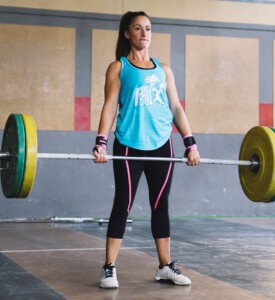
The arms remain fixed and straight, eliminating potential for wrist, elbow and shoulder injuries. And don’t even think of head injuries or collision-related injuries.
It’s actually safer for kids to perform deadlifts (with adult supervision and proper form) than it is for them to engage in competitive running, soccer, youth football, basketball, Little League pitching (can damage growing shoulder joints), gymnastics, skiing, wrestling, and the most injury-causing (percentage-wise) activities of all:
1) Activities involving wheels (bicycling, skating, scooters, skateboards, wagons)
2) Playground equipment. Every year in the U.S. about 200,000 children are treated in emergency rooms for playground-related injuries!

Freepik.com, pressfoto
Don’t think that these activities are most dangerous because so many children do them. I reiterate: Percentage-wise, these activities are the most dangerous for kids.
And if you had to choose between cheerleading and deadlifting for your adolescent or teen daughter, go for the deadlifting, as cheerleading is currently the most dangerous sport for this demographic.
Performing deadlifts will not stunt growth. Smoking will. Lifting weights will discourage youth from smoking.
Maximum height is determined by genetics, and a person can fall short of this from bad health habits.
Lifting weights encourages more production of human growth hormone. This won’t make your child, who deadlifts, become a giant.
It will simply mean that he or she won’t be shorted on his genetically determined growth potential.
 Lorra Garrick is a former personal trainer certified through the American Council on Exercise. At Bally Total Fitness she trained women and men of all ages for fat loss, muscle building, fitness and improved health.
.
Top image: Freepik.com
Sources regarding the most dangerous sports and physical activities for kids:
sciencedaily.com/releases/2011/01/110127110709.htm
sciencedaily.com/releases/2008/05/080522072325.htm
sciencedaily.com/releases/2008/08/080811200423.htm
sciencedaily.com/releases/2008/04/080404114431.htm
sciencedaily.com/releases/2007/10/071004084045.htm
sciencedaily.com/releases/2011/04/110404161714.htm
newswire.ca/en/releases/archive/May2010/31/c7999.html
tonganoxiemirror.com/news/2011/apr/27/5-questions-playground-safety/

Best Discipline for Kids: Spankings, Timeouts or Pushups?

What is the best discipline for kids: spankings vs. timeouts or … pushups?
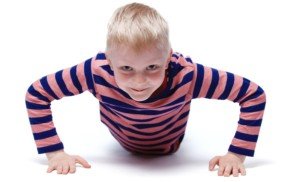
Pushups might not be a bad idea, considering that one day, I witnessed a 10-year-old boy discipline HIMSELF with pushups.
His infraction?
He interrupted two adults (I was one) in conversation, then promptly dropped to the floor and knocked off pushups.
Of course, this boy had no problem doing the pushups; he had a black belt in karate.
But he did enough to get fatigued. Karate training itself is a marvelous way to instill discipline and self-control in kids.

Shutterstock/Ravil Sayfullin
“I’m punishing myself,” said Brad after apologizing, down on the floor and doing pushups.
In some karate schools, the instructor makes kids do pushups for speaking when they’re not supposed to.
Pushups are generously dolled out in the military as part of mental discipline, not just physical conditioning.
I don’t think it’s a bad idea to make kids do pushups for discipline, and unlike spankings, this classic exercise drill won’t foster aggressive behavior or teach “might makes right.”
But if the parent screams “THAT’S IT! TWENTY PUSHUPS, NOW!” this might make the child feel very negative towards exercise, and when he or she grows up, may completely avoid exercise.
However, if parents use a controlled and take-charge voice to order the pushups (such as how a high-quality martial arts instructor does), then children won’t hate exercise when they’re older; and doing this exercise in gym class or in a fitness class at the health club won’t bring back traumatic memories.
But are pushups more effective for discipline than timeouts or spankings?
If spankings and timeouts aren’t working for discipline, then try pushups. In fact, you may want to reserve the classic spanking as a last resort.
Pushups won’t make kids cry like spankings will, and nobody will likely report you for child abuse if they see you ordering (with a controlled voice) your child to “give me 10.”
While pushups will bring on discipline in kids, they’ll also improve fitness and even boost self-confidence and self-esteem.
Spankings and timeouts won’t do that, but this doesn’t mean you should abandon the timeouts.
Timeouts have not been shown to induce aggression or other maladaptive behaviors.
So what should a parent do to discipline the child who’s become so good at pushups, that the exercise is no longer a challenge?
Shutterstock/Duct
This movement can always be modified to increase difficulty.
- On the knuckles
- On the fingertips
- With one foot in the air
- Bringing a knee towards the chest after each push upwards (great core workout!)
You can start your kids off by having them first work off of their knees until they get stronger.
I’ve had years of experience in the martial arts, and believe me when I say that pushups are a very effective strategy for making children behave without making them feel hostility towards the person in charge.
When kids do this type of exercise, this chest/shoulder/triceps movement really does instill self-discipline.
And even though your child will not realize it at first, pushups will build fitness, strength and self-confidence.
And don’t fret about what strangers will think if they see you disciplining your child by ordering a set of 10 or 20.
I’d be willing to bet that a stranger will come up to you and say, “Hey, that’s a brilliant idea! I’m gonna try that on MY kids next time they act up!”
You can take this concept and broaden it to other forms of exercise, such as mountain climbers, jumping jacks, squat jumps and bear-walking for teaching mental discipline.
Ordering an exercise routine is NOT abuse unless the context is adverse, such as prolonged exertion in the heat without water, or if accompanied by insults and belittling.
Spankings vs. timeouts vs. pushups: You decide.
Lorra Garrick has been covering medical, fitness and cybersecurity topics for many years, having written thousands of articles for print magazines and websites, including as a ghostwriter. She’s also a former ACE-certified personal trainer.
.
Top image: Shutterstock/Cookie Studio

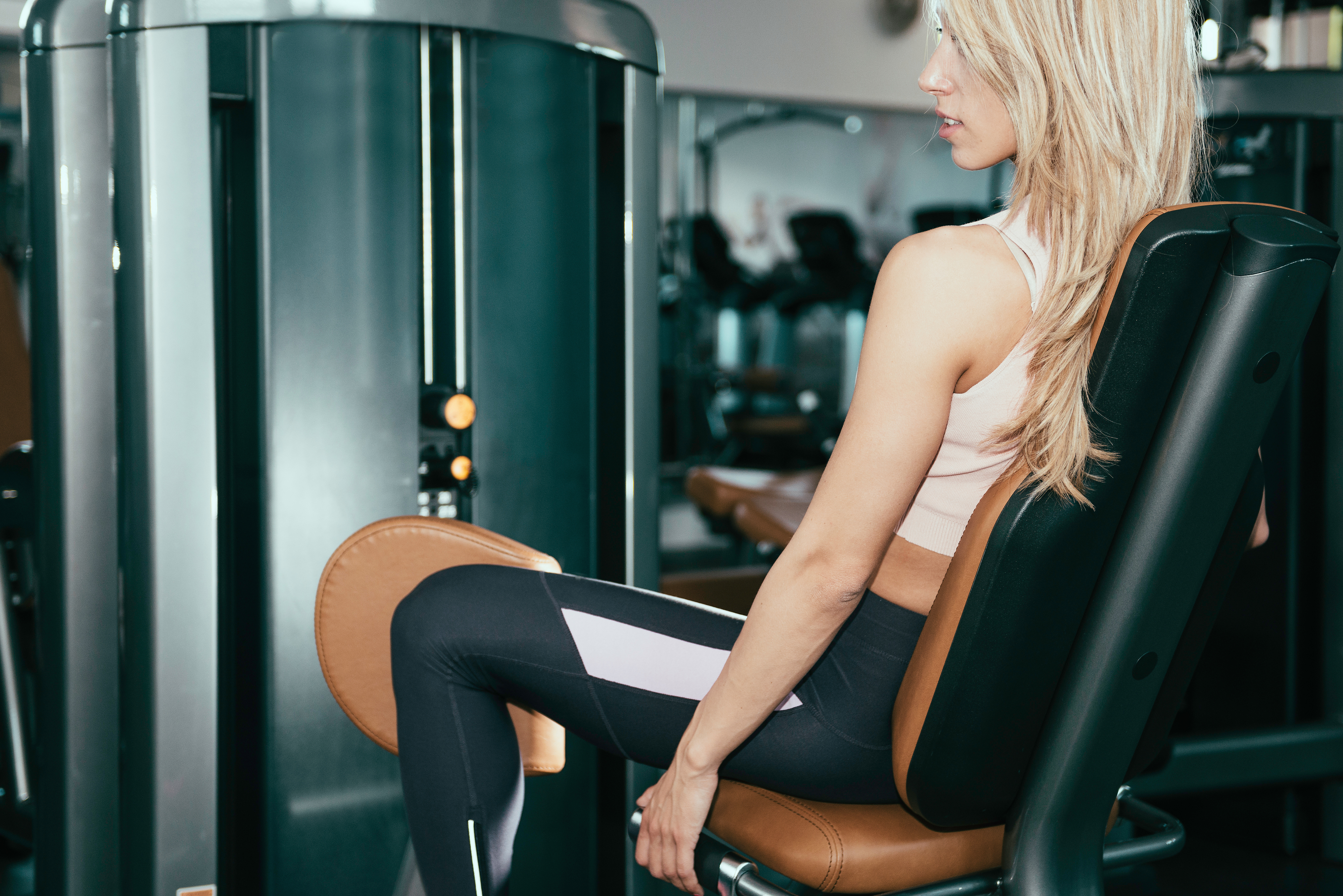
Should Men Use Hip Adductor & Abductor “Girl” Machines?

Do men and the hip adductor & abductor machines belong in the same sentence?
Who says that men shouldn’t use the hip adductor and abductor machines?
Why are the hip adductor and abductor equipment often referred to as “chick” machines?
Well, that’s because almost every user of this equipment is a woman.
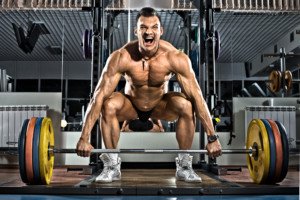
Men prefer deadlifts and squats.
Shutterstock/tankist276
And just because women often camp out at this equipment, doesn’t mean that it’s a show of manli-less for men to use this type of apparatus.
After all, don’t men, too, have adductor and abductor muscles?
The hip abductor and adductor machines are extremely popular with women because collectively, women believe that using this equipment will shave fat off their outer and inner thighs.
This misconception arises in part from the diagrams on some of the equipment models.
The diagrams say “Muscles Worked,” and then show, usually in red color, the portions of the upper legs that the adductor and abductor exercise target.
This leads women to conclude that hip adductor and abductor movements against resistance will trim their inner and outer thighs.
Another reason they fall for this myth is that when you use these machines for a good set, you will indeed “feel it” in your inner thighs (hip adduction) and outer thighs (hip abduction).
So Here’s the Good News …
The hip adduction and abduction machines will not make big thighs slimmer or burn fat off the thighs.
So why, then, would men, who almost never have a fat problem in their thighs, want to use this equipment?
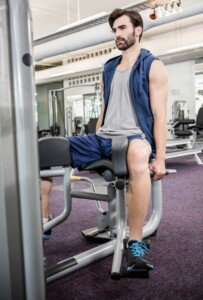
Shutterstock/wavebreakmedia
From time to time, I see men using the hip adductor or abductor machines.
These men certainly don’t have fat thighs or jiggly thighs.
However, why not hit all the muscle groups in the upper legs? Why just hit the quads and hamstrings?
There are six muscles responsible for hip adduction.
This means six muscles that don’t get worked much when doing squats, leg presses, hamstring curls and leg extensions.
If during squats and leg presses, your feet are pointed outward and especially with a wide stance, there will be more hip adductor recruitment.
Same with a Sumo deadlift. But it’s essentially non-existent with hamstring curls and leg extensions.
I’ve seen male bodybuilders using the hip adduction machine — obviously to build mass in their inner thighs.
But not every man wants to bulk up his upper legs.
Another reason for men to use the hip adductor and abductor equipment is simply to strengthen the inner and outer thigh muscles.
These machines isolate the inner and outer thigh muscles.
Another consideration is that hip abduction isolates the gluteus minimus and medius: two butt muscles.
If a man wants to build mass in his buttocks, it would be smart to include hip abduction in his routine — as the last exercise, after the bigger movements that target the butt’s biggest muscle: the gluteus maximus.
Men who ski will find that hip abduction work will enhance their skiing.
And men who inline skate will find that hip abduction will enhance inline skating.
This also serves to keep the outer thigh muscles (which are actually the gluteus minimus and medius here, which are located in the buttocks area rather than the “outer thighs”) conditioned for inline skating in the event a man must cease skating for awhile (such as for bad weather).
Inline skating heavily recruits these smaller butt muscles, and working them on a gym machine will keep you ever-ready to inline skate.
So go ahead, men, get on the hip adduction or abduction machines and don’t worry that other men might think you’re not macho; you just might meet some hot women at these machines.
Slimmer women populate this equipment quite a bit because, though the exercises don’t melt off fat, they DO firm and tone the muscles, which creates tighter legs and buttocks.
Lorra Garrick has been covering medical, fitness and cybersecurity topics for many years, having written thousands of articles for print magazines and websites, including as a ghostwriter. She’s also a former ACE-certified personal trainer for Bally Total Fitness.
.
Top image: Shutterstock/Microgen
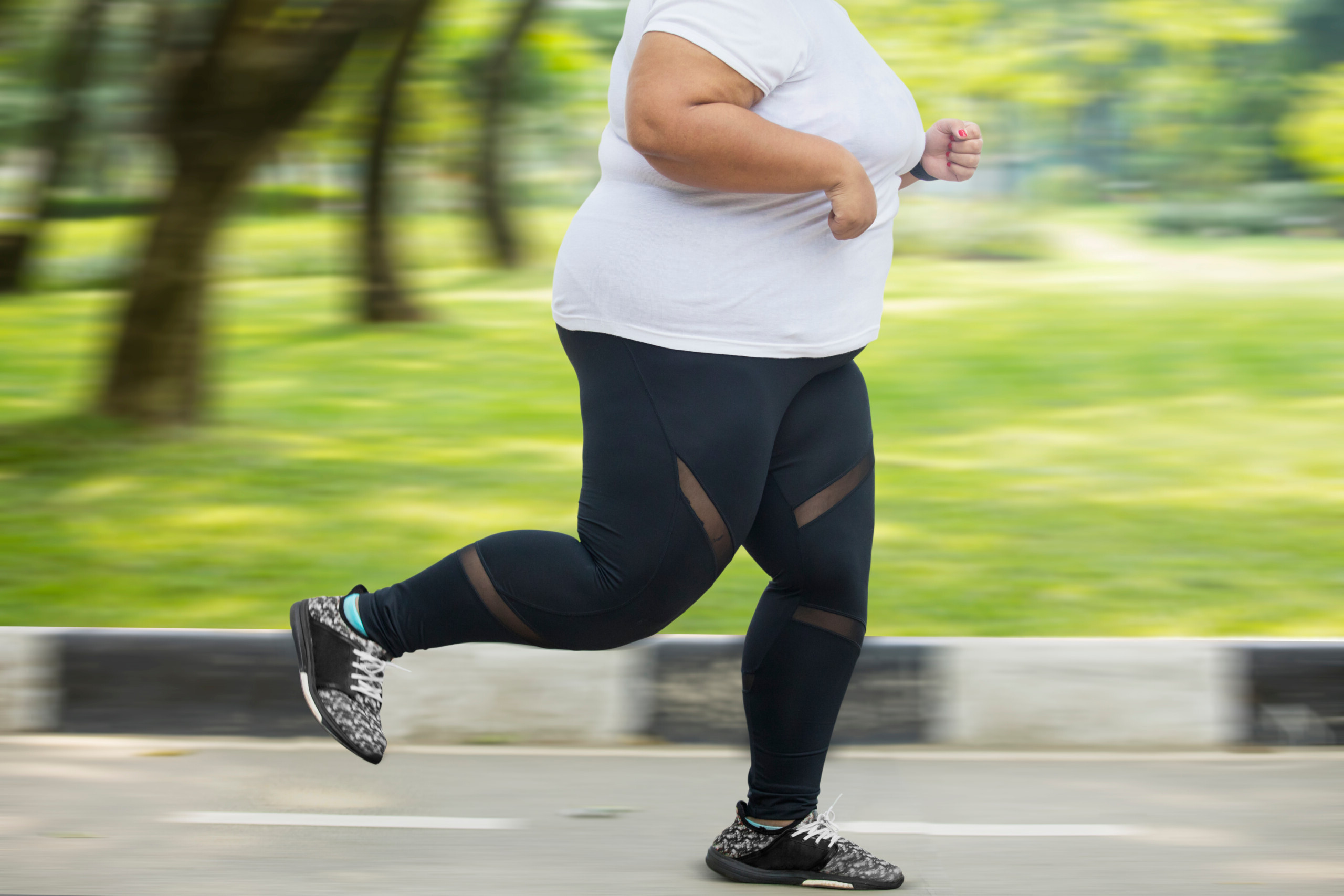
Overcome Your Fear of Jogging Outside if You’re Overweight
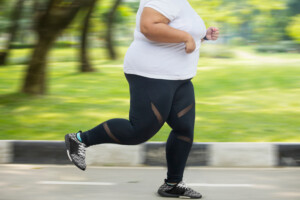
There are solutions for self-conscious overweight joggers.
Solution #1
I’m not going to say just ignore the name calling. To jog through a litany of insults is very stressful.
However, if the overweight jogger is with a smaller jogger, this will buffer the insults; might even prevent 90 percent of them.
If the overweight jogger is with two or three joggers, it is very unlikely even one insult will get yelled from a car or spoken from a child on his front lawn.
Secondly, how do big joggers know for sure they’ll get ridiculed? Have you tried jogging in public?
If not, give it a try and see what happens. Obviously, a 210-pound woman who jogs past a construction site during the lunch hour is bound to get heckled.
Joggers should choose jogging routes with discretion. If overweight joggers choose a route within the vicinity of a junior high or high school, during lunch hour or at the time school is let out — again, this paves opportunity for jeering.
Many residential streets are safe havens for big joggers.
The only people big joggers will see during school hours are mothers pushing babies in strollers, retired people walking their dogs, service technicians approaching customers’ homes, and maybe a person watering their lawn.
Do you really think these people will poke fun at an overweight jogger? Sometimes, fear of heckling is just an excuse. I don’t blame the big jogger for avoiding anywhere near the local high school.
But there are so many nice, quiet, peaceful residential streets!
The big jogger may even try jogging on the grounds of a retirement community. It’s extremely unlikely that a couple of 80-year-olds are going to holler insults at a large runner.
Solution #2
Why do some heavy people avoid jogging around the gym track due to self-consciousness, but feel okay doing other exercises on the gym’s main floor?
Maybe it’s the motion of jogging? The bouncing? One of the gyms I go to has a track on the second floor, overlooking the main workout area. Anyone on the first floor can easily see people jogging the track.
Trust me on this: If you’re overweight and decide to jog such a track, NOBODY will give a rip.
We’re all too busy focusing on our own routines. If anything, we might think, “Good for her; she’s jogging.” But we certainly won’t shout out at you.
If the track still seems daunting, use a treadmill. Select one at the end near the wall, even.
Solution #3
Try a path around a lake. There’s a 1.5 mile path that encircles a lake not far from my home.
These kinds of paths do not attract the kind of people who’d make fun of big joggers. Or try any walking/jogging path at a park.
The overweight jogger will encounter moms pushing strollers, dog walkers, inline skaters, old people walking hand-in-hand, and many overweight walkers who will admire you.
Solution #4 for overweight joggers is to buy a treadmill. This will give you privacy. And don’t hold onto the machine!
Lorra Garrick is a former personal trainer certified through the American Council on Exercise. At Bally Total Fitness she trained women and men of all ages for fat loss, muscle building, fitness and improved health.
.
Shutterstock/Creativa Images

Is Oscar Mayer Bologna Really Healthier than PB & J Sandwich?

The truth about what’s inside Oscar Mayer Bologna…
Whoa, moms…be careful when you select Oscar Mayer bologna over PB & J for your kids just because you saw a magazine ad showing some gleeful kid holding an Oscar Mayer beef bologna sandwich.
These ads state: “Our bologna has 75% less sugar than a PB&J.”
In tiny print at the bottom of these Oscar Mayer beef bologna ads is nutrition information:
A peanut butter and jelly sandwich has 18 grams of sugar, and a bologna sandwich with fat-free mayonnaise has 4 grams of sugar.
Something’s not right.
Two tablespoons of MaraNatha organic creamy peanut butter contains just 3 grams of sugar! (7 grams total carbohydrates).
Where does Oscar Mayer come up with 18 grams?
The company must have selected the most sugary peanut butter brand they could find, and then calculated based on what — eight tablespoons?!
Many peanut butter brands have similar sugar content to MaraNatha for two tablespoons.
The Oscar Mayer ad then says that the PB & J sandwich has 18 grams of fat, of which 3.5 is saturated (the bad fat).
And that the bologna sandwich has 10 grams of fat, of which 4 grams is saturated.
Is Oscar Mayer boasting about this?
Because if 3.5 grams out of the PB & J sandwich is saturated (bad) fat, that means the remaining 14.5 grams of fat is the healthy, good kind of fat!
So what kind of fat, then, is in the remaining 6 grams of fat in the bologna sandwich?
According to the ingredients list, 4 grams is monounsaturated fat (good fat) and 1.1 grams is polyunsaturated (good fat).
One gram of fat is not accounted for, but this leaves a little over 5 grams of good fats…compared to the peanut butter’s impressive 14.5 grams of healthy fats!
Peanut butter is from peanuts, not animals, so you know that the remaining 14.5 grams is healthy fat (natural peanut butters do not contain trans fats, which are man-made).
Yikes! Ingredients for Oscar Mayer Beef Balogna
“Beef, Water, Contains Less than 2% of Salt, Corn Syrup, Sodium Lactate, Flavor, Dextrose, Hydrolyzed Beef Stock, Autolyzed Yeast, Sodium Phosphates, Sodium Diacetate, Sodium Ascorbate, Sodium Nitrite, Extractives of Paprika.”
What is “flavor”? Anyone? Sounds like calling an ingredient “flavor” is just a way of getting out of actually identifying it. Why doesn’t Oscar Mayer want to identify this ingredient?
Sodium nitrate is a carcinogenic preservative. According to the World Cancer Research Fund UK and one of several studies, processed meat is linked to colon cancer.
Balogna, by definition, is junk food.
“Bologna is a form of ultra-processed meat,” says Shana Spence, MS, RDN, CDN, a registered dietitian nutritionist based in New York.

“Read the ingredients of the Oscar Mayer brand (mechanically separated chicken, pork and beef, not to mention corn syrup and a bunch of other preservatives),” continues Spence.
“We’re unfortunately living in a time where we think meat protein reigns supreme (Keto diet, Atkins, etc.). So this may be where this misconception came from.
“Peanut butter and other nut butters are an excellent source of protein as well as healthy fat. Of course, always choose oil free and no sugar added!
“Peanuts in particular also contain important B vitamins as well as vitamin E and also minerals like magnesium, phosphorous, potassium, zinc and iron.
“Bologna really does not have any nutritional value except for protein — which again, can be received through other forms.”
It’s clear that the much healthier choice for a sandwich is the PB & J.
Here are the clean ingredients for Organic Principle’s grape jam, and MaraNatha’s peanut butter, respectively:
“Organic Concord Grape Juice from concentrate (Water, Organic Concord Grape Juice Concentrate), Organic Natural Milled Sugar, Natural Fruit Pectin, Ascorbic Acid, Citric Acid.”
“Organic Dry Roasted Peanuts, Organic Palm Oil, Organic Cane Sugar, Sea Salt.”
There’s no escaping the sugar in either kind of sandwich.
But contrary to Oscar Mayer’s bologna ads, a PB & J sandwich need not contain any more sugar than a bologna sandwich, unless your child takes three tablespoons of peanut butter for his PB & J sandwiches.
And even then, this won’t come within a mile of the 18 grams cited in the Oscar Mayer bologna ads!
A health-conscious parent should consider organic, all-natural peanut butter and organic jams and jellies.
Even cheaper, non-organic versions are better for the body than bologna.
If your child insists on bologna, buy a brand that does not contain additives or preservatives.
Such can be found at health food stores or at Whole Foods.
 Shana Spence of The Nutrition Tea is committed to providing trending information and nutrition facts covering a wide range including nutrition for heart disease and diabetes, pediatric nutrition and healthful lifestyles.
Lorra Garrick is a former personal trainer certified by the American Council on Exercise. At Bally Total Fitness she trained clients of all ages for fat loss, muscle building, fitness and improved health.
.
Top image: Shutterstock/baibaz
Sources: theorganicprinciple.com; worldpantry.com; naturodoc.com/library/nutrition/MSG.htm; acaloriecounter.com/food/oscar-mayer-bologna-chicken-pork-beef-

Tall Women: Top 10 Sports for You Regardless of Body Type

Top sports for tall women of all body types go well beyond basketball and volleyball.
Other top sports for tall women of all body types are plenty, sports you’d never think tall would be such a significant advantage.
Tall women who think they have no athletic skills should try these sports.
Previously non-athletic tall women may be pleasantly surprised to discover an untapped aptitude and passion.
And if such tall women are young enough, there might still be time to get good enough to compete nationally!
We all know that basketball and volleyball love tall women.
It’s also no longer a secret that tall women have an advantage in tennis or badminton, either because of a better reach or more torque when serving.
It’s common sense to know that tall women have an advantage in high jumping, though an amazing vertical jump is also required.
But tall women of all body types can do quite well in other sports; tall women need not be as thin as high jumpers to possess aptitude in sports.
Top sports for tall women with “skinny” body types:
High Jump, Pole Vault, Fencing, Sabre Fighting
Most of these sports require the ability to deliver great reaches, which include lunging motions to get to a ball or target as quickly as possible.

Fencing. Shutterstock/ Fotokostic
Pole vault and high jump require ability to clear a height, so it’s obvious why tall, lightweight women would like to try these.
Top sports for tall women with lean (not stick-thin) body types:
Basketball, Volleyball, Lacrosse, Tennis, Swimming, Golf, Handball, Softball, Martial Arts, Soccer Goalie, Javelin, Fencing, Sabre Fighting

Martial arts. Shutterstock/Fotokvadrat
Several of these sports are not listed in the skinny body type category because to do really well, a little more muscle mass is required.
Top sports for tall women with medium body types:
Basketball, Volleyball, Rowing, Tennis, Lacrosse, Swimming, Golf, Handball, Discus, Shot-Put, Javelin, Soccer Goalie, Softball, Martial Arts, Fencing, Sabre Fighting
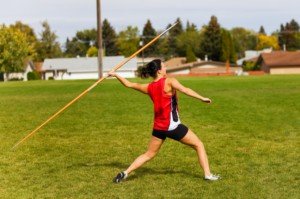
Javelin throw. Shutterstock/Brenda Carson
This list is a lot longer now because some of these sports require more muscle mass than a very lean woman can deliver, such as rowing, discus and shot-put.
For example, two tall women may both weigh 155 pounds, but one is 16 percent body fat, and the other is 24 percent body fat.
The one at 16 percent body fat will do a lot better at rowing, because more of her body weight is muscle, and rowing combines power with endurance.
Top sports for tall women with bigger body types — “husky,” “overweight,” “big boned”:
Basketball, Volleyball, Rowing, Discus, Shot-Put, Javelin, Softball, Golf, Martial Arts, Fencing, Sabre Fighting, Powerlifting

Javelin throw

Powerlifting. Shutterstock/Miljan Zivkovic
Yes, tall women who can stand to lose a bit of weight can still do wonderfully in basketball and volleyball, even though these sports require a lot of quick movement and running.
You’ll see tall but heavy women in the WNBA, and at least one beach volleyball player I saw at the 2008 Olympics was noticeably pudgy, though because she was 6-4, I’m sure she’s referred to as big boned rather than pudgy.
A tall heavy body is not necessarily a hindrance in softball, depending on position played, and the weight going behind the ball at bat is a definite asset for tall women who can swing a bat well.
Discus, shot-put and javelin are not the type of sports that women must take up as children, like tennis, in order to excel at high levels.
Young tall women can try these sports and still have a crack at becoming nationally ranked.
But bear in mind that just because being tall and a bit weighty is not a hindrance as it would be in competitive tennis, lacrosse or pole vaulting, it’s important to note that if tall women want to truly excel at these sports, they will need to alter their body composition so that 180 pounds on a 6-1 body doesn’t include excess fat.
The powerlifter, discus thrower and shot-putter can actually be overweight with body fat and still excel.
One reason is because the execution of the sport takes only seconds, and hence, doesn’t require endurance.
Martial arts, fencing and sabre fighting can be draining on the cardiovascular system, but the drain is short-lived as opposed to long-duration like lacrosse or tennis.
Further, some martial arts tournaments have board breaking competitions; endurance not required.
Forms or kata competitions are also suitable for a well-trained, heavy and tall woman.
Lorra Garrick is a former personal trainer certified through the American Council on Exercise. At Bally Total Fitness she trained women and men of all ages for fat loss, muscle building, fitness and improved health.
.