How Dad Can Teach Daughter to Refuse Rides from Strangers

Hey dads, have you been teaching your young daughter how to refuse a ride from a stranger?
If so, you’re probably missing some very crucial ways to ingrain the message.
There are predators out there, and you’re a key player in whether or not your daughter gets reeled into getting inside a car with a complete stranger.
Women and teen girls who do this aren’t “stupid” in the academic sense.
An airing of “Mystery Detectives” focused on a 17-year-old who was an excellent student with dreams of becoming a doctor.
She was walking home, less than one-quarter mile away, when a stranger pulled up, offered her a ride and she accepted!
This man (age 24) wasn’t a complete stranger (he was living with her cousin), but she hardly knew him. So essentially, he was stranger material.
Teens Getting into Cars with Strangers: Why?!

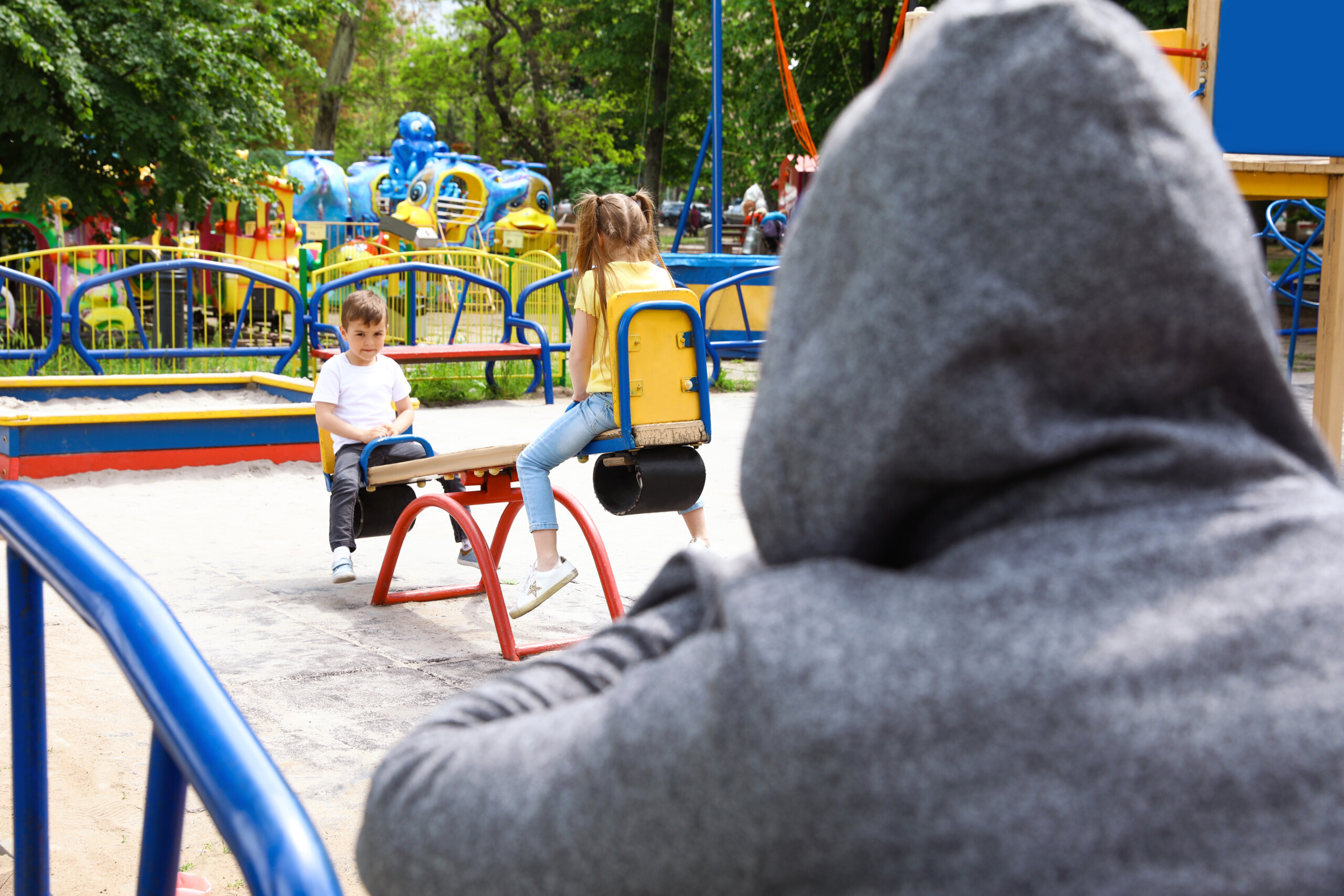
Freepik.com, senivpetro
“Whatever the bait that the stranger promises — a puppy, candy or simply a ride, the real reason teens and young women take the bait is deeper,” begins Carole Lieberman, MD, forensic psychiatrist and author of Bad Boys: Why We Love Them, How to Live With Them and When to Leave Them.
Dad. Or lack thereof.
“The real bait is the promise of a surrogate daddy’s love,” says Dr. Lieberman.
“The driver is offering ‘the kindness of strangers’ — a man who is going out of his way to pay attention to and help the girl.”
Before you question this explanation, ask yourself how many young women you think would take a ride being offered by another young woman (complete stranger), or how many middle-aged women would accept a ride from a 25-year-old man.
You’d think that today’s proliferation of frightening headlines, says Dr. Lieberman, would scare off young women and teen girls from accepting rides with strangers or men they just met.
But, she continues, “At the same time the number of girls who are longing for male attention has skyrocketed because of losing daddies to divorce, depression and other problems.
“This makes girls more vulnerable than ever to a man who, despite his malevolent intentions, appears to care about them.”
What percentage of young women and teenage girls, who accept a ride from a stranger (and this includes a “nice” man they just met at a bar or party), grew up in a home without a father?
This data is not available. But a surprising number of females who simply get into a stranger’s car have had no strong father figure in their life, says Dr. Lieberman, based upon her years of professional experience in the legal system.
The absent father isn’t the only explanation, though. It’s a multifactorial process.
After all, there are girls, raised by strong single mothers, never knowing their fathers or having little contact with them, who couldn’t be paid a thousand bucks to get into a stranger’s car in even frigid cold weather.
What can fathers do to ensure their daughters will never get into a car with a stranger?
This article pertains strictly to those who voluntarily get into the vehicle, versus those who are frightened in by the sight of a wavering gun.
The first and most important relationship a girl will ever have, says Dr. Lieberman, is that with her father.
Even if dad is physically present, married to the girl’s mother, this alone doesn’t guarantee a strong positive presence; he can still be emotionally distant and neglectful, or harsh and denigrating.
“The way you relate to your daughter will determine how she views men for the rest of her life — from whom she picks to date to whom she’ll marry to whether she will fall victim to a stranger,” explains Dr. Lieberman.
“If you don’t make her feel like she’s a lovable princess from day one, she will wind up dating bad boys, giving up on finding her prince and ending up in a loveless marriage.
“That is, if she hasn’t been raped and killed by a sweet-talking stranger beforehand.”
You Don’t Have to Spoil Her
Hey dads, don’t make the mistake of assuming that making your daughter feel like a valuable princess will set her up for being spoiled rotten.
Nobody says you must buy her everything she points her finger at or hand her your credit card every time she blinks.
When fathers make their daughters feel important and valued, and make time for them and have a relationship that’s real rather than based on just material provisions, this will go a long way in protecting your daughter from voluntarily accepting a ride from a stranger.
 Dr. Lieberman analyzes the psychological impact of world events, as a guest and/or host on all major media outlets. Her appearances include “Larry King Live,” “The Today Show,” “Good Morning America,” “Entertainment Tonight,” CNN and Fox News.
 Lorra Garrick has been covering medical, fitness and cybersecurity topics for many years, having written thousands of articles for print magazines and websites, including as a ghostwriter. She’s also a former ACE-certified personal trainer.
.
Top image: Freepik

How to Role Play with Children to Teach Stranger Safety

Here’s fantastic advice on how to role play with your kids so they can be as resistant to abduction lures as possible.
The dangers of strangers come in all forms, and this article will explain how to use role playing to instill a powerful resistance in your children against the abduction tricks that predators use.
Keeping your kids safe requires a lot more than telling them like a broken record, “Don’t talk to strangers.”
The National Center for Missing and Exploited Children studied 7,000 attempted abductions that occurred between Feb. 2005 and Jan. 2012. Some results:
– 32 percent of the kids were lured by the offer of a ride.
– 12 percent were lured by sweet treats.
– 8 percent were asked a question by the alleged predator.
– 8 percent were offered money.
– 8 percent of the alleged predators asked for help with a lost puppy or cat.
I use the word “alleged” because the adults did not succeed in (and thus were not convicted of) these particular attempts.
However, ask yourself why an adult would need a child’s help in finding his lost puppy, and why an adult would just go up to a stranger-child and offer candy. Hmmm.
“Role playing is an excellent way to teach children the importance of stranger safety, and how to protect themselves, and how to react when situations make them uncomfortable” says Dr. Marilyn Benoit, Chief Clinical Officer and SVP of Clinical & Professional Affairs of Devereux. Devereux is one of the largest not-for-profit behavioral healthcare organizations in the U.S., helping children and adults with emotional, developmental, educational and cognitive disabilities since 1912. She is a child/adolescent/adult psychiatrist.
However, not all situations that morph into an abduction initially make a victim feel uncomfortable. A lure is what reels them in; the key is to teach kids to recognize when they’re being set up.
In addition to the above abduction ruses, here are more:
Posing as a talent scout
Posing as a new teacher
Offering money to help lift something out of a van
Claiming he knows the child’s parent
Claiming the parent is in the hospital and he’ll drive the child there
Asking “help” for other things (directions, lost child) that adults should not ask children for.
Run through all of these ruses with your kids. There are only so many ruses, though they can have derivatives (informed-older kids will easily spot these, such as a full-grown man offering a 12-year-old money to help him change a flat tire).
“Role playing activities need to be repeated,” says Dr. Benoit. “You can role play with your children simply by first explaining the concept of strangers, and give them directions on how to resist and protect themselves.”
Select one of the ruses, then have your child pretend you’re the stranger, says Dr. Benoit.
See what kind of script unfolds, based on the premise that 1) you will be persistent in your pretend-role, and 2) your child will never accept. Give your child permission to “yell” at you in your make-believe role.
Use props, such as a bag of candy and a photo of a puppy. Take the role playing outdoors.
Practice various permutations: your child on a bike, you in a car; your child on foot, you on a bike or in a car, etc.
Role play in the rain, cold and extreme heat so that your child builds up the resistance to lures of a heated or air-conditioned car or of getting out of the rain.
All of this role playing will imprint upon a child’s brain, making the resistance to the lures of abduction attempts increasingly reflexive and increasingly impenetrable.
Rehearse over and over so that it becomes second-nature for a child with tired legs in the heat to run in the opposite direction when a stranger offers a ride in his air-conditioned car.
“Play through different scenarios,” urges Dr. Benoit. Ask your child to come up with some of these different scenarios. This will get the brain cells firing.
“It may be useful to have the child pretend that he or she is the stranger,” adds Dr. Benoit.
This will really get the brain cells exercising — and proliferating as new insights are formed.
“Role playing is a great opportunity for children to learn and develop skills,” says Dr. Benoit.
Never assume your kids are too young to benefit from learning how to recognize an abduction attempt or the common ruses.
Do not put this project off, and once you start, keep it ongoing, especially since lures for older kids are different than lure tactics for younger kids.
 Dr. Benoit is past president of the American Academy of Child and Adolescent Psychiatry and has provided Congressional testimony on issues including child abuse, teen pregnancy and youth suicide.
Lorra Garrick has been covering medical, fitness and cybersecurity topics for many years, having written thousands of articles for print magazines and websites, including as a ghostwriter. She’s also a former ACE-certified personal trainer.
.
Top image: Shutterstock/ New Africa
Source: missingkids.com/home

Projects for Kids that Teach Stranger Safety & Awareness

Here are very clever projects that will help kids understand what a stranger really is & how to sense danger and have more awareness for safety.
Perhaps you’ve warned your children, “Don’t talk to strangers!” till you were blue in the face, but have you ever checked to see if your child actually knows what a stranger is?
Many parents focus only on convincing their kids to “avoid” or “stay away from” strangers without helping their kids understand just what “stranger” means.
To the parent, the concept of what a stranger is may seem incredibly simple. But the younger a child, the more abstract this concept is. Ask your child what they think a “stranger” is.
They might reply, “Someone I don’t know.” But many others will reply in a way that shows they don’t understand.
I once asked a child to tell me what a stranger is. She replied, “You don’t talk to strangers.”
I then said, “That’s what you’re not supposed to do. But can you tell me what a stranger IS.” She really couldn’t.
Knowing what you shouldn’t do is worthless if you don’t know to whom this rule should apply.
“We need to help children understand what we mean when we use the word strangers, and help them, through reinforcement and repetition, understand the nuances in regard to the topic of strangers,” explains child/adolescent psychiatrist Dr. Marilyn Benoit, Chief Clinical Officer and SVP of Clinical & Professional Affairs of Devereux. Devereux is one of the largest not-for-profit behavioral healthcare organizations in the U.S., helping children and adults with emotional, developmental, educational and cognitive disabilities since 1912.
Ask child to write down 10 traits of a stranger (five if the child is very young). What they write will be very telling of their concept of strangerhood.
For example, if they write down “He has a weapon,” or, “He has tattoos,” you have some talking to do.
Ask questions like, “Can a stranger be handsome?” “Can a stranger be well-dressed”? Then discuss.
The most compelling project, though, is having your child DRAW what they think a stranger looks like. Supply crayons in many colors.
Many years ago I became aware of a study in which young kids were asked to draw a stranger. I was not able to locate this study online, but the results were disturbing.
Without having been given any prompts, the kids drew pictures of ugly faces, some looking almost monster-like. Lack of drawing skills had nothing to do with it.
They used mostly black, brown and grey crayons. None of the facial expressions looked friendly; some were mean. Hair was wild in some.
This study showed that children equated strangers with ugliness, nasty expressions and dark, dreary colors.
When you have your child make a drawing, do not give any suggestions. Just say, “Draw a stranger.”
Have them do this BEFORE you ask them to write down what they think a stranger looks or acts like.
Then, without discussing the drawings, have them do the writing drills. THEN discuss everything.
Next Project
Dr. Benoit strongly recommends role playing. “Repetition is key. It would be nice to see this performed in classrooms as well. The group setting really facilitates the learning.”
Dr. Benoit urges parents to work together, “to participate in discussions and role playing activities with children. With groups of parents and children, there may be great opportunities for parents to use settings and hypotheticals to contextualize for children and explain differences between sociability and trust.”
Finally, make sure your child knows the difference between approaching a stranger if they need help, and a stranger approaching them asking for help or offering goodies or a ride. Big difference!
Dr. Benoit is past president of the American Academy of Child and Adolescent Psychiatry and has provided Congressional testimony on issues including child abuse, teen pregnancy and youth suicide.
Lorra Garrick has been covering medical, fitness and cybersecurity topics for many years, having written thousands of articles for print magazines and websites, including as a ghostwriter. She’s also a former ACE-certified personal trainer.
.
Top image: Freepik.com, jcomp

Are Preschoolers too Young to Learn Stranger Danger?

Preschoolers are actually NOT too young to learn some concepts about stranger danger.
A child psychiatrist explains how parents can go about teaching their very young ones about basic safety.
The preschool age is usually considered to be three to four; or, to put another way, preschoolers are older than toddlers but younger than kindergarteners, but are they old enough to be taught stranger danger?
“I think the best strategy is constant supervision by an adult,” says child/adolescent psychiatrist Dr. Marilyn Benoit, Chief Clinical Officer and SVP of Clinical & Professional Affairs of Devereux.
Devereux is one of the largest not-for-profit behavioral healthcare organizations in the U.S., helping children and adults with emotional, developmental, educational and cognitive disabilities since 1912.
“I say constant supervision because I cannot tell you how many times I see parents on their cellphones with their little ones in tow.
“Yes, the parent is with the child, but they’re not focused on their child.”
Parents may wonder how to teach the so-called stranger danger to preschool-aged children, but when you think about this, why would you have to teach stranger danger unless you were planning on letting your preschooler go off somewhere unsupervised?
On the other hand, there ARE circumstances in which a preschooler is not being watched like a hawk, and I don’t necessarily mean because they’re with parents who aren’t keeping a good eye on them. I’ll get to that in just a moment.
But before I do, here’s what else Dr. Benoit says: “When I see a child following behind a parent, it upsets me.
I also see parents sometimes walking with their children on the sidewalk, and the child is on the outside, closest to the road.
“So, when we talk about parental supervision, we should emphasize that parents should be focused on the children and using good safety.”
Now back to those situations in which the parent can’t always be physically present, and as a result, the preschooler is not being watched like a hawk…
…For instance, at a daycare facility, where there might be two adults and 10 preschoolers, maybe more. What if the adults take them out in public?
Children ages three and four should be taught some degree of stranger danger, because there’s always that chance (though very slim), that at a park, one will wander just a little too far away from the daycare attendants or nanny, and end up within the visual field of a predator. The lure could be just too easy to pull off.
Another situation where a preschooler might end up lured by a predator is right outside their house while playing.
In fact, in Sept. of 2012, a predator tried to snatch a four-year-old as he played outside his seven-year-old cousin’s home.
The cousin, A-nari Taylor, kicked and karate chopped at the man and he fled.
It can be daunting to a parent faced with figuring out how to prevent their preschooler from going off with a stranger who offers candy, offers to show some puppies or says “Mommy is sick and she sent me to get you.”
In the meantime, take Dr. Benoit’s advice: Stay focused on your preschooler when in a public place like the mall; the texting can wait.
Dr. Benoit is past president of the American Academy of Child and Adolescent Psychiatry and has provided Congressional testimony on issues including child abuse, teen pregnancy and youth suicide.
Lorra Garrick has been covering medical, fitness and cybersecurity topics for many years, having written thousands of articles for print magazines and websites, including as a ghostwriter. She’s also a former ACE-certified personal trainer.
.
Source: .wcsh6.com/news/article/215583/108/7-year-old-Miami-girl-foils-kidnapping

Can You Be Immune to Stockholm Syndrome?

Find out from an expert just what kind of person will never get Stockholm syndrome…
“Some people will argue that everyone, no matter how strong, has their breaking point, including the so-called psychopaths who commit the heinous crimes of abduction, imprisonment and torture.
“Since every human being has developmentally passed through earlier stages of immaturity, perhaps at some point, under sufficient stress, almost anyone might break.”
But how much worse or stressful can a situation be when we’re talking about real-life men and women who escaped (or summoned for help first chance they got) their torturous captivity?
Dr. Reiss explains that “there are certainly real stories of persons who have so much control of their emotions and behaviors that they remain ‘in control’ even in what seems to be the most extreme and horrifying situations.”
Staying in control, yet acknowledging feelings of fear and rage towards the captor, is a protective mechanism against Stockholm syndrome.
It boils down to the solidity of an individual’s personality structure, says Dr. Reiss.
He explains that “for all practical purposes, they can be considered ‘immune’ from Stockholm syndrome-type reactions.
Perhaps you know men or women, or even teenagers, who fit this bill. If you’re an adult, think back to when you were in high school.
Did you know any classmates who seemed like they’d be immune to Stockholm syndrome if they were ever abducted and locked in the captor’s cellar, beaten and sexually assaulted?
Did your school have a few bullies who seemed to be fearless of everybody? Suppose one of those bullies had been kidnapped.
If it’s easy to imagine that bully making an escape first chance that came his or her way, that’s because perhaps that individual’s personality structure was quite solidified.
However, the bully who is “all bluster and bluff” could actually have a weak character and react in the opposite direction if the tables are turned.
Or what about teens or young adults who are very rebellious and defiant? Perhaps they’d be immune to Stockholm syndrome, too. Any strong leaders at your school or on the job? Anyone who’s quick to voice a strong opinion any chance they get?
Yes, it’s very possible for someone to be immune to Stockholm syndrome, and this doesn’t just happen by chance.
 Dr. Reiss has been in private practice 25+ years, specializing in adult and adolescent psychiatry, having evaluated and treated over 10,000 patients.
Lorra Garrick has been covering medical, fitness and cybersecurity topics for many years, having written thousands of articles for print magazines and websites, including as a ghostwriter. She’s also a former ACE-certified personal trainer.
.
Top image: Shutterstock/Maria Sbytova

Do People Who Don’t Make Friends Easily Get Stockholm Syndrome?

Is it really impossible for an antisocial-type person to bond with someone who abducts and abuses them: the Stockholm syndrome?
Seems that if a person is capable of bonding with their abductor, especially a cruel abductor (the Stockholm syndrome), then this individual in general makes friends extremely easy.
Or, to put this another way, isn’t it logical to conclude that “antisocial” people who don’t have any friends (who even hate shaking hands with people) would be immune to Stockholm syndrome?
The issue isn’t whether or not one easily makes friends, but why a person doesn’t make friends easily, says David M. Reiss, MD, a psychiatrist from San Diego with extensive experience in PTSD.
There are those who are reserved and cautious with making friendships, but are still capable of normal and healthy emotional relationships, says Dr. Reiss.
These individuals “may be more resilient in being able to maintain objectivity and may not be as vulnerable to their own emotional reactions, which could lead to embracing a dysfunctional relationship,” he explains.
In short, they aren’t at risk for embracing a bond with a kidnapper: Stockholm syndrome.
But then there’s another type of individual, continues Dr. Reiss.
We’ve all known men and women who tend to avoid friendships “out of fear of relationships, repressed dependency, paranoid tendencies or antisocial tendencies.”
Dr. Reiss says that these individuals “may be more vulnerable to developing an ‘alliance’ with a controlling malevolent power, albeit probably a rather unemotional relationship – but perhaps involving a lack of emotional maturity and/or a lack of ethics.”
Stockholm syndrome is not to be confused with the phenomenon of remaining with one’s captor out of fear of the consequences.
Though the fear may seem insanely illogical to those on the outside, this does not mean that the victim has experienced Stockholm syndrome.
If you do not make friends easily and are even “paranoid” or in some way apprehensive about cultivating relationships or friendships on any level, this does not mean you’re necessarily at high risk for developing Stockholm syndrome.
For obvious reasons, there have been no controlled experiments on who’s truly at highest risk for Stockholm syndrome.
Dr. Reiss has been in private practice 25+ years, specializing in adult and adolescent psychiatry, having evaluated and treated over 10,000 patients.
Lorra Garrick has been covering medical, fitness and cybersecurity topics for many years, having written thousands of articles for print magazines and websites, including as a ghostwriter. She’s also a former ACE-certified personal trainer.
.
Top image: ©Lorra Garrick

Why Stockholm Syndrome Can’t Happen to Anyone

Stockholm syndrome cannot happen to anyone. There is a reason for this, which is why most hostage victims actually do not develop this condition.
Though cases exist in which the victim of a kidnapping develops an emotional alliance or bond (or kinship, whatever you wish to call it) with their captor, even when the captor is brutal, this Stockholm syndrome reaction doesn’t necessarily occur with every hostage.
It’s not fair to say, “Anyone can develop Stockholm syndrome,” especially when considering that a captor can impose torture on the victims.
Just like it’s false that “anybody can be capable of kidnapping a teenager and brutalizing that individual in a basement for months,” it’s equally illogical to believe that anybody could fall prey to Stockholm syndrome as a coping mechanism or as a natural fallout of being held prisoner.
“Stockholm syndrome is just one type of reaction to traumatic/frightening situations,” says David M. Reiss, MD, a psychiatrist from San Diego with extensive experience in PTSD.
“Even if one accepts that ‘everyone has their breaking point,’ that does not mean that everyone is vulnerable to this particular type of regression.”
Two Famous Victims of Stockholm Syndrome
Jaycee Lee Dugard. Kidnapped at age 11, she had plenty of opportunities to escape her brutal captor (Phillip Garrido) and countless chances to alert authorities via the Internet as well as when dealing with visitors to the house of her captor.
She willingly stayed with him for 18 years before the police intervened.
Dugard’s parents had described her, as a child, as being very easy to get along with, very accommodating and mellow.
From a layman’s standpoint, I can clearly see how a youth who’s more rebellious, challenges authority, is outspoken and daring, would jump at the first opportunity to escape from Phillip Garrido’s loosely barricaded yard.
Shawn Hornbeck. Being female is not a risk factor for Stockholm syndrome. Hornbeck was kidnapped at age 11 and for about five years lived with his abductor who raped him, Michael Devlin.
However, on many occasions, Hornbeck was allowed to leave Devlin’s house to ride his bike, go to movies and visit friends. Of course, he always returned to his “captor.”
Were the following kidnap victims immune to Stockholm syndrome?
19-year-old woman, East St. Louis, Illinois. The victim reported being raped and beaten daily and had made numerous escape attempts, but each time her captor chased her down and forced her back to his house at gunpoint.
His mother also lived there and took part in the captivity. Finally, after two years, the woman, who had given birth to the captor’s baby during the first year of captivity, bolted successfully.
Kevin Lunsmann, 14, Manila, Philippines. After five months of captivity by armed captors, Lunsmann tricked them into thinking he was going to a stream to bathe. Instead he fled, barefoot, into the jungle and was eventually rescued.
11-year-old girl, Whittier, California, March, 2013. She was forced into a car in which a crying 7-year-old girl was in.
At some point the older girl saw an opportunity to escape and, along with the younger girl, both bolted from the car.
28-year-old woman, East Moline, Illinois. She was held captive by a former boyfriend who’d beat her if she tried to escape. After two weeks of this, she finally escaped.
Stockholm syndrome is over-emphasized by the media, and the vast majority of abduction victims do not develop it.
“There are other regressive behaviors that are even more dangerous – but with sufficient underlying emotional strength and ongoing conviction, most people can avoid becoming pathologically co-dependent in personal relationships and in traumatic situations,” says Dr. Reiss.
Dr. Reiss has been in private practice 25+ years, specializing in adult and adolescent psychiatry, having evaluated and treated over 10,000 patients.
Lorra Garrick has been covering medical, fitness and cybersecurity topics for many years, having written thousands of articles for print magazines and websites, including as a ghostwriter. She’s also a former ACE-certified personal trainer.
.
Top image: Shutterstock/Sjstudio6
Sources: livescience.com/7862-bonding-captor-jaycee-dugard-flee.html; dailymail.co.uk/femail/article-429052/A-bond-reason.html; nbclosangeles.com/news/local/Whittier-Police-Kidnapper-Sought-192421751.html; huffingtonpost.com/2012/08/24/teenager-held-hostage-for-2-years-escapes_n_1826878.html; newsmax.com/Newsfront/AS-Philippines-US-Hostage/2011/12/11/id/420555

How to Parent Your Child for Stockholm Syndrome Immunity

Find out the best way to raise your child to be Stockholm syndrome-proof…
Is it possible to “Stockholm syndrome-proof” your child? With more and more parents becoming alarmed at the idea of their children (including teens) being abducted, this is a fair question.
Should parents even discuss Stockholm syndrome with young children?
“Since involuntary captivity occurs so infrequently, in my opinion, it does not make sense to specifically ‘prepare’ your child by discussing the possibility – that is more likely to instill a disruptive fear than to be protective,” says David M. Reiss, MD, a psychiatrist from San Diego with extensive experience in PTSD.
This doesn’t mean shut the door if your savvy child comes to you to discuss a nationally publicized case of abduction such as the Elizabeth Smart case.
That aside, Dr. Reiss does encourage parents to be the best they can be at promoting normal development in their kids, to “encourage a solid and realistic self-esteem, and encourage appropriate experience and appropriate expression of disappointment and anger – with provision of aid in distinguishing between disappointment and abuse/danger.”
Parents must be acutely aware of the relationships their kids have with peers.
Parents should encourage their kids to tolerate normal, non-hostile, non-sadistic disagreements and disappointments that occur through life, says Dr. Reiss, yet at the same time, not to repress feelings of anger in social situations that are dangerous.
Children should be taught to recognize abusive behavior and to distance themselves from it first chance they get, rather than stay silent and accept it.
Accepting a dangerous situation is how a Stockholm syndrome first develops. In fact, kids who accept being bullied at school are more likely to develop Stockholm syndrome as an adult hostage, than are kids who simply will not tolerate being bullied.
“If a pattern of bullying or being bullied is observed, provide intervention or seek professional intervention,” says Dr. Reiss.
He adds that parents should be on the lookout for significant signs of anxiety or depression, which can signal difficulty in resolving underlyng conflicts.
Parents are often afraid that they’ll instill fear or paranoia if they broach the topic of stranger danger or bad people with their young kids.
However, this should still be done, says Dr. Reiss, but on an age appropriate level.
Though it’s rare for kids/teens to ever end up abducted and imprisoned by a stranger or someone they know, it certainly wouldn’t hurt to help them develop insight into the fact that some people are just plain bad, and that whenever a child feels uncomfortable around someone, that they should trust their gut.
You may have prevention of Stockholm syndrome in mind when raising your children, but raising them to help prevent Stockholm syndrome will generate many benefits such as insightful kids who will not tolerate abusive relationships when they’re older.
Dr. Reiss has been in private practice 25+ years, specializing in adult and adolescent psychiatry, having evaluated and treated over 10,000 patients.
Lorra Garrick has been covering medical, fitness and cybersecurity topics for many years, having written thousands of articles for print magazines and websites, including as a ghostwriter. She’s also a former ACE-certified personal trainer.
.
Top image: ©Lorra Garrick

Can Introverts Get Stockholm Syndrome?

An expert weighs in on whether or not introversion protects against Stockholm syndrome.
It’s fair to assume that introverts have a built-in protection against Stockholm syndrome, while extroverts are more vulnerable to forming an emotional alliance with the very person who has abducted them.
“Some people are just naturally more introverted, which may not be a reflection upon their level of self-esteem or interpersonal maturity,” says David M. Reiss, MD, a psychiatrist from San Diego with extensive experience in PTSD.
“However, if introversion is a reaction to fear of dependency, fear of interaction with others, or even a fear of the experience of fear this may be a risk factor for reacting dysfunctionally to an abusive situation and perhaps development of Stockholm syndrome.”
Suppose a person, who’s introverted as a result of fearing relationships, is kidnapped and held hostage in a dungeon by their abductor.
That person is now in a situation they can’t escape from, at least initially (bound up).
Their captor is frightening and seems powerful.
The victim then retreats to a very dependant, almost infantile state as a defense or coping mechanism; they were never well-equipped to cope effectively with the normal experience of fear throughout their life.
Thus, to avoid the overwhelming waves of fear while in that dungeon, they take on a dysfunctional and self-defeating approach.
This may be premeditated or developed unconsciously, but this dysfunctional approach and its correlating behaviors are designed to justify their involuntary captivity and torture.
They now, in this state of mind, have reduced their ability to feel fearful, despite being in a dangerous situation.
And by the way, this is NOT the same as staying in the dungeon because you’re convinced that if you attempt an escape, your captor will nab you along the way and kill you.
Stockholm syndrome and Introversion
Dr. Reiss says that with involuntary captivity, “introversion leading to a healthy sense of disengagement from the perpetrator may be protective [against Stockholm syndrome]; but introversion that is actually present in the service of defending against unresolved dependency issues can increase vulnerability” to Stockholm syndrome.
Dr. Reiss has been in private practice 25+ years, specializing in adult and adolescent psychiatry, having evaluated and treated over 10,000 patients.
Lorra Garrick has been covering medical, fitness and cybersecurity topics for many years, having written thousands of articles for print magazines and websites, including as a ghostwriter. She’s also a former ACE-certified personal trainer.
.
Top image: ©Lorra Garrick

How Kidnap Victims Can Prevent Stockholm Syndrome

Find out what you can do to prevent Stockholm syndrome if you’re ever abducted.
“Unfortunately, one cannot change their underlying psychological makeup, and I don’t know of any actions that can be completely protective in particularly vulnerable individuals,” says David M. Reiss, MD, a psychiatrist from San Diego with extensive experience in PTSD.
That doesn’t mean there aren’t some guidelines to take note of for increasing the odds of preventing Stockholm syndrome in a hostage scenario.
Dr. Reiss presents the following tips for assisting in the prevention of developing Stockholm syndrome.
Remind Yourself of the Reality. No matter how “well” your captor seems to be treating you (good food, bathroom breaks), continuously remind yourself you’re a hostage; you’ve been abducted; your freedom has been robbed.
Yes, stay cool to avoid enraging the captor, but “Be a good actor/actress, but never forget that any ‘thankfulness’ shown to the perpetrator is a manipulation, a ploy, and is NOT actually merited,” says Dr. Reiss.
Tolerate Fear. The situation should be frightening, says Dr. Reiss. Do not allow your level of fear to dwindle. Remind yourself you’re in a horrible situation.
Maintain Emotional Distance. Keep detached from the captor, even if he tells you a sob story of his abusive childhood.
“Keep in mind the primary fact that what they are doing is dastardly – regardless of the excuses or rationales they may suggest,” says Dr. Reiss.
It is not YOUR responsibility to let the captor off the hook because he’s disturbed and was locked in dark closets without food by his parents for days on end. That’s the justice system’s job once he is put on trial.
Maintain Distrust. Assume that a person who kidnaps is a person who lies and manipulates, and may be skilled at this.
“No matter how seemingly sincere the perpetrator may be, manage your behavior as befits safety, but keep reminding yourself that they are not to be trusted – at all, regarding anything,” says Dr. Reiss.
Relate to other Victims. If it’s a group hostage situation, maintain as much safe and appropriate contact as possible with other victims. Avoid discussing the morality of the captor’s behavior.
Keep your relationship distant from any victims showing signs of Stockholm syndrome.
One way to help prevent Stockholm syndrome is to refrain from trying to save a fellow hostage from it.

Depositphotos.com
Fantasize Your Escape. No matter how remote an actual escape may be, keep envisioning it. Keep imagining you ARE scaling that fence outside or climbing down the wall to ground level.
To achieve you must first conceive and believe. To help prevent Stockholm syndrome, never believe that your imprisonment is your “new normal.”
Manage Feelings of Depression and Hopelessness
They’re normal for a hostage victim, but don’t let them dictate your frame of mind or behavior.
Tolerating these feelings rather than “trying to escape” them will help protect against Stockholm syndrome.
Following the above guidelines will go a long way in increasing the chances of preventing Stockholm syndrome.
Though these tips may seem like no-brainers, many people would have difficulty practicing them in a hostage situation.
Dr. Reiss has been in private practice 25+ years, specializing in adult and adolescent psychiatry, having evaluated and treated over 10,000 patients.
Lorra Garrick has been covering medical, fitness and cybersecurity topics for many years, having written thousands of articles for print magazines and websites, including as a ghostwriter. She’s also a former ACE-certified personal trainer.
.