Sick Dog Starting to Die? Wait; May Be Treatable Strep Throat

Don’t put down your “dying dog” yet; may be treatable strep throat.
Is your sick dog’s dying process starting and you’re making arrangements to put the dog down? Does death seem imminent for your cancer-stricken pet?
Don’t call the vet or Humane Society yet to have the dog put down; a strep throat infection can mimic dying, in that it can seem like death will occur within a day or even hours – death from cancer or whatever your dog was originally diagnosed with.
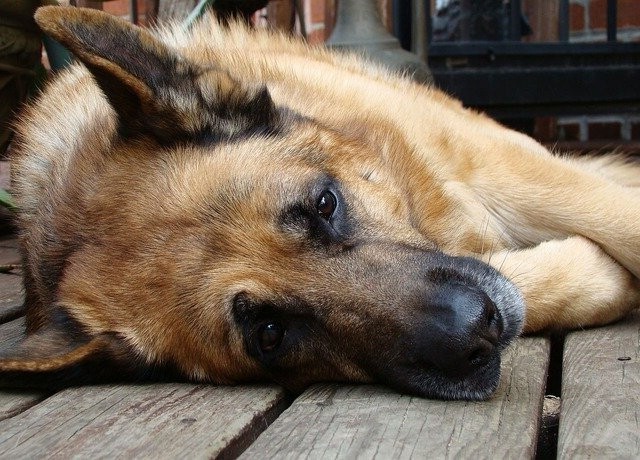
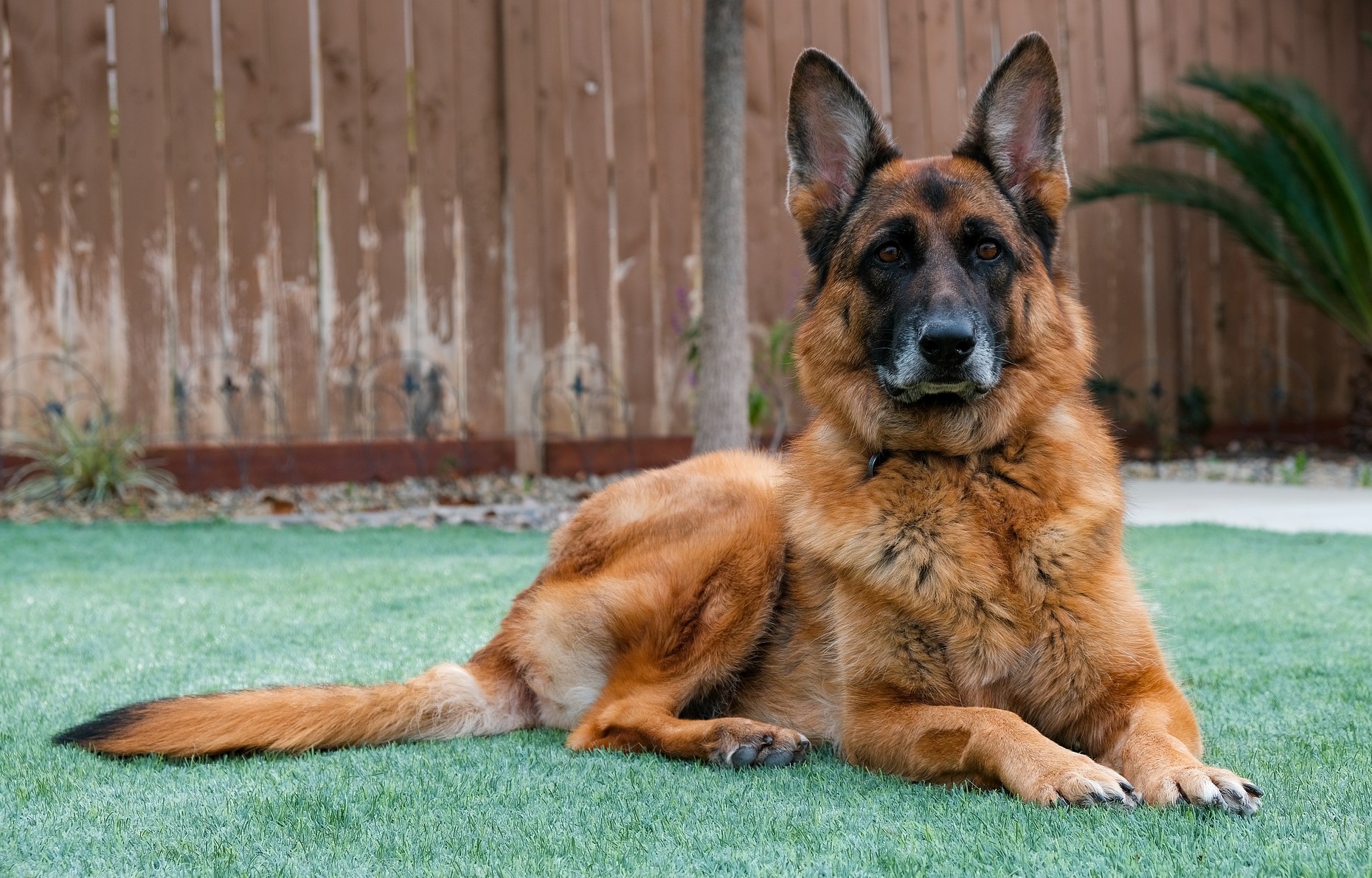
Don’t be too hasty with plans to put your dog down until you get it checked for strep throat. This happened to my parents’ dog.
The animal was diagnosed with a brain tumor about three weeks prior to when he took a sudden turn for the worse. He was taken to the ER of the diagnosing facility.
The dog had suddenly become listless and lethargic. The treating neurologist said it was fluid buildup in the brain from the tumor.
The German shepherd was kept overnight, and $1,300 later, was sent home all perked up, having been treated with mannitol, an anti-inflammatory, and furosamide, a diuretic, via IV catheter.
Come evening, the animal had regressed and had diminished appetite. Next day he was more lethargic, slept excessively and had diminished appetite. We thought it was side effects from chemo.
Next day he was worse, doing nothing but sleeping, not responding to familiar verbual cues, and exhibiting severe hind leg weakness.
He was growing increasingly out of it and appeared to be entering his “final” stage; it appeared that death was around the corner; that “this is it.”
We braced ourselves as the evening wore on. The dog refused to eat; his breathing was very rapid while he deeply slept; he had profound body weakness; his eyes, when open, lacked life.
“He’ll probably expire overnight,” said my father, who had suggested calling the Humane Society for someone to “come over with a needle,” after the dog collapsed in the garage (after we let him out the side door to relieve himself) and refused to budge.
Once back inside the house, he resumed sleeping. This is it, we all thought. By then, we had begun taking the animal to a holistic doctor.
We thought the new treatment wasn’t working; the dog’s ears wouldn’t even twitch when we announced familiar verbal cues that historically excited him.
We called the new doctor that evening; he said bring the dog to his clinic 7:30 am next morning; he suspected a strep throat.
Next morning: Diagnosis: Strep Throat. Here we were, thinking the dog was dying, had reached the end of his rope.
Many other people in the same boat would have taken their dog to the nearest shelter or vet to be put down.
Had we had the dog put down, we would have had a dog put down for a strep throat!
A strep throat is very treatable, though success is not guaranteed. But you don’t put a dog down for a strep throat!
Symptoms of strep throat in a dog can mimic the dying process: rapid breathing, excessive sleeping, not easily aroused, no interest in food or social interaction, glazed, half open eyes when not asleep, significant weakness, collapsing on hind legs, unsteady gait.
The German shepherd’s temperature turned out to be 104.7; normal is 101-102. The doctor diagnosed him within one minute of examining him.
Later in the afternoon, the doctor called to say that the animal was doing very well, and had been walked twice around the building, which includes a hill!
If your dog, that’s been diagnosed with a serious disease, seems to be dying or on its way out, consider having the animal examined for a strep throat before you arrange to have it put down.
 Lorra Garrick has been covering medical, fitness and cybersecurity topics for many years, having written thousands of articles for print magazines and websites, including as a ghostwriter. She’s also a former ACE-certified personal trainer.

Mistakes You Might Make with a Dog Shock Collar

A dog expert describes mistakes even the most well-meaning person could make with a bark shock collar–including fatal.
Will a shock collar hurt a dog (both physically and mentally)? Can a shock collar actually work?
A smart dog won’t bark if he knows he’ll get a shock, so people might wonder, “What is the harm?”
“Shock collars can only be used successfully by experts,” says Mary Remer, certified pet dog trainer, breeder and licensed AKC judge, having trained more than 20,000 dogs in her 30-year career.
“In my opinion, most people are quick to use a shock collar to suppress behavior without finding out what the underlying causes of the behavior are.”
Remer continues: “Another problem is that few people have the technical skills or the timing to use a shock collar correctly.” She cites two examples of this:
“I was told by a person who bought a shock collar after being recommended by ‘experts’ to help stop their two male dogs from fighting.
“The shock collar was used on the more aggressive dog, and when that dog was in a tussle with the other dog, he hit the button to shock the dog.
“That dog thought that the pain he was experiencing was coming from the dog he was fighting with, and he proceeded to kill that dog.”
Remer continues with the next example, “Someone bought a shock collar to use on their dog that kept running away. There was no thought given to why the dog was running away.
“The owner shocked the dog while it was running and the dog was gone for hours before it was finally found a shaking mess.”
It’s hard to imagine that a person could actually think this might work; why would the dog return home upon feeling a shock?
How about putting a fence up?
How about not letting your dog outside unless leashed?
A shock collar might seem like a simple, easy and quick solution, but it’s not as simple as placing the device on your pet and then pushing a button or waiting for the dog itself to activate the collar (by barking, for instance).
Remer explains, “A person needs to be educated on the way the collar works. The dog needs to be assessed by an expert as to why there is aberrant behavior that cannot be remedied using alternative methods.
“If the expert deems the collar to be an effective tool for the individual dog for the particular situation, training can begin so the collar is used in the right way.”

Mary Remer is founder of What a Good Dog, a dog training and behavioral facility.
Lorra Garrick has been covering medical, fitness and cybersecurity topics for many years, having written thousands of articles for print magazines and websites, including as a ghostwriter. She’s also a former ACE-certified personal trainer.
.
Top image: ©Lorra Garrick

How to Stop Your Dog from Soiling the Crate

Stopping a dog from soiling its crate has three possible scenarios.
#1) The dog is housebroken, but when inside the crate, he’ll soil it, #2)
The crate soiling behavior is a new behavior with an old crate, and #3) The crate is new, and the soiling has come along with it.
For scenarios #1 and #2, “I have to re-teach the dog what the appropriate surface is to alleviate themselves,” says Mary Remer, certified pet dog trainer, breeder and licensed AKC judge, having trained more than 20,000 dogs in her 30-year career.
“I like to tie open the crate door, secure an x-pen to the crate or encircle the crate with the x-pen, then line the x-pen with a suitable surface for relieving.
Gradually we make the surface smaller and smaller, making sure to reward heavily for relieving in the appropriate location.
“Many times dogs are crate soilers as a result of habituation or stress. We need to recondition them and remove the stress.”
For the third scenario, Remer says, “A new crate shouldn’t matter. I would use the x-pen. Again, it’s all about habituation or stress.”
Never hit your dog if he soils his crate. This simply will not work, especially since an aversive response needs to be carried out immediately after the infraction in order for your pet to make the association.
Even if you catch your dog in the act of soiling the crate, do NOT hit the animal.
Remer continues, “When a dog soils in their crate, people do not only have to clean the crate but the dog as well, often creating more stress.
No one wants to come home to that; people will lose their patience.
“The homecoming rituals will become tainted by the fact that there will be something to clean up. Homecomings should be joyful and calm.
“It’s pretty hard for that to not be stressful. Sometimes it’s easier to roll up the newspapers or pee pad. Some dogs get to almost a panic point being left in crates.
“I also think it’s a good idea to help the dog on its way to get someone to come in during the day and walk the dog.”
Mary Remer is founder of What a Good Dog, a dog training and behavioral facility.
Lorra Garrick has been covering medical, fitness and cybersecurity topics for many years, having written thousands of articles for print magazines and websites, including as a ghostwriter. She’s also a former ACE-certified personal trainer.
.
Top image: ©Lorra Garrick

To Spank or Not Spank Your Dog: Expert Advice

Is it harmful to spank your dog?
Wondering if spanking your dog can be harmful in some way? Perhaps you’ve already spanked your dog in an effort to housetrain it, or, you spanked the dog because it gnawed on some furniture or took a nip at you, or stole some food off the countertop.
“Yes spanking is harmful — It makes for the association that hands are not always kind and trustworthy,” says Mary Remer, certified pet dog trainer, breeder and licensed AKC judge, having trained more than 20,000 dogs in her 30-year career.
“Furthermore, in my experience, it’s extremely rare for people to spank a puppy (i.e., give a correction), within an appropriate time frame, which you must do to make a direct association for the puppy or dog between the behavior and the punishment.
“Usually, the dog makes a different association than what the human intends. Dogs are inherently good. They do not go out of their way to do something ‘wrong.’”
If you’ve ever watched Animal Planet’s “Me or the Dog,” you’ll know that dog trainer Victoria Stilwell teaches the most unruly of dogs to behave using various techniques — and none of them spanking or hitting.
The techniques work after a relatively short time, sometimes after just one training session.
Spanking a dog can make the animal skittish around people or other dogs. To establish pack order in the household, you do not have to hit your pet.
Watch a few episodes of “Me or the Dog” or a similar program to learn how pack order can be established without so much as raising an angry hand to a dog.
For instance, to get a dog to stop barking when you have guests over, every time the dog barks, remove it from the room. It won’t be long before the animal makes the connection: If I bark, I’ll be removed from all this activity; I’d better be quiet from now on.
This is a classic technique to stop barking. Spanking the dog simply will not work, and can also result in an aggressive dog.
In fact, if you hit your dog, the animal may instinctively take a good chunk out of your leg, no matter how many steaks you’ve been feeding it.
Mary Remer is founder of What a Good Dog, a dog training and behavioral facility.
Lorra Garrick has been covering medical, fitness and cybersecurity topics for many years, having written thousands of articles for print magazines and websites, including as a ghostwriter. She’s also a former ACE-certified personal trainer.

How to Easily Put a Muzzle on a Dog

Getting a muzzle on a dog can be a real bear, especially if the dog is a large breed.
Twice a day I put the device on my parents’ German shepherd, so that I can give him a series of injections without getting bitten.
For those of you who need to put a muzzle on your dog, but are met with a lot of exuberant resistance in the effort, don’t give up yet; there is hope.
You can desensitize your dog to the muzzle by placing a morsel of food inside the device, then bringing it to the dog’s snout.
Your pet will see and smell the treat and will go for it as you slip on the muzzle.
Do this several times or so and the dog will associate the muzzle with something positive: food.
With this new association, your pet will no longer fight being muzzled. However, this doesn’t mean you’re out of the woods.
My parents’ dog associates his muzzle with raw beef, but this association was forgotten when we were at the vet clinic and I tried to get the device on him.
He absolutely refused to let me put it on, and it took several minutes to finally succeed — after I put a dog “cookie” in the device.
A week later it happened again at another vet clinic, but this time the task was impossible because our pet would not close his mouth.
Thus, the desensitization that occurs at home won’t necessarily carry over to the vet’s office.
Another trick in getting a muzzle on a dog is to put the unit on the animal while standing behind him. This way, he won’t be able to take a nip at you.
In addition, move slowly. Don’t use sudden hand movements or rapid gestures.
Move in slow motion and speak in a soothing voice, rather than in an irritated, frustrated, angry or authoritative tone.
If right after you get the muzzle on the dog, you then follow up with an unpleasant experience to your pet, he will associate the device with that negative experience, even if you put food inside of it.
For example, if I were to proceed with the injections right after putting the muzzle on my parents’ dog, he would associate the device with the pain of the injections, raw meat or not.
I wait 30 minutes after putting the device on before I start giving the shots.
This way, the animal will never make the connection between muzzle and injections.
Lorra Garrick has been covering medical, fitness and cybersecurity topics for many years, having written thousands of articles for print magazines and websites, including as a ghostwriter. She’s also a former ACE-certified personal trainer.

Can Human Food Give Your Dog a Brain Tumor?

Can a bad diet like human junk food cause brain tumors in dogs?
Ever wonder why brain tumors are so common in dogs?
According to a veterinarian whom I consulted for this article, it’s possible that a poor diet can be part of the multifactorial process leading to increased brain tumor risk in dogs.
My parents’ dog, a German shepherd, was diagnosed with a brain tumor at age eight years, 10 months.
My thoughts: I just knew it; I knew what they were feeding him all the time would eventually cause something like this.
One of the diagnosing veterinary neurologist’s assistants told us, “There was nothing you could have possibly done to prevent the tumor,” after my mother asked what could have caused it.
Is it remotely possible that a bad diet can cause brain tumors in dogs?
“I believe that certain foods, additives, preservatives, processing agents, etc., can lead to an increase in incidence of cancer in general,” explains Dr. Michel Selmer, DVM, with The Caring Vet in NY.
“I agree with you about your ‘pulling the trigger’ theory,” continues Dr. Selmer.
My “pulling the trigger” theory is from the world of genetic research: Genetics loads the gun, but alas, environment pulls the trigger.
Many dogs out there are fed a bad diet including certain kinds of “human food”; the vast majority are fed foods, including human, that do NOT mimic the diet that nature designed dogs to live on; yet most dogs age eight years do not have cancer.
I believe that a combination of what my parents fed their German shepherd and “bad genes” led to the brain tumor.
The purebred dog is more likely to develop cancer than are mixed breeds. It’s no secret that some purebreds come from a line of inbreeding.
“You may not realize it, but you and your pet have spent your lives altering your genetic activity,” says Dr. Selmer.
“When you took your first sip of beer or wine, you turned up the volume of your body’s genetic ability to detoxify alcohol. Every summer, when you strive for that perfect tan, you activate the genes that protect your skin.”
Dr. Selmer continues, “Genes are not a fixed set of preprogrammed instructions. Genes are a dynamic, active part of your pet’s life, responding each day to environment and their diet.
“Diet and environment have the capacity to turn up the volume on some genes and silence others, vastly changing our health.”
I have always warned my mother and brother about the possible harm of feeding the dog certain types of foods, namely processed meats, canned gravies, plus pancakes, waffles, chips, mashed potatoes that came from a box, and French fries.
I never told her or my father (whom I’ve witnessed feeding the beloved dog apple butter on white bread) that these foods could cause cancer, let alone a brain tumor.
Instead, I harped on general health and longevity. My brother kept telling my mother to stop feeding the German shepherd anything with grains, including pasta.
Yes, dogs should not eat grains! Grains suppress the immune system! In addition to the “human food,” our dog was fed standard dog food from a bag, plus doggie “cookies.” Can anyone say PROCESSED?
A second veterinarian (an alternative practitioner) who had begun treating the dog said to us, “If the immune system works, you won’t get cancer.”
Had my parents avoided feeding the dog processed ANYTHING – and that includes “dog food,” would the brain tumor still have developed? Fair question!
That dog was also fed cereal. Many kinds of cereals are high in acrylamide, recognized in 2005 by the FDA to be a carcinogen. Many cereals are loaded with added sugar.
“A little bit won’t hurt him,” was my mother’s mantra regarding processed food.
And I say, “A little bit wouldn’t have helped him, either.”
Think of what dogs in the wild eat, what they’ve eaten for centuries: food in its natural state — raw! Dogs are actually omnivores.
Toxins from processed foods and conventionally raised meats (manmade sugars, artificial colors, flavorings, preservatives, carcinogens, pesticides, hormones, antibiotics) accumulate in dogs fed this stuff. The day after you feed your pet junk does not begin at ground zero; it’s an add-on to previous junk feedings!
I’ve never told my parents that I think the dog’s brain tumor could have been prevented, indeed, with a diet absent of processed “human food.”
I suspect that the incidence of brain tumors in dogs would be significantly reduced if dogs were fed raw meat from wild game or grass-fed livestock, and organic vegetables and fruits.
Realize, too, that some “healthy” foods are toxic to dogs, like grapes, raisins, chocolate, onions, mushrooms and macadamia nuts.
 Dr. Selmer offers conventional Western plus holistic veterinary medicine, traditional Chinese veterinary medicine including acupuncture and herbal therapy, and integrative medical care for dogs and cats.
Lorra Garrick has been covering medical, fitness and cybersecurity topics for many years, having written thousands of articles for print magazines and websites, including as a ghostwriter. She’s also a former ACE-certified personal trainer.

Dog Just Diagnosed with Brain Tumor? What Next to Do

Has your dog just been diagnosed with a brain tumor?
Don’t make the mistakes that my parents and I made when their beautiful German shepherd was diagnosed with a brain tumor.
My parents’ dog was diagnosed with a brain tumor, and we had him euthanized when it became clear that the treatment was no longer working.
Rule # 1: Just because your regular vet strongly recommends a specialist, doesn’t mean that the specialist is the best one for treating your dog’s brain tumor.
Initially we thought that the specialist, a veterinary neurologist, was the best option for treating our dog’s brain tumor.
Had we continued going to him for treatment, our beloved would have died six weeks before he actually did.
Rule # 2: Don’t judge a veterinarian’s expertise by the appearance of his workplace. The vet-neuro told us he would not perform surgery to “de-bulk” the brain tumor, and said that radiation was pointless.
His only treatment was a chemo drug, Lomustine, which he said “might slow the progression of the brain tumor.” The upscale-looking clinic he worked out of boasted state-of-the-art treatments.
If a pill that “might slow” the brain tumor’s growth is all that your doctor can come up with, do not take it as the gospel.
Now, perhaps your pet’s condition truly is hopeless; a doctor should be upfront and honest and should never give false hope.
However, my point is that if the first veterinarian you see for your dog’s brain tumor won’t even operate and won’t even recommend radiation — which are two modalities that have historically given ailing canines months of quality living — get a second opinion fast!
After our magnificent had to be laid to rest, I have since discovered an out-of-state veterinary hospital that I am 100 percent convinced would have treated our dog with de-bulking surgery and follow-up cutting-edge tumor-targeting treatment.
Rule # 3: Don’t rule out traveling to seek treatment for the brain tumor. I could have driven my parents’ dog to this cutting-edge vet hospital and stayed at a motel while the animal was getting treatment.
I then could have kenneled the dog in between treatments if follow-up appointments were close together, all the while remaining at the motel; I work from home off my computer, so I could have easily telecommuted from any motel.
Seek that second opinion if you suspect that the veterinarian won’t do surgery because it seems he’s afraid he might kill the dog.
To this day, I suspect this was the reason the vet-neuro wouldn’t de-bulk the brain tumor.
I’ve also since read that radiation can go a long way in shrinking brain tumors and giving dogs many more months of quality life.
A once-a-month chemo pill, as the only brain tumor fighting weapon, is a complete joke.
The money that was spent on problems resulting from setbacks could have been spent on the radiation, because, in hindsight, I realize that some of these setbacks would have never occurred had the dog received radiation and even de-bulking surgery.
Rule # 4: Don’t ever allow money to dictate treatment for your dog’s brain tumor! If you have the money, if it’s there, then you have the money for the treatment.
You either have the money in some shape, way, or form, or you don’t. If you have it, then use it.
You don’t ever, ever want to go through life kicking yourself because you realize that your dog is dead because you didn’t want to spend money on treatment.
There’s only one thing worse than grief: grief plus guilt. Don’t worry about the expense. Just pay for it and then pray.
If you must become a stripper and remove your kids from college to come up with the money, or sell illegal drugs to come up with the money, then of course, this is crossing the line and should not be considered.
I’m talking about if you already have the money, either in the bank, as I-bonds, or as disposable income from credit cards.
If it’s there, do not feel guilty about spending it for your dog’s brain tumor treatment. Remember, grief PLUS guilt is a horrible way to live.
Rule # 5: Do not blow off alternative treatment as an adjunct to conventional treatment.
A holistic veterinarian cancer specialist saved our dog from the near-fatal condition he ended up in as a result of the vet-neuro’s protocol.
This second veterinarian’s alternative treatment gave us back our glorious dog for six wonderful weeks.
Though the treatment ultimately was no match for the brain tumor, this doctor had also been upfront and honest from the get-go, informing us he didn’t know if the treatment would work.
The holistic veterinarian had restored our dog from the condition that the vet-neurologist, and his ER colleague, had completely missed!
Had we never found this holistic vet, we would have taken the dog back to the first vet to have him put down!
Rule # 6: If your dog is deteriorating, find out if another ailment is at play. The alternative vet determined that a drug that had been prescribed by the first vet, dexamethasone, had ravaged our dog’s immune system.
Brain tumors are rarely curable, and the prognosis is usually bleak. Nevertheless, you want to pursue all possible avenues for your dog.
Look beyond your state. Consider traveling for the treatment. Don’t assume that just because a veterinarian is local, that he or she is the best one for the job.
Lorra Garrick has been covering medical, fitness and cybersecurity topics for many years, having written thousands of articles for print magazines and websites, including as a ghostwriter. She’s also a former ACE-certified personal trainer.
Potassium Bromide Ataxia vs. Brain Tumor Ataxia in Dogs
Telling the difference between brain tumor ataxia and potassium bromide ataxia in dogs
Is there a difference between the ataxia caused by potassium bromide, and the ataxia caused by a brain tumor in dogs?
If you clicked on this article, you already know why your dog is taking potassium bromide: to help prevent seizures from your dog’s brain tumor.
My parents’ dog was diagnosed with a brain tumor and put on potassium bromide for seizure control.
Potassium bromide may cause a side effect called ataxia, a drunken-like or staggering, off-kilter gait.
The chemical can also cause hind leg weakness (paresis). Both side effects may come and go (as in our dog), but may also be persistent, depending on patient tolerance and dose.
A brain tumor in a dog can also present with these signs.
Is there a way to tell the difference between the ataxia caused by a progressing brain tumor in a dog, and the ataxia caused by chronic use or increased dosage of potassium bromide?

“I agree both types of ataxia can look similar; however, there are a few clues that can help differentiate,” says Dr. Peter Gordon, DVM, Dipl. ACVIM (Neurology), with Boundary Bay Veterinary Specialty Hospital in Langley, British Columbia.
“Firstly, which limbs are involved?
“Unilateral brain tumors will often create proprioceptive deficits on one side of the body, since the right cerebral hemisphere controls the left limbs, and the left hemisphere controls the right.
“If the tumor is localized to one hemisphere, as it often is, the deficits will be on one (opposite) side of the body.”
Our dog had been on potassium bromide for about seven weeks before he suddenly took a turn for the worse.
The dog’s hind leg weakness became more pronounced, and I noticed a more pronounced drunken gait that came and went.
It was difficult to tell, however, if the weakness or tipsy-topsy gait was affecting only one side of the dog’s body.
Several times the dog outright plopped down on all fours as though suddenly losing strength, and just lie there — in locations he normally didn’t lie in.
During the dog’s rapid decline, in the middle of frenetic pacing, he suddenly plopped down and then struggled for several minutes to get up on his hind legs; I could clearly see it was a hind leg problem, but maybe it wasn’t and it just seemed that way.
Keep in mind that there was no reason why the potassium bromide would have, after all this time, suddenly caused this kind of difficulty getting up on all fours.
Dr. Gordon continues, “Since a drug side effect would be systemic and not limited to just one half of the body, hemi-paresis or proprioceptive deficits that are limited to one side point more towards tumor progression.”
In the days of the dog’s decline, I noticed that he somewhat staggered leftward, as though tipsy from alcohol, and made contact with the left side of his body into the washing machine.
The brain tumor was on the right side of the dog’s brain. I also noticed that other staggering episodes were leftward as well.
“Secondly, the patient’s previous treatment history can be helpful,” says Dr. Gordon.
“If the patient has been treated successfully with bromide for an extended period of time and the dose has not been increased, it would be very unusual for ataxia to develop that far down the road.”
Our dog was on a stable dose of potassium bromide.
“A blood bromide level can also be tested to see how much bromide is in the blood.
“If it is within an accepted therapeutic range that seems too low for the degree of ataxia, again tumor progression would seem more likely.
“Finally, if there is any further question as to the role the bromide is playing in the clinical picture, it can be diuresed (removed) from the body by flushing the system with intravenous fluids.
“Whatever ataxia remains after 24 hours of diuresis would be the result of disease.”
We didn’t have this done, but I just knew that the brain tumor was progressing, and that it was time to stop blaming our dog’s increased episodes of loppy gait and apparent hind leg weakness on the potassium bromide.
My perception that this was a hind leg weakness, rather than a weakness/clumsiness on one side of the body (left rear leg and left front leg), may have been tainted by my layman’s hope that “Hey, this is just ataxia from the potassium bromide,” rather than from an advancing brain tumor.
It’s also difficult for an untrained eye to discern exactly which limbs in a dog are compromised.
Dr. Gordon adds that cessation of potassium bromide may result in resumption of seizures.
Diureses of potassium bromide should always be done by your dog’s treating medical professionals in a well-monitored environment.
If you’re unable to tell what’s causing your dog’s ataxia — potassium bromide or brain tumor — bring this up to your veterinarian, rather than trying to fool yourself that after many, many weeks, the salt solution is still causing the ataxia or even causing more ataxia.

Dr. Gordon has advanced training in intracranial and spinal neurosurgical techniques for the correction of intervertebral disc disease, cervical vertebral instability, spinal cord trauma/fracture, Chiari malformation and brain tumor resection.
 Lorra Garrick has been covering medical, fitness and cybersecurity topics for many years, having written thousands of articles for print magazines and websites, including as a ghostwriter. She’s also a former ACE-certified personal trainer.
Brain Tumor in Your Dog: Words of Comfort for Coping
A brain tumor may be the most frightening disease a dog can get.
If your dog has a brain tumor, you’ve gone through that initial stage of wondering where it “came from” or what could have “caused it.”
When my parents were told that there was a strong possibility that their dog had a brain tumor (pre-MRI scan), my mother told me after the veterinary neurologist left the room, “I’m going to ask him what could cause a brain tumor.”
I told my mother, “If the doctor had the answer to that, he’d be on the cover of Time and Newsweek. Don’t even bother asking. They don’t know.”
My mother asked anyways — to the vet tech who returned to the room. The vet tech said, “We don’t know what causes brain tumors. But there is nothing you could have done to prevent it or cause it.”
After our dog’s passing, I consulted with Dr. Peter Gordon, DVM, Dipl. ACVIM (Neurology), with Boundary Bay Veterinary Specialty Hospital in Langley, British Columbia.
Dr. Gordon explains, “Having a pet with a brain tumor can be a frightening and frustrating experience for a family to go through.
“Thoughts and feelings of anger that more cannot be done, unfairness that this happened to them, guilt for not noticing signs earlier, or frustration imposed by potential financial limitations are not uncommon.”
My brother, a pharmaceutical chemist, told my mother early on that brain tumors are common in dogs and that “we are not cursed.”
After our magnificent was diagnosed with a brain tumor, my brother perused Web sites dedicated to ailing dogs, and told us, “Millions of people are going through this and it’s heartbreaking.”
Dr. Gordon stresses, “Owners must realize that it is never their fault that their dog developed a brain tumor.
“Nor can they be blamed for not detecting a problem in a species that cannot verbalize early symptoms and who is evolutionarily programmed to hide weakness.
“It is not until the dog is simply unable to hide the signs any further that we as humans are alerted to the potential for concern.”
I initially thought my parents’ dog had a slowly-developing bloat, because he had been retching and pacing, and seemed a bit depressed or disengaged from us.
At 8:15 a.m. I made an 11 a.m. appointment for that day with our general veterinarian.
At 8:45 a.m., the dog had his first seizure (which I actually thought, at the time, to be convulsions from bloat).
We rushed him to the vet clinic; they said everything was fine with his body; the problem must be in his brain…
That dogs have no idea they are sick is a blessing.
Dr. Gordon explains, “With this limitation comes a saving grace. No dog is aware of its own mortality.
If a human were to be diagnosed with a terminal brain disease, his / her life would be forever changed by the realization that their life is near an end.”
“With a dog, however, we cannot relay such information, and although the family has to be plagued with the knowledge of what is to come, the patient is not.
“As long as we can maintain the pet’s comfort and quality of life, he / she can live in happy ignorance of what is to come.
“Regardless of how long that may be, living every day to its fullest, by its very nature, defines the respect and dignity a true friend deserves.”
After our dog was euthanized, my brother reassured us that our beloved was watching over us in a very special way.
Dr. Gordon has advanced training in intracranial and spinal neurosurgical techniques for the correction of intervertebral disc disease, cervical vertebral instability, spinal cord trauma/fracture, Chiari malformation and brain tumor resection.
Lorra Garrick has been covering medical, fitness and cybersecurity topics for many years, having written thousands of articles for print magazines and websites, including as a ghostwriter. She’s also a former ACE-certified personal trainer.
.
Top image: ©Lorra Garrick

Do Brain Tumors in Dogs Cause Pain?

Ever wonder if a brain tumor causes a dog to suffer with pain?
Unfortunately, dogs can’t tell us if they’re hurting anywhere, if they have head pain or some other pain related symptom.
For this post I consulted with Dr. Peter Gordon, DVM, Dipl. ACVIM (Neurology), with Boundary Bay Veterinary Specialty Hospital in Langley, British Columbia, about whether or not it’s possible to determine if a dog feels any pain as a result of a brain tumor.
My parents’ dog had been diagnosed with a brain tumor, and my mother kept wondering if he was feeling any pain.
The vet tech for the diagnosing veterinary neurologist told me that “there is no pain.”
But I had to wonder: How could she or the doctor be so sure? Also keep in mind that there is a difference between pain and discomfort.
Dr. Gordon, whom I consulted with after my parents’ dog passed, explains:
“Unfortunately, it is very difficult to determine the exact feeling/sensations a dog experiences with a brain tumor, as we are unable to interview them or have them explain their symptoms. As such we are restricted to working with clinical signs.”
Before our dog was diagnosed, he vomited once, and had been retching.
Certainly, the need to vomit is accompanied by discomfort (namely nausea), even though technically, this isn’t considered pain.
Dr. Gordon continues, “A symptom is a verbal description / complaint (i.e., headache) as opposed to a sign defined as a clinical / physical manifestation of a disease ( i.e., seizure, weakness).
“Humans with intracranial neoplasia (brain tumors) often describe headaches, migraines and/or dizziness, so it is a fair assumption that our canine companions could experience similar feelings.
“This assumption can be further supported by many owners who report that their pets are much more active, energetic, and perky after successful treatment, commenting that their pets seem even happier than they did in the months preceding the eventual diagnosis / realization of the intracranial problem. This of course is anecdotal.”
We often wondered if our dog was experiencing dizziness; how could we possibly tell while he was just lying there, snoozing or waiting for food?
The brain tumor made our dog lose interest in playing fetch. This may have been strictly a cognitive change caused by the brain tumor, or…perhaps persistent dizziness was the culprit?
The dog would go for the ball if I tossed it, which was always a very short distance, because the dog was clumsy and had apparent rear-leg weakness, both of which may have been side effects of his anti-seizure drug, and/or caused by the brain tumor.
He’d go after the ball clumsily, and after picking it up, he’d either drop it and walk away from me (rather than bring the ball back to me).
Or, he’d keep it in his mouth and walk away from me, then after a few feet of this, drop the ball and show interest in going inside the house rather than playing.
Cognitive changes at work, here?
Or dizziness or even a persistent headache?
We wondered if perhaps a brain tumor was a “merciful” type of tumor, because we talked about how perhaps dogs with bone or pancreatic cancers might experience agonizing pain throughout their bodies.
Dogs with these cancers have been known to howl in pain.
They know they are suffering because they still have their wits.
We figured that maybe our dog at some point would experience compromised cognitive faculties and thus would not have instinctive knowledge that something was very wrong.
A brain tumor that has not spread will not cause a dog pain in his abdomen, throat, lungs or limbs, like other cancers can.
However, it’s logical to suspect that a brain tumor may cause a dog to experience head pain, dizziness and nausea, along with body weakness — all of which depend on the disease’s location in the brain.