

Why Some Gyms Have Rubber Coated Weights Instead of Metal

Have you ever wondered why some gyms have only rubber coated weight plates?
Why not just use the cheaper metal-surfaced plates? There are very logical reasons for this.
So why do some gyms use rubber coated weights (plates and dumbbells) instead of providing the weights in their natural metal form?
The answer seems obvious, but this question was actually a thread in a bodybuilding forum.
The thread starter asked why gyms use the rubber weights instead of the metal.
Reduction of Sound Volume
Ramming a metal-surfaced, 45-pound plate into another one creates a very loud sound.
The sound of letting such 45-pound plates drop nearly vertically onto another for some models of the calf raise equipment can be heard all over the gym.
With multiple people using multiple 45-pounders at once, the noise is considerable.
Rubber-on-rubber reduces the sound volume, though it can still be loud if a man deliberately slams a large plate into another when loading a leg press machine or bar for squatting.
Even 25-pounders against 25-pounders, when not coated in rubber, can be very loud.
The thread starter had mentioned that he enjoyed the sound of metal crashing against metal.
Some responders to his thread agreed. They admitted that the noise made them feel more macho.
It’s been said that if you want to protect your hearing from the damage caused by loud noise at a gym, to head on over to Planet Fitness.
But a snarky suggestion is never appreciated.
Gym operators who order only rubber coated weights know that there’s just no excuse for banging the plates, but they also realize that it’ll happen no matter what.
However, the sound reduction with the rubber IS quite considerable.
Rubber Won’t Attract Rust
When I was out of town years ago I worked out at a gym with metal-surfaced plates.
They were grimy with rust and smelled. I hated handling them, my hands getting dirty and smelly.
Rubber weights won’t cause this problem, though I will admit, that sometimes rubber weights can smell pungent when they’re brand new. But over time, their “new rubber smell” will diminish.
More Visual Appeal
The sleek black rubber has more visual appeal than old grey metal – especially for dumbbells.
Furthermore, the gym operator knows that the sleek, modern appearance will be less “intimidating” and more inviting to novice exercisers.
 Lorra Garrick is a former personal trainer certified by the American Council on Exercise. At Bally Total Fitness she trained clients of all ages for fat loss, muscle building, fitness and improved health.
.
Top image: Shutterstock/Lyashenko Egor
Why Don’t Women Grunt Loudly when Lifting Heavy Weights?
Any reason women don’t grunt, at least loudly, during their gym workouts?
Is this an alpha male thing or what?
Sure, some hardcore women do make vocal sounds when pushing out those last few heavy reps, but when compared to men, women are pretty quiet when lifting THEIR maxes. (more…)
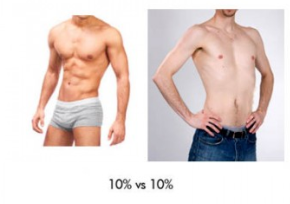
Is a Low Body Fat Percentage the Same As Thin or Skinny?
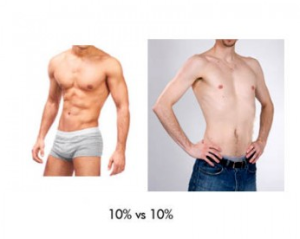
Just what does “low body fat” mean, if there’s a such thing as “skinny fat,” and is a person with low body fat necessarily what we’d consider as thin or skinny? (more…)
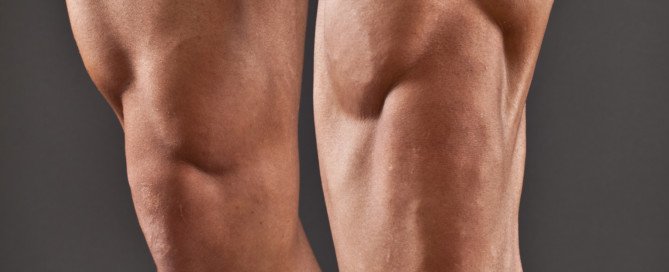
Back Squat Comparison to Leg Press: Quadriceps Activation
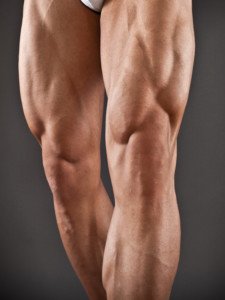
Find out what research says when the back squat is compared to the leg press for activating quadriceps muscles. (more…)

Daughter Gained Weight in College? Tips for Parents

How should parents approach daughter’s college weight gain?
Has your daughter gained weight while in college and you’re wondering how to approach this topic without offending her?
So what’s a parent (usually, the mother) to do or say, or not say, upon seeing a visible weight gain in her daughter who is visiting home from college?
A mother may have absolutely no intention of hurting her daughter, but ends up doing so anyways, without realizing it.
“It is essential that parents do not overreact, react impulsively or jump to conclusions about weight fluctuations,” says Harry A. Brandt, MD, Regional Medical Director, Eating Recovery Center/Eastern Region in Baltimore, MD.
“During adolescence and early adulthood, bodies naturally go through changes in size and shape that are normal and often are perfectly healthy. It is possible that this is the case.”
What if it’s not the case, and your daughter has been struggling with unhealthy behaviors, negative body image or stress-related eating while at college?
This is easy to do, being that there are unlimited servings for most dormitory cafeteria foods, which include cake, pie, cookies, ice cream, hot dogs, pizza, fries, biscuits, not to mention breakfast foods like sausage, bacon and pastries.
And don’t forget the dormitory’s snack shop: pizza, nachos, etc.
“If the child does not seem to be concerned about her own weight gain, a parent’s comment may trigger unnecessary anxiety that could lead to decreased self-esteem, chronic dieting, obsessive exercising or even serious eating disorders,” says Dr. Brandt.
“The reality is, most individuals (especially college students) who gain weight are already aware of it and do not need a parent to point it out.
“In fact, making statements about weight often causes people to shut down and become defensive.
“Focusing on the weight change is not likely to be the best way to encourage productive further communication with the child.”
This is akin to telling a smoker, “You smoke.”
Dr. Brandt continues, “Unless the child initiates the discussion, weight changes are certainly not best discussed during the early period of reuniting with the child.
“Initially, parents could focus on enjoying the visit with their child, asking questions about school, classes, friends, and other general areas to get a holistic view of how their child is really doing at college.”
It would be unrealistic, however, for the parent to pretend that a daughter’s college weight gain never happened, especially if the parent is worried about possible complications such as insulin resistance, which is a forerunner to type 2 diabetes.
“If parents notice changes in a child’s weight and are considering raising discussion, it is crucial to first reflect on the origin of the concern,” says Dr. Brandt.
“Is it a parent’s own negative body image or anxiety about cultural weight/beauty ideals that is driving the concern over a child’s weight gain?”
Or is it concerns over your daughter’s health and eating too much unhealthy junk food at college?

“Effective parents are able to focus on health and underlying feelings or stressors as opposed to weight and size.
“For example, asking open-ended statements about the transition to college is usually more productive and more informative than asking how much weight they gained or focusing on causes of weight gain (i.e., ‘Looks like you’re not exercising enough.’).”
Here are some open-ended questions that a parent can the daughter who has gained weight at college:
“What’s been the hardest part of this semester for you?”
“Classes sound like they’ve been really stressful. What are you doing to take care of yourself?”
“What is your schedule like on a normal day?”
“Are you sleeping okay?”
“Are you feeling okay?”
“How’s the dining hall?”
“Do you and your friends use the campus fitness center at all?”
Bear in mind that a noticeable weight gain from college doesn’t always indicate that your daughter needs special counseling or is struggling, though it is important to remember that the campus counseling center is always an option if this is indeed the case.
I gained weight in college for the very simple reason that there were unlimited servings of absolutely delicious dormitory food!
The soft, fresh baked chocolate cookies were divine, and the tuna salad sandwiches were out of this world.
The marble cake was impossible to stop at just once serving, and don’t even get me started on the snack shop’s 5-star pizza.
“It is essential that parents do not judge weight gain as a negative,” says Dr. Brandt.
“Parents need to assess whether they are acting in the best interest of their child and not as a result of their own insecurities, negative body image, or cultural prejudices about weight/size.”
 Dr. Brandt pursued fellowship training in biological psychiatry and eating disorders at the National Institutes of Health where he eventually became Chief of the NIMH Eating Disorders Program.
 Lorra Garrick has been covering medical, fitness and cybersecurity topics for many years, having written thousands of articles for print magazines and websites, including as a ghostwriter. She’s also a former ACE-certified personal trainer.
.
Top image: ©Lorra Garrick

Types of Exercise that PREVENT Knee Osteoarthritis

Specific exercises will help prevent osteoarthritis of the knees.
But which exercises, specifically, just might prevent this common painful condition?
A study has some surprising results, and enthusiasts of prolonged running won’t like these results.
I’m a former certified personal trainer, and I’m not ready to accept these results, even though they are indeed the results of a carefully controlled study headed by Thomas M. Link, MD, radiology professor and chief of musculoskeletal imaging at University of California, San Francisco.
Dr. Link explains in his report, “According to the results of our study, participating in a high-impact activity, such as running, more than one hour per day at least three times a week appears associated with more degenerated cartilage and potentially a higher risk for development of osteoarthritis.”
Dr. Link adds that “light exercise” and avoiding “frequent” knee-bending may guard against development of osteoarthritis in the knee.
This condition afflicts about 27 million Americans over age 25.
Before you conclude that high-impact exercise is a risk factor for knee osteoarthritis only in those already at risk, such as obese people, or people with previous knee injuries, this study included a control group who did not have outstanding pre-existing risk factors for the condition.
The researchers studied 132 subjects without symptoms, but at risk for knee osteoarthritis.
Also recruited were 33 control subjects who were matched for age and body mass index. Subjects included 66 men and 99 women between 45 and 55.
They answered the Physical Activity Scale for the Elderly questionnaire, and based on that, were placed into three strength training and exercise levels.
For “exercise,” the divisions were: sedentary, light, and moderate to strenuous. For “strength training,” the divisions were: none, minimal and frequent. Subjects also did knee-bending.
Among the three exercise groups, who had the healthiest knee cartilage? The light exercisers.
Among the strength trainers, who had the healthiest cartilage? The “minimal” group. MRI imaging verified the findings.
For women who did moderate to strenuous exercise, an association existed for more degeneration of knee collagen.
The study found that the following physical activities were tied to greater cartilage abnormalities:
Squatting to lift items over 25 pounds, going up at least 10 flights of stairs daily, and deep knee-bending or kneeling at least 30 minutes daily.
Dr. Link says that frequent bending of the knee, and strenuous exercise, are risk factors for osteoarthritis.
According to this study, then, the best kind of exercises for prevention of knee osteoarthritis are the absence of strenuous exercise, avoiding frequent knee bending and squatting, and avoiding high-impact activities like tennis and running.
More specifically, the exercises that may prevent knee osteoarthritis are low-impact like walking, swimming and the elliptical machine.
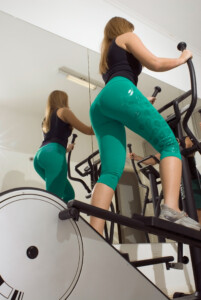
Dreamstime.com Orangeline
Hovis adds that frequent walking in particular, is the smarter choice for preserving healthy cartilage.
I do have questions:
1) Have any studies been done comparing the development of degenerated knee cartilage between lifelong rigorous exercisers, and people who began rigorous exercise later in life?
2) Have any studies been done comparing only lean people to lean people?
3) Have any studies been done that excluded poor exercise form or unsafe biomechanics?
For example, when someone uses the Smith machine for squats, foot position can alter how this affects the knee architecture over time.
4) Has the effect of high intensity interval training on risk of knee osteoarthritis or preservation of cartilage been examined, versus research focusing only on steady-state or long duration running?
If you are not symptomatic for knee osteoarthritis, do your homework very thoroughly before deciding to give up running, plyometrics, barbell squats and, in general, strenuous exercise routines.
Lorra Garrick is a former personal trainer certified by the American Council on Exercise. At Bally Total Fitness she trained clients of all ages for fat loss, muscle building, fitness and improved health.
.
Top image: Shutterstock/Africa Studio
Source: .sciencedaily.com/releases/2010/11/101129101912.htm
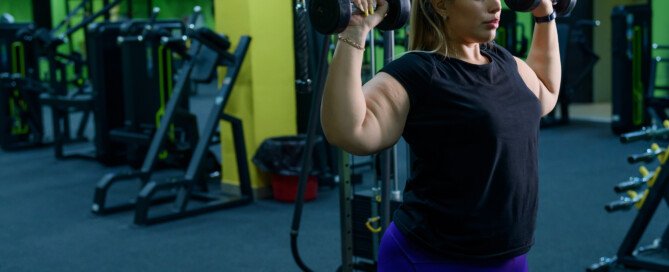
Why Obese Women Should Do Free Weight Workouts
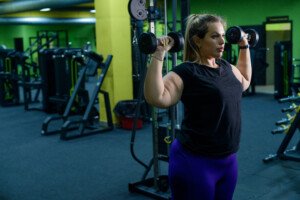
Obese women absolutely need to do strength training, especially with free weights!
I continue to see a severe shortage of obese women lifting weights, i.e., strength training, especially in the free-weight area.
The free weight area is always barren of obese women. On the rare occasions I see obese women strength training in the free weight area is when they have a personal trainer.
What’s so special about the free weight area? Research clearly shows that training with dumbbells and barbells is superior to burning fat and getting physically fit, than is training with machines.
However, some machines are excellent for some routines, such as lat pull-downs, seated rows, and lateral raises, which help shape shoulders.
If you’re an obese woman, simply observe the women in the free weight area.
Compare them to the women who only hang at the machines, and to women who never do any strength training and instead just do cardio.
You will see a notable difference in physiques. The women with the best bodies, collectively, are always in the free weight area.
Shutterstock/Reshetnikov_art
Why do so few obese women venture into the free weight area, let alone spend most of their workout time there?
Intimidation. Because more “hard-bodies” are in the free weight section, obese women will feel awkward and out of place.
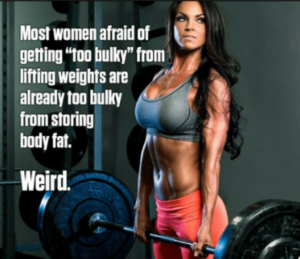
Fear of bulking up. An obese woman may believe that handling barbells and big dumbbells will make her get bigger.
If this sounds like you, I say again, observe the ladies who work hard with free weights. Are they bulky or big?
Sure, you might just happen to see another plus-size woman using free weights.
But she’s not full-figured because she uses free weights.
Look at the women who regularly lift with free weights.
What size dress would you say they wear? Is that size your goal size? Enough said.
What kind of routines should an obese woman do with free weights? You are not limited by your size!
You are only limited by fear. However, if strength training is new to your body, then take it easy and go light; don’t try to set records. This same rule applies to thinner novice women.
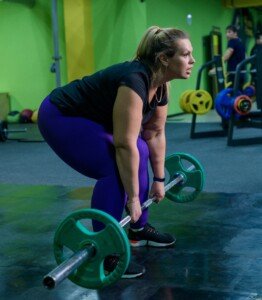
Some very effective routines include deadlifts, barbell squats with a Smith machine, leg press, flat or incline bench press, dumbbell press and “clean-and-press,” which is when you pick a barbell off the floor and then press it over your head.
Tips for obese women new to strength training or using free weights:
1. Hire a personal trainer. No, this doesn’t mean spend thousands of dollars. Health clubs offer small training packages. Four sessions can go a long way.
2. Participate in a group fitness class that includes strength training. These classes use dumbbells and barbells. Barbells can be very light.
3. Ask personal trainers at your gym for basic help; they have down time and will gladly answer questions.
5. Consult with a friend who’s experienced with strength training.
Obese individuals, as they become stronger, should not fear increasing the resistance load.
Training should be progressive. When 30 pounds starts feeling less challenging, then go to 35 pounds, and so on. You will not gain inches; you will lose inches.
If you are an obese women, promise yourself that you’ll take a detour from your current path and step into that free weight area of your health club or gym.
Olympic barbells without added weights weigh 45 pounds. Start bench pressing. You’ll get hooked!
Lorra Garrick is a former personal trainer certified through the American Council on Exercise. At Bally Total Fitness she trained women and men of all ages for fat loss, muscle building, fitness and improved health.
.
Top image: Shutterstock/Reshetnikov_art
Knee Osteoarthritis Treatment Without Surgery: Lose Weight
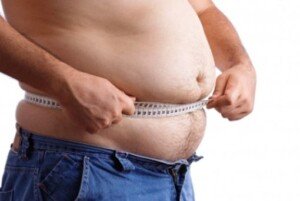
Before scheduling surgery for your diagnosed knee osteoarthritis, see what happens when you lose weight.
Obesity is a major risk factor for knee osteoarthritis. (more…)

Blast Off Belly Fat 8 Minutes a Week, 4 Minutes at a Time

Do you have belly fat that won’t go away, no matter how much you exercise?
There truly is a secret to burning fat, and this fat-loss technique has been proven time and time again with scientific studies on maximum fat loss. (more…)



Fun Ways to Get in More Steps with Your Pedometer

Counting steps with a pedometer can lose its steam after a while.
It can become a boring way to lose weight, and not only that, but relying only on pedometer step counting for weight loss and fitness has significant limitations. (more…)