Cause of Eye Freckles that You Can See in a Mirror

If you can see tiny brown specks or freckles in the iris portion of your eyes, these can increase the risk of two serious eye diseases. (more…)
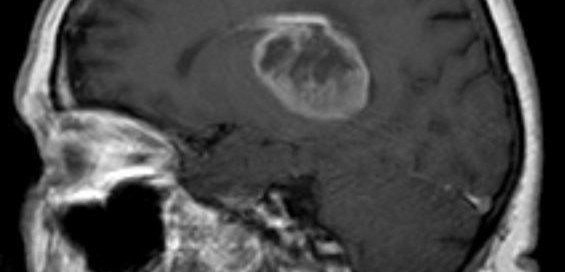
How Common Is Glioblastoma Brain Cancer in Americans?
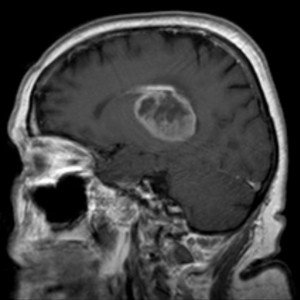
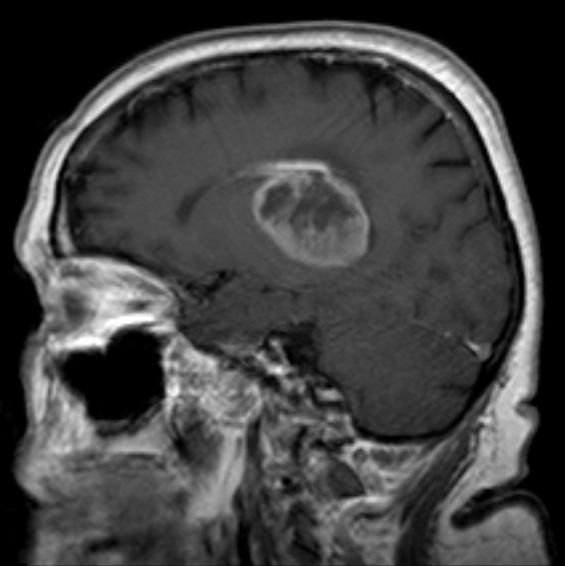
Glioblastoma brain cancer is actually the most common type of malignant brain tumor in adults, and the prognosis is grim.
“He’s finished,” one might think upon learning that someone has this very high grade cancer.
This type of brain tumor is also commonly known as glioblastoma multiforme.
It’s aggressive and merciless.
Incidence of Glioblastoma Brain Cancer in the U.S.
• 3.19 per 100,000 people according to Cancer Epidemiology, Biomarkers and Prevention (July 22, 2014); and 4.67 to 5.73 per 100 000 (Neuro-Oncology, July 2014).
• Average age of diagnosis is 64
• Can strike any age; 1.1 to 3.6 per 100 000 infants (Contemporary Oncology, 2014)
• More common in men than women: 1.26 cases to 1, and 3.3 to 1 for infants (Contemporary Oncology, 2014)
• Average survival rate with treatment after diagnosis is 15 months.
• Five year survival rate with treatment is less than five percent.
Glioblastoma Brain Cancer Symptoms
The American Association of Neurological Surgeons lists the following symptoms.
• Persistent headaches
• Blurred or double vision
• Loss of appetite
• Vomiting
• Personality or mood changes
• Cognitive impairment
• New-onset seizure
• Gradual onset of speech difficulty
Why is a GBM so lethal?
Glioblastoma is particularly difficult to treat due to several factors.
Firstly, its highly aggressive nature makes it one of the most rapidly growing and invasive brain tumors.
The tumor cells infiltrate surrounding brain tissue, making complete surgical removal difficult (National Brain Tumor Society, 2020).
Additionally, glioblastomas often exhibit resistance to standard treatments like radiation and chemotherapy.
This resistance is partly due to the tumor’s heterogeneous cellular composition and the presence of a blood-brain barrier that limits the effectiveness of many drugs (American Brain Tumor Association, 2021).
Furthermore, glioblastoma cells can develop multiple mechanisms to evade the immune system and repair themselves after medical treatment (Cancer Research UK, 2022).
Breakthrough Can Extend Life for GBM Patients
A study from Keck Medicine of USC may offer new hope regarding glioblastoma.
Researchers have found that combining three different types of therapy may significantly extend patients’ lives.
The treatment involves using tumor treating fields (TTFields), a device that sends mild electric fields into the brain to interfere with cancer cell growth.
When used together with chemotherapy and a form of immunotherapy called pembrolizumab, this combination appears to give patients more time.
How It Works
TTFields uses low-level, alternating electric waves to disrupt cancer cell division.
The painless waves are delivered through soft mesh patches on the scalp, which patients wear for about 18 hours a day.
The electric fields target only the tumor without harming surrounding healthy brain tissue.
On their own, these electric fields help slow down or stop tumor growth.
But in this study, scientists found they helped trigger the body’s immune system to attack the tumor.
The fields attracted the immune system’s T cells into the area around the tumor.
Once these immune cells were present and active in the tumor, the addition of immune-system-boosting pembrolizumab helped them work even better.
The Results
The new combination therapy led to a 70% improvement in how long patients lived, compared to earlier patients who received only TTFields and chemotherapy.
The treatment worked best against large tumors that couldn’t be removed through surgery.
These patients, who usually have the worst outlook, showed the strongest immune response and lived the longest.
Bigger tumors may provide more “targets” for the electric fields and the immune system to work on.
When the tumor is left in place, it may trigger a stronger immune response — something that surgery might accidentally reduce by removing much of the tumor material the immune system would otherwise recognize.
To test this, researchers launched a clinical trial involving 31 patients with newly diagnosed glioblastoma.
All had already completed radiation treatment.
Of those, 26 received the full treatment: TTFields, chemotherapy and immunotherapy.
Seven of these patients had inoperable tumors.
The full treatment in the Keck study lasted up to two years, depending on how well each patient tolerated the therapy.
On average, patients who received all three treatments lived about 10 months longer than those who had previously received TTFields and chemotherapy alone.
Those with inoperable tumors lived about 13 months longer.
As of summertime 2025, Keck Medicine is participating in a larger Phase 3 trial that will include over 740 patients at sites in the U.S., Europe and Israel.
 Lorra Garrick has been covering medical, fitness and cybersecurity topics for many years, having written thousands of articles for print magazines and websites, including as a ghostwriter. She’s also a former ACE-certified personal trainer.
.
Top image: Hellerhoff
Sources:
ncbi.nlm.nih.gov/pubmed/25053711
ncbi.nlm.nih.gov/pmc/articles/PMC4057143/
ncbi.nlm.nih.gov/pmc/articles/PMC4248049/
abta.org/about-us/news/brain-tumor-statistics/?referrer=https://www.google.com/

Prolonged QTc on One EKG but Not the Others?

What should you do if one EKG out of several shows a prolonged QTc interval?
Your cardiologist may then start talking about possible cardiac arrest.
This is scary sh**! And I know this because it happened to me. (more…)

2 Signs that Teen with Long QT Syndrome May Have Cardiac Arrest

Long QT syndrome is a potentially fatal heart arrhythmia that’s usually diagnosed in childhood. (more…)
Why Obese Men Are More Likely to Get Aggressive Prostate Cancer

Obese men have a higher risk of getting aggressive prostate cancer. But obesity can also cause problems with the initial screening process.
Researchers investigated the relationship of height and weight on the development of prostate cancer as well as death from this disease.
When people think of the health risks of obesity, most usually think of any of the following:
- Heart disease
- Heart attack
- Obstructive sleep apnea
- High blood pressure
- Type 2 diabetes
- Knee replacement surgery
But obesity is quite relevant to prostate cancer.
A study involved about 150,000 male subjects. Over a 14 year period their data was analyzed. At the end, 7,024 were diagnosed with prostate cancer.
• 726 were aggressive tumors
• 934 deaths total
Average age at diagnosis was 67.8, and the age range was 41 to 95.
Height, Weight and Aggressive Prostate Cancer
For every 10 centimeter increment in a man’s height, the risk of aggressive prostate cancer jumped by 21 percent, and mortality risk spiked by 17 percent.
Obesity was also found to be a risk factor. Needless to say, keeping a healthy body weight lowered both risks.
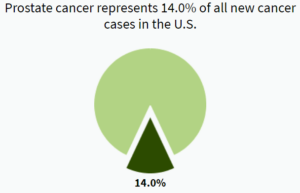
seer.cancer.gov/statfacts/html/prost.html
Why is obesity a risk factor in prostate cancer?
Overweight men are less likely to be diagnosed with early prostate cancer.
“Meta-analyses of existing data suggest that obese men are at higher risk of aggressive prostate cancer and a failure of treatment (surgery and radiation),” says Matthew Allaway, DO, a urologist who specializes in detecting prostate cancer and the developer of a prostate biopsy technique that improves cancer detection.
“Potential causes include the increased challenge of screening, insulin/insulin growth factor, sex hormones and adipokine signaling factors.
“Of interest, obese patients often have low testosterone levels, which have been linked to more aggressive prostate cancer.”
Obesity can hinder detection of the disease because overweight men tend to have larger prostates.
Plus, “Conducting a prostate specific antigen (PSA) test in combination with a digital rectal exam (DRE) is the standard process in diagnosis of prostate cancer before a biopsy is performed,” begins Dr. Allaway.
“It is more challenging to perform these tests in obese men because it is more difficult to actually feel and find their prostates.”
The problems with obesity don’t end as yet. Dr. Allaway also explains, “Obesity leads to increased aromatization (the process that converts testosterone into estrogen), causing estrogen levels to rise and testosterone levels to drop.
“Low testosterone has been linked to increased risk of aggressive prostate cancer.”
The full report, regarding the connection to obesity with prostate cancer, is in BMC Medicine (2017).
 Dr. Allaway is the founder and CEO of Perineologic, a medical device company focused on the development and delivery of technology to improve the safety, precision and efficiency of healthcare options in the field of urology.
 Lorra Garrick has been covering medical, fitness and cybersecurity topics for many years, having written thousands of articles for print magazines and websites, including as a ghostwriter. She’s also a former ACE-certified personal trainer.
.
Top image: Motortion Films
Source: bmcmedicine.biomedcentral.com/articles/10.1186/s12916-017-0876-7
Cardio or Strength Training for Diabetic Lowering Blood Sugar?
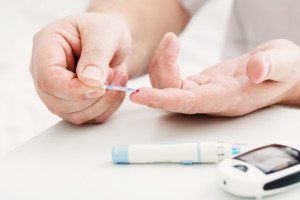
“Strength training and cardio workouts can have different short- and long-term effects on your blood glucose (sugar),” says Sheri Colberg, PhD, Professor Emerita, Exercise Science, Old Dominion University, founder of Diabetes Motion, and one of the world’s leading experts on diabetes and exercise.
Diabetes Blood Sugar Control: Cardio vs. Strength Training
“In general, strength training causes a greater release of glucose-raising hormones like glucagon and adrenaline, and your blood glucose is less likely to drop and may even go up when you do intense strength workouts,” says Dr. Colberg.
“Cardio workouts that last for 30 to 60 minutes are usually done at a more moderate workload and lower blood glucose more than intense ones or strength training,” continues Dr. Colberg.
Intensity a Key Factor
HIIT cardio involves, for instance, sprinting as fast as you can across a parking lot (very intense!) and then walking slowly around for several minutes to recover – alternating this way for 20 minutes total.
You’ve done actual work for maybe three minutes total, but high intensity interval training (three minutes’ total work, 17 minutes recovery walking) is far more intense than a continuous 5 mph jog around that parking lot for even 40 minutes.
So as far as lowering blood sugar, “It depends a lot on the intensity of the workouts,” says Dr. Colberg.

Light effort can also mean a weight training session in which you stop at 12 repetitions at light resistance, but feel you could have done another 12.
The session is even more docile when most of the exercises isolate small muscles, such as with the inner and outer thigh machines, biceps curls, triceps kickbacks and dumbbell side lifts.
“All intense exercise of any type has the potential to temporarily raise blood glucose instead of lowering it,” says Dr. Colberg.
Intense strength training would be 1) a focus on big multi-joint moves like the bench press, leg press, back squat, deadlift and overhead barbell press, 2) an eight to 12 rep max in which rep 13 is impossible due to so-called muscle failure, and 3) short rest periods.

Shutterstock/baranq
“As far as the longer term effects go, your blood glucose will tend to drop more after resistance training if you use up lots of stored carbs from muscle (glycogen), and you may drop overnight, whereas cardio workouts may have less of an impact on your blood glucose later on.
“Many other factors impact how your blood glucose responds to any given workout, though, including exercise type, the time of day, when you last ate, what your medication regimen is and environmental factors, to name just a few.”
Study Shows Better Blood Sugar Control when Strength Training Precedes Cardio
Canadian researchers showed that if weights and cardio are done in the same session, diabetics gain better blood sugar control when they lift weights first.
However, the study, led by endocrinologist Dr. Ronald Sigal, focused only on type 1 diabetes.
The Study
• 12 type 1 diabetics, already fit from cardio and weight training, participated.
• They worked out in a lab setting twice with at least five days apart.
• One session was 45 minutes of treadmill cardio followed by 45 minutes of strength training.
• The other session was in reverse order.
• Each session began at 5 pm.
• Blood sugar was measured before, during and after the sessions.
The target glucose for type 1 diabetics is 4 to 10 mmol/L.
If the participants’ glucose dropped below 4.5 mmol/L, they were instructed to stop exercising and eat.
Doing cardio before weights caused blood sugar to drop closer to that threshold and remain lower during the remainder of the workout than when subjects did strength training first and cardio after.
Needless to say, when strength training was done before cardio, there was less of a drop in blood sugar in the hours following the session. Post-workout glucose drops also tended to last shorter.
This study shows what previous research reveals: Cardio causes a faster drop in blood sugar than does strength training.
Bear in mind that this was a small study and that, as Dr. Colberg mentioned, other factors influence glucose level.
The Canadian team acknowledges that other factors, that were not accounted for, could have influenced glucose readings.
This includes what the participants ate prior to the lab sessions.
The report, which appears in Diabetes Care, also points out that the results may not apply to type 2 diabetics, unfit diabetics or older diabetics (mean age of study subjects was 32).
So don’t take these study results as the gospel. But it won’t hurt to do strength training before cardio if you have no choice but to combine both in the same session.
However, the diabetic (as well as general population) is served best when strength training and cardio are done on separate days.
This will also be better for blood sugar control.
 The mission of Diabetes Motion is to provide practical guidance about blood glucose management to active diabetics. Dr. Sheri Colberg is the author of “Diabetes & Keeping Fit for Dummies.”
Lorra Garrick has been covering medical, fitness and cybersecurity topics for many years, having written thousands of articles for print magazines and websites, including as a ghostwriter. She’s also a former ACE-certified personal trainer.
.
Top image: Shutterstock/Maya Kruchankova
Source: bit.ly/yItDRO Diabetes Care, online February 28, 2012

Should Diabetics Eat Before or After Exercise?

Whether or not a diabetic should eat before or after exercise depends on at least five factors, says a leading expert on diabetes. (more…)
Should Diabetics Strength Train or Do Cardio for Weight Loss?

If a diabetic had to choose one form of exercise for weight loss, either strength training or cardio, one of these is much better for igniting fat loss.
Obesity and even a moderate amount of excess body fat are risk factors for developing type 2 diabetes. (more…)
3 Strength Training Exercises Least Affected by Mastectomy

If you’ve had a preventive double mastectomy and were told to lay off strength training for at least four weeks postop, there are 3 exercises that will be particularly easy to get back into once your restriction is lifted. (more…)





Why Don’t Kids Using Computers Get Carpal Tunnel Syndrome?