Cause of Sciatica Pain and Tingling in the Butt and Hip

If you’re suffering from sciatic butt pain, especially if it’s accompanied by tingling or numbness, this is probably caused by the sciatic nerve getting compressed by the piriformis muscle. (more…)

Treatments for Butt and Hip Pain, Tingling and Numbness

Pain in your butt and hip that’s especially accompanied by tingling or numbness is usually a condition called piriformis syndrome; here’s treatment that will bring you relief. (more…)

Can Children Get Venous Insufficiency?

You’ve probably seen venous insufficiency in adults with its classic signs of purplish or red swollen lower legs, but why don’t kids get this? (more…)

Can Seeing Your Lungs on a CT Scan Help You Quit Smoking?

A CT scan of one’s lungs can motivate smokers to finally kick their cancer causing habit.
Perhaps this is because what you can finally see (your lungs) will kick you into high gear to throw out the Camels for good. (more…)

Child Hits Head, Feels Fine but Vomits Overnight: Get to ER

Did your child hit their head during play yesterday, felt fine all day but in the middle of the night vomited?
Are you still wondering if an ER visit is necessary?
“With a head injury, the thing that pediatricians worry about the most is bleeding in or around the brain,” says Dr. Tiff Jumaily, MD, a board certified pediatrician with Integrative Pediatrics and Medicine.
“Bleeding in the brain is an emergency that needs urgent medical attention.
“However, it is rare. So, we try not to send every bump on the head to the ER.
“If there were bleeding in the brain, it could cause increased pressure in the head — which might manifest as an extremely painful headache, vomiting (especially when lying down) or seizures.”
I was inspired to write this post after reading about a woman whose young son bonked his head at the playground. He got right back up and felt fine all day (seemingly, anyways).
He seemed fine in the evening too, but then awakened in the middle of the night and vomited.
His parents decided to wait till “morning” to take him to the emergency room. Needless to say, a scan revealed bleeding in his brain. He fully recovered. He was lucky.
But this lucky story doesn’t mean you can wait till “morning” if your child upchucks in the middle of the night — even if they felt or seemed fine all throughout the preceding day and evening.
If a bang to the head (hit by a hard ball; hits head on a hard object on the way down from a fall; or slams head to hard ground during sport or play) occurred in the day prior to overnight, and then there’s vomiting for no apparent reason late into the night …
Get to the ER Now
Do not “wait till morning,” even though in the case I read about, there was a happy ending.

Shutterstock, Rocketclips, Inc.
“If a child hits their head and then vomits within the next 12 hours, I would recommend the child is examined in the emergency department right away,” says Dr. Jumaily.
“The dangers of a bleed in the head are too great to risk ignoring.”
Vomiting as a result from head trauma can be delayed while blood and fluid slowly and stealthily build up in the brain.
But once an overt symptom occurs, the deterioration can be rapid – and deadly.
The presence or absence of a visible injury is NO indicator of seriousness or prognosis.
Well of course, if there’s a gaping deep gash that reveals brain matter and bone fragments, common sense says this is immediately life threatening.
But a “little bump” does not mean there can’t be a serious head injury.
And NO bump, bruise, cut or redness certainly cannot be taken to mean “it’s nothing.”
Symptoms are a tell-all sign that something sinister can be brewing unseen under the skull: bleeding in the brain.
Don’t wait till morning to take your child to the ER if there’s upchucking or even just a little spitting up. The sunrise will not wait for you.
If the next 12 hours coincides with when the child will be asleep – even if that means overnight – you should periodically check on him to make sure that there’s been no vomiting.
As a matter of fact, it’d be a smart move to have the child sleep in your room so that if she vomits, there’ll be a greater chance of you immediately awakening to it rather than sleeping through it.
Though vomiting can indicate bleeding in the brain, this isn’t always the case. But are you going to leave this to chance?
Your child just vomited. He or she got hit in the head hours earlier.
There is no way that you, sitting there at home, can see into their brain. But a CT scan can.
Now you may be concerned over a CT scan’s radiation.
However, an ER doctor will weigh the risk benefit ratio of ordering a CT scan for your child’s head.
Progressive bleeding in the brain causes progressive neurological symptoms that an ER doctor will be looking for.
UpToDate.com says about 10 percent of kids vomit at least once after a head injury, and that “Children who vomit after a head injury do not necessarily have a serious brain injury.”
Vomiting warrants a trip to the ER to rule out a brain hemorrhage.
Which action is more regrettable for the rest of your life:
• Took my child to the ER right after they vomited but the CT scan was clean and he was sent home soon after.
• Delayed taking my child to the ER because I wanted to wait till morning, but by then he couldn’t be wakened. I rushed him to the ER but by then he’d stopped breathing.
They got him resuscitated but then said he was brain dead. A brain scan showed an acute subdural hematoma.
Fear of CT Scan Radiation
UpToDate.com points out that “In studies, some children with vomiting, headache, or a brief loss of consciousness (without other symptoms) have a traumatic brain injury while others do not.”
The emergency room physician may simply place your child under observation rather than rushing to order a CT scan.
UpToDate points out that in these situations, one reasonable approach is to observe the child closely for four to six hours following the injury. This usually takes place in an ER setting.
If there are no further symptoms, the young patient will not usually need a CT scan.
Kids who are doing well more than 12 hours after a bang to the head have a very low risk of a brain injury that would require surgical intervention — although there always is a very small chance.
It’s all about being safe rather than sorry. If your child vomits overnight, following getting hit in the head the previous day, don’t panic, but do take him or her to the emergency room and let the physician make a determination.
 Dr. Jumaily is a board certified pediatrician and fellow of the American Academy of Pediatrics. She has a thriving pediatric practice in Los Angeles, where she integrates allopathic medicine with integrative and holistic options to treat the whole child and help them thrive.
 Lorra Garrick has been covering medical, fitness and cybersecurity topics for many years, having written thousands of articles for print magazines and websites, including as a ghostwriter. She’s also a former ACE-certified personal trainer.
.
Top image: Freepik.com, asier_relampagoestudio
Source: uptodate.com/contents/head-injury-in-children-and-adolescents-beyond-the-basics
If Ensure Is So Bad, Why Do So Many Doctors Recommend It?

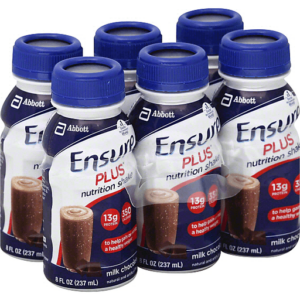
Just what does “No. 1 Recommended by Doctors” mean in those Ensure ads?
Is it really true that doctors and nurses sincerely believe that Ensure is good for their patients?
“Ensure is definitely not conducive to good health,” begins Stacy Mitchell Doyle, MD, resident physician of FoodTherapyMD and long-time advocate of plant-based nutritional protocols.
Dr. Doyle continues, “The ingredients of concentrated milk byproducts, artificial sugars and synthetic vitamins create inflammation and decreased immune function. Yet it carries the label ‘Number 1 Doctor Recommended.’”
You’ll find Ensure in hospitals all over the U.S. Of course, hospitals also carry other “unhealthy” foods such as potato chips, ice cream, cake, pizza, cookies and hotdogs.
But Ensure was given to me as a treat with my dinner, without me asking, when I was hospitalized overnight. I doubt the hospital gives cake or brownies as unsolicited treats.
Why Some Doctors and Nurses Recommend Ensure
I lived this experience firsthand and can tell you precisely why Ensure is the first thing that comes to mind for many doctors and nurses when it comes to nourishing the body.
Let me put it this way. Try to imagine how utterly difficult it would be to get your clinically depressed elderly mother to chew on salmon and swallow it.
When my mother was disabled by depression (later found out to be primarily caused by untreated low thyroid), I was putting forkfuls of salmon to her mouth and urging her to open.
It was a battle to get her to eat her favorite foods like scrambled eggs and yogurt.
But for some odd reason, it was easy to get her to drink Ensure through a straw.
I’m sure scenes like this play out thousands of times a day all over – whatever an underweight elderly person will eat, give it to them, because sometimes, the issue is just getting enough calories into them rather than phytonutrients.
Whatever it takes to get an elderly, ill, underweight person to take in calories, YOU DO IT – even if it’s Ensure!
It was no surprise that whenever I mentioned my mother’s eating issues with various nurses, they’d predictably ask if I had tried Ensure.
When doctors and nurses recommend Ensure, you absolutely must take into consideration the CONTEXT of these recommendations.
Weak from Undereating, Need Calories STAT!
If you ask a doctor or nurse what beverage they recommend “for my elderly sick mother/father/spouse who refuses to eat and is losing a lot of weight and is beginning to look like skin and bones,” you’d better believe you’ll hear “Give them Ensure.”
Now ask a doctor or nurse the following question (and note the drastic change in context):
“What is the healthiest beverage a person can drink?”
You can bet the farm none will answer “Ensure” or any drink similar to it like Boost.
Hospitals will buy the cheapest “nutrition drink” for their patients. If Ensure is cheaper by huge volume than is its main competitors (Boost and Equate), then Ensure will win the bid. Do not take out of context the “Recommended No. 1 by Doctors.”
Yeah, Ensure is No. 1 when compared to Boost or the Equate version of this sugary beverage.
And remember, what’s easier for a post-op 103 pound, non-compliant 85-year-old who refuses to eat to get down in one sitting?
• 300 calories of chicken and potatoes?
• 300 calories of oatmeal and fruit?
• 300 calories of Ensure through a straw?
Brilliant Marketing for Ensure
Why is Ensure No. 1 recommended by doctors? It’s all about the money, says Dr. Doyle.
“Abbott Pharmaceuticals, the makers of Ensure, is a multibillion dollar international company,” continues Dr. Doyle.
“And they spend tens of millions of dollars marketing to physicians, as well as taking them to dinners, sporting events and conferences.
“And more millions are spent on direct to consumer advertising and commercials, so that regular people ask their doctors to prescribe it to them. So having the approval of doctors doesn’t always mean it’s healthy.
“Ensure is not real food. If you are looking for better health, you will find it in the produce section, not in a bottle of liquid candy.”
When’s the last time you saw a TV commercial for pomegranate juice? Medical professionals are subjected to marketing just like anybody else.
Reams of studies have been done on the health benefits of pomegranate juice and green tea, yet doctors and nurses continue to recommend Ensure.
BUT REMEMBER THE CONTEXT of that recommendation!
This also includes for younger people with a health condition that makes solid food intolerable.
It’s much easier for medical professionals to recommend something ready-made in a small bottle than hand out recipes to fruit smoothies.
If you have a decent appetite and want to eat healthy, skip the No. 1 doctor recommended Ensure and drink what has been scientifically proven to be beneficial to the body such as a homemade berry smoothie with some leafy greens mixed in.
 FoodTherapyMD™ is the brainchild of Dr. Mitchell Doyle and recognizes that phytonutrients, the substances that make plant food so amazing, can be tailored to fight specific disease states.
Lorra Garrick has been covering medical, fitness and cybersecurity topics for many years, having written thousands of articles for print magazines and websites, including as a ghostwriter. She’s also a former ACE-certified personal trainer.
Can Diabetes Cause Pins & Needles in Hands Soon after Running?

If you’re diabetic and you run for exercise, you may have noticed that during or soon after running your hands feel like pins and needles are going through them.
And in fact, people who are not diabetic, as well, from time to time will feel a “pins and needles” sensation in their hands during or soon after their running. (more…)
Cause of Fatigue for Days After Exercise in Diabetics

It may not be just the exercise that leaves a diabetic fatigued for days after.
So when a person with diabetes is still suffering from fatigue even days after exercise, there’s a particular situation going on. (more…)






Swollen Hands & Fingers in a Diabetic After Running: Causes

You can stop worrying if you’ve been experiencing swollen hands and fingers after running even if you have diabetes.
That’s because diabetes does not cause your hands or fingers to swell up as a result of running. (more…)
HIIT for Diabetics: Duration, Frequency, Effect on Sugars