The Two Leading Causes of Chronic Venous Insufficiency?

When you see someone with apparent chronic venous insufficiency (swollen red or purple portion on their lower legs), what seems to be the leading causes of this condition? (more…)
Can Weight Loss and Exercise Alone Cure Venous Insufficiency?
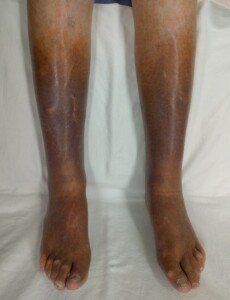
Venous insufficiency can lead to noticeable varicose veins and sometimes only discoloration and swelling.
Being overweight and under-exercised, according to my lifelong observation of the red/purple and swollen legs of venous insufficiency, seem to be the two conditions strongly linked to these visible characteristics.
Ironically, whenever I see someone with thick varicose veins rippling up and down their legs, that person is never obese and is usually on the trimmer side.
So based on my observations over many years, I asked a vascular surgeon if indeed, only weight loss and a good leg exercise program (squat, leg press, walking lunge) could reduce the visible signs of venous insufficiency.
Now remember, this is about improving an existing problem rather than taking measures (weight control and intense exercise) to actually prevent it from ever developing in the first place.
“Venous insufficiency is a condition related to incompetent vein valves,” says Seyed-Mojtaba Gashti, MD, a board certified vascular surgeon with Broward Health Medical Center in Florida.
“Veins, unlike arteries, carry blood back to the heart, and the veins in our legs have valves to allow blood flow only in one direction: towards the heart.
“If these valves are not functioning well, then the blood would flow down to the legs and over time you developed the varicose veins, swelling, etc.”
This is called venous insufficiency.
“There is no cure for this condition,” continues Dr. Gashti.
“So weight loss and/or exercise will not cure this condition, but they can help reduce the signs and symptoms of it.
“As we walk or use our leg muscles in other ways, the contraction and expansion of the muscles provide a pumping action that helps move blood through these valves.
“Obesity is a known risk factor for cardiovascular disease, and weight loss can be beneficial in that regard; but it also reduces the stress on the veins and may improve the symptoms.”
When I was a personal trainer I never had a client with visible venous insufficiency in the form of swollen reddish or purple legs.
But I did have a client who had painful peripheral vascular disease. Her legs looked normal, but walking was painful, primarily because pressure on her feet from any walking caused pain.
She used a wheelchair in public but was able to walk around the gym.
She was an overweight smoker. Despite these odds stacked against her, she was able to perform leg presses on a machine with an impressive amount of weight – as much as any other typical woman using the same equipment – even more than many, since I’d always encourage my clients to press as much weight as possible (with good form and proper breathing).
I also had her doing high intensity interval training (aka “sprint training”) on a stationary bike.
She was as good as the next woman. I certainly kept her away from the treadmill and walking lunges.
As a fitness enthusiast, I’d like to see more people who have swollen, red or purple legs from venous insufficiency working out in a gym.
With their doctor’s endorsement, they can experiment with various leg exercises and see which ones are tolerable as far as pain.
However, venous insufficiency is not a contraindication to upper body exercise while seated or lying down, such as machine and dumbbell workouts and the bench press!
Though swollen, red and purple legs are unsightly and can be a source of self-consciousness to some people, they may want to wear long sweats or leggings to feel more at ease at a gym. Leggings are extremely common among all women.
But I’d like them to know that many people at gyms have less-than-attractive legs (obesity, cellulite, “chicken” legs, varicose veins) and exercise in shorts nevertheless. And nobody cares!
Even just only upper body workouts (plus dietary control) will help the overweight person with venous insufficiency lose weight, which, as Dr. Gashti points out, can help with this medical condition.

Dr. Gashti specializes in the diagnosis and treatment of vascular disease including abdominal and aortic aneurysm. He received his medical degree from University of New England College of Osteopathic Medicine and has been in practice for more than 20 years.
 Lorra Garrick has been covering medical, fitness and cybersecurity topics for many years, having written thousands of articles for print magazines and websites, including as a ghostwriter. She’s also a former ACE-certified personal trainer.
.
Top image: James Heilman, MD, CreativeCommons

Can Lean People Who Exercise Get Varicose Veins?

Ever wonder if intense exercise is protective against the development of gnarly varicose veins?
This does NOT refer to the “vascularity” that bodybuilders and physique athletes work so hard to achieve. (more…)
Why People with Multiple Sclerosis Should Lift Weights

This isn’t new news: People with multiple sclerosis should take up weightlifting or strength training.
“Exercise is very important to overall health for MS and other chronic diseases,” says Mitzi J. Williams, MD, clinical neurologist with Morehouse School of Medicine and clinical advisor for the Multiple Sclerosis Foundation.
“There are various types of exercise that can help with specific symptoms such as yoga or stretching for spasticity, and swimming for cardiovascular benefit,” continues Dr. Williams.
“Weightlifting can be helpful to build muscle strength for those who have weakness or who just want to maintain good physical condition.”
Study Shows Strength Training Benefits People with Multiple Sclerosis
Never mind the old-school, outdated thinking that those with MS should just take it easy. Lifting weights can relieve symptoms of MS. But it doesn’t end there.
Training with weights can also slow progression of MS, says research which appears in the Multiple Sclerosis Journal (2017).
It’s old news that exercise will not harm a person with MS and improves ambulation, muscle strength and cardio capacity.
The study shows that strength training has a protective effect on the brain as well.
• The study followed 35 people with MS for six months.
• Prior to the study their brains were scanned via MRI.
• Half did strength training twice a week.
• The other half did not.
• At the end of the study MRIs were taken again.
• Those who did the weightlifting showed less brain shrinkage.
In MS, the brain does shrink faster than in those without the disease. Though drugs can help oppose this situation, training with weights adds to this opposition to those already taking the drugs.
Severe MS: Can These Patients Also Benefit from Strength Training?
“If a person has significant weakness related to MS and wants to build muscle tone and strength, a weightlifting program may be best initiated with a physical therapy referral from your doctor or with a personal trainer,” says Dr. Williams.
“It is important to learn to lift weights properly to avoid injury, so any drastic changes to your exercise routine should be discussed with your doctor.”

Dr. Williams is author of “MS Made Simple: The Essential Guide to Understanding Your Multiple Sclerosis Diagnosis.” She is a member of the American Academy of Neurology.
Lorra Garrick has been covering medical, fitness and cybersecurity topics for many years, having written thousands of articles for print magazines and websites, including as a ghostwriter. She’s also a former ACE-certified personal trainer.
.
Top image: Shutterstock/ Catalin Petolea
Source: sciencedaily.com/releases/2017/08/170801090231.htm

Is There a Test Better than PSA for Predicting Prostate Cancer?

A study has determined that the IsoPSA blood test is more accurate at predicting prostate cancer than is the traditional PSA test. (more…)

You Know You Might Have Diabetes When…

Over seven million Americans have NO idea they have diabetes!
Is it really so difficult to know you probably have diabetes without having blood tests?
Many people actually do worry they “might” have diabetes despite not having seen a doctor. (more…)
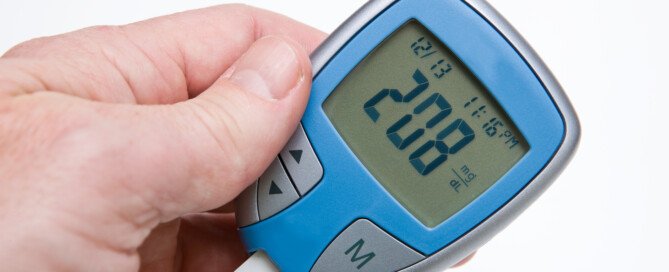
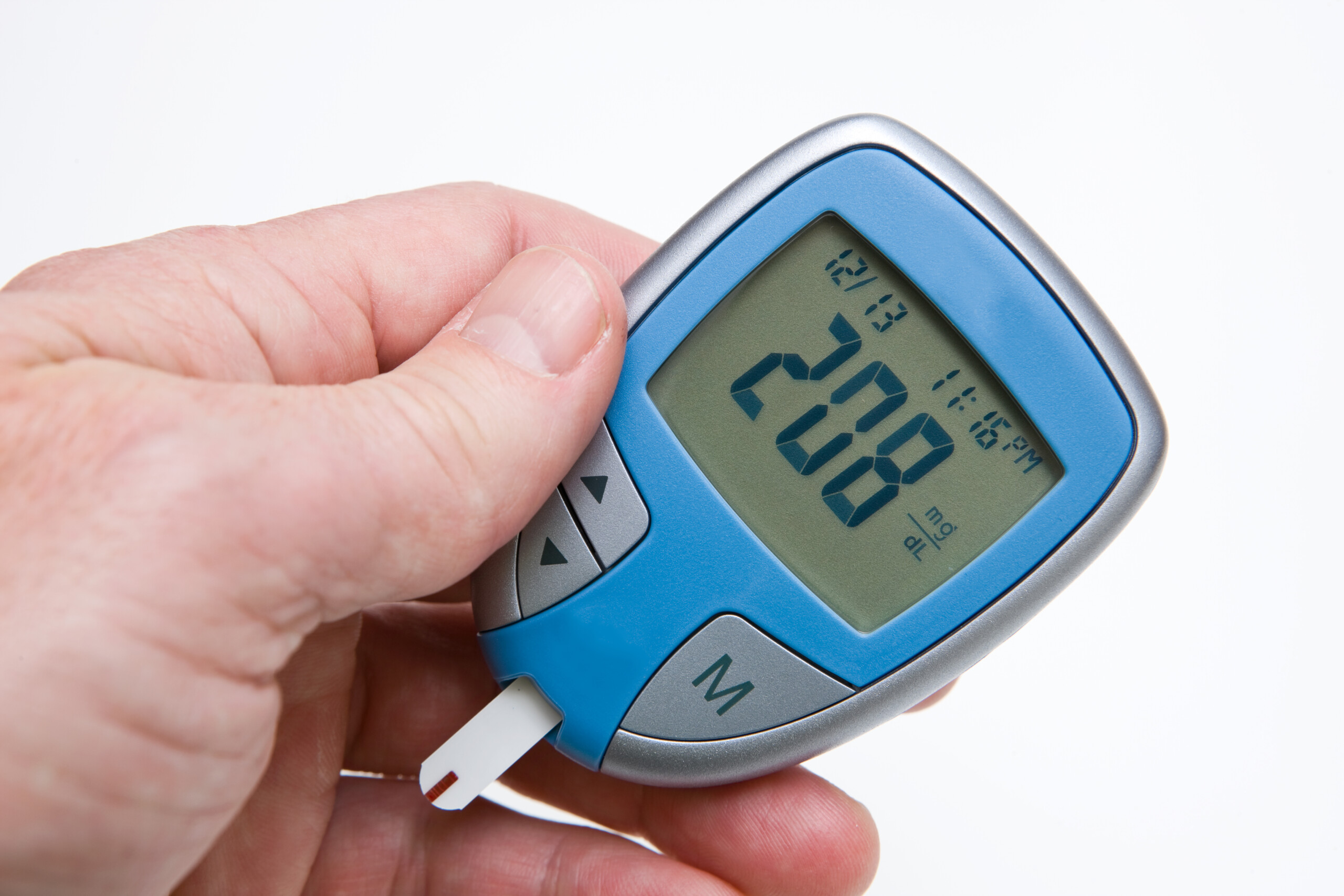
Why Does Blood Sugar in Diabetes Go Up without Eating?
It’s strange that blood sugar in a diabetic can rise despite not having eaten anything, since typically, eating causes blood sugar to go up.
But it’s not an uncommon occurrence that in diabetes, glucose or blood sugar levels can actually rise in the absence of eating.
“When we don’t take food into our body for energy, our liver will try to help us by releasing glucose into our blood so we have the energy we need to stay alive,” says Lucille Hughes, RN, CDE, president of Diabetes Insights LLC.
“For people with diabetes, the liver may release too much glucose, causing blood sugar to go up.”
This is why it’s so important for diabetics to regularly take blood sugar readings, even if they feel fine.
The liver has hundreds of jobs. One of those jobs is to release glucose into the bloodstream for energy — because the body requires energy to function, even when at rest or asleep.
Basic bodily functions require energy — and glucose provides that energy. Even thinking requires energy.
In diabetes, be it type 1 or type 2, things are out of whack in the body.
The liver in the diabetic individual may sometimes overestimate how much sugar to release into the bloodstream.
Or, to put it another way, the liver may over-correct what it “thinks” is a shortage of blood sugar.
The only way that a diabetic person can stay ahead of this curve is to monitor their glucose levels on a regular basis throughout the day to make sure that the sugar level doesn’t sneak its way into getting into a dangerously high range.
Keeping Blood Sugar Under Control
It’s not enough for those with diabetes to faithfully take glucose readings.
A person with diabetes (either type 1 or type 2), even when they’re not hungry, should not go long periods without eating.
This is because irregular eating patterns can lead to fluctuations in blood sugar levels.
Skipping meals can cause blood sugar to drop too low, a condition known as hypoglycemia, which can result in symptoms like dizziness, weakness and confusion.
On the other hand, eating in an inconsistent way can also lead to overeating later, potentially causing blood sugar spikes, not to mention weight gain.
Even a snack sized amount of food will help solve the problem of going long periods without eating.
Snack items should include fruit, nuts, seeds, strips of chicken, a few hard boiled eggs, a tuna salad and other foods with limited processing.

For 35+ years Lucille Hughes has worked as a certified diabetes educator for inpatient acute care, home care, private endocrinology practice and outpatient diabetes education centers. She is board certified in advanced diabetes management and is a fellow of the Association of Diabetes Care and Education Specialists.
 Lorra Garrick has been covering medical, fitness and cybersecurity topics for many years, having written thousands of articles for print magazines and websites, including as a ghostwriter. She’s also a former ACE-certified personal trainer.
.
Top image: Shutterstock/ Hdc Photo

Duration of Standing on One Leg Predicts Future Hip Fracture

Want to know how likely you’ll suffer a hip fracture in the future?
See how long you can stand on one leg before toppling over.
How long a person can stand on one leg without holding onto anything is inversely proportional to risk of a hip fracture down the road. (more…)
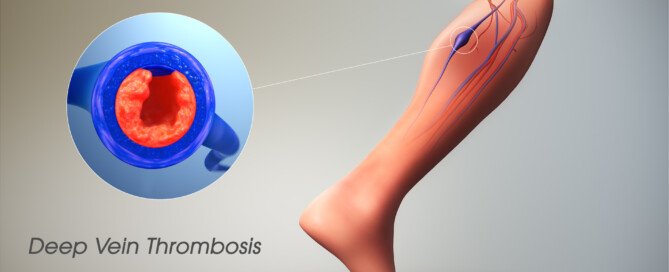
Why Must DVT Patients Take Blood Thinners for Six Months?
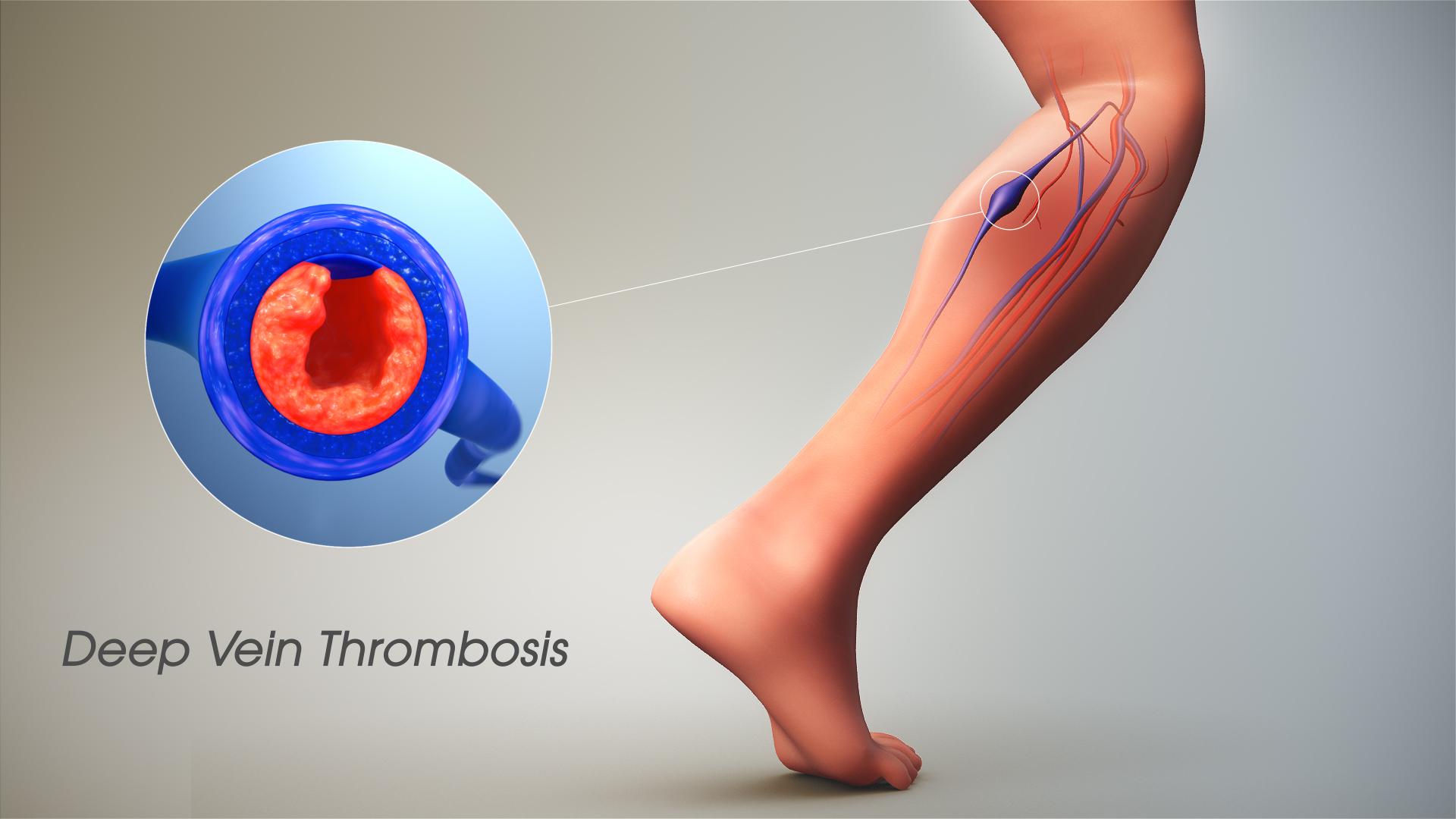
Ever wonder why, if the body has a natural clot-dissolving mechanism, DVT patients must continue with blood thinners for many months even after the blood clot is dissolved? (more…)






How Much Does a Double Mastectomy Affect the Deadlift?