Cause of Just One Finger Getting Icy Cold
It’s one thing when your entire hand feels chilly cold, but what if only one finger feels cold?
This is a very oddball symptom, but it has explanations. (more…)
Can Restless Leg Syndrome Affect Only One Leg?

Restless leg syndrome can occur in only one leg, and there are a few risk factors that can make this happen. (more…)
Can the Lungs Really Itch or Is Something Else Itching?
If your lungs are truly itching, how can you tell it’s your lungs and not something else under your skin like your ribs or muscles? (more…)

Cause of Stomach Pain in Your Baby After Breastfeeding

Does your baby experience pain in the stomach after he or she has been breastfed?
“Belly pain after breastfeeding is extremely common,” says Joel Gator Warsh, MD, of Integrative Pediatrics and Medicine, Studio City, CA, and part of the pediatric staff of Cedars-Sinai Hospital. (more…)
Can Excessive Sweating in an Infant Ever Be Normal?
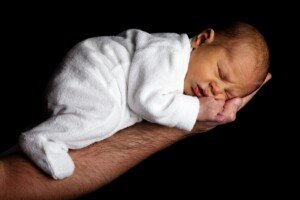
Have you noticed that your baby sweats a lot?
How can a baby sweat when they don’t engage in any exercise, and the temperature in the room is normal?
What’s even more puzzling is that it’s not a vague coat of sweat; sometimes it’s quite wet.
Understandably, this can worry a parent.
“Infants and babies can sweat profusely, causing them to be soaking wet, especially during the deepest stages of the sleep cycle,” says Jacqueline Winkelmann, MD, whose experience includes that of chief medical officer, pediatric hospitalist and former chief-of-staff, Orange County, CA.
Can all the sweating in a baby ever be normal?
“Because newborns spend an average of 15-18 hours a day sleeping, they can often be found in bed very sweaty, even if the temperature in the room is comfortable,” explains Dr. Winkelmann.
“Babies sweat mostly during sleep through the head, and this is common for the first few years of life.” Most of a newborn’s active sweat glands are in the head.
“Babies sweat mostly because they have an immature nervous system. Therefore, they are not able to regulate their temperatures as efficiently as adults can. As in adults, some babies sweat more than others.”
One reason excessive sweating in a baby might frighten the parents is that they think it’s a sign of cancer. After all, it’s no secret that lymphoma causes night sweats.
But rest assured, it is VERY unlikely to be from cancer, especially if it occurs only during sleep.
If your baby sweats a lot (through the head) while you breast feed, that’s because your milk—which is warmed up by your body heat—is making your baby warm.
When to See Doctor About a Sweating Baby: Some Causes Are Serious
Dr. Winkelmann explains, “If the baby sweats while awake, in particular when feeding, notify your baby’s doctor.
“Another warning sign of something more serious can be if your baby is not gaining weight adequately and sweating while at rest or feeding.”
Possible causes are a urinary tract infection, respiratory tract infection and wound infection.
Asthma. This can cause a lot of sweating. But the baby will also be wheezing and breathing heavily.
Congenital heart disease. This can cause excessive sweating while the baby eats or plays.
Hyperhidrosis. This means excessive sweating; patients as young as an infant will sweat profusely even in a normal room temperature and light clothing.
It does not affect health, but it’s a nuisance and causes body odor (depending on where the sweating occurs) as the patient gets older if not well-managed.
Sleep apnea. Yes, babies can have this – due to large throat structures blocking the airway during sleep when the structures are very relaxed. Snoring and fitful sleep are symptoms.
SIDS. “It is important to avoid overheating infants, as it can be a risk for SIDS [sudden infant death syndrome],” says Dr. Winkelmann.
Thyroid disease. This will probably cause additional symptoms such as pale skin.
“Keep the temperature of the room comfortable. Avoid overdressing your baby.” This includes excessive wrapping or bundling.
Babies are more prone to overheating than toddlers and older, because babies cannot readily toss and turn during sleep – which is the body’s way of cooling itself, though tossing and turning can have other causes.
 Dr. Winkelmann, known as Dr. Jacq, has a special interest in sports nutrition for young athletes, teen issues and the opioid epidemic, and baby and infant product consulting. She’s an award-winning pediatrician, national and international speaker and published author.
 Lorra Garrick has been covering medical, fitness and cybersecurity topics for many years, having written thousands of articles for print magazines and websites, including as a ghostwriter. She’s also a former ACE-certified personal trainer.
Causes of Green Mucus in a Baby’s Ear Include Eardrum Rupture

If there’s green gunk or mucus coming out of your baby’s ear, there’s no reason to panic (if it was blood, yes, ER time), but a ruptured eardrum is one possible cause.
There is no cause of green mucus or discharge from a baby’s ear that would justify letting it run its course without a diagnosis and treatment. (more…)
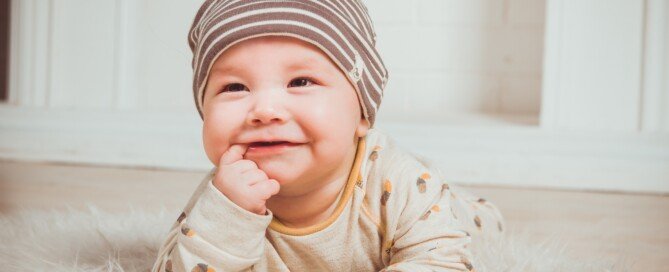
Why Are Some Babies Fat and Some Skinny?

Some babies are fat and tubby while others are skinny and scrawny.
And many fall in between somewhere. What makes one baby fat and the next one thin?
Is it as simple as some babies simply get fed more while others get far fewer calories?
Or maybe some babies have naturally oversized appetites while others get satiated with only small amounts of milk or food?
“Babies are born in all shapes and sizes,” says Joel Gator Warsh, MD, of Integrative Pediatrics and Medicine, Studio City, CA, and part of the pediatric staff of Cedars-Sinai Hospital.
“There is a wide range of normal. Most babies born between 38 and 40 weeks weigh somewhere between 2,500g (five pounds, 8 ounces) and 4,000g (eight pounds, 13 ounces). Outside of this range would be considered small or large for gestational age.”
Fat vs. Skinny Babies
“There are a number of reasons for fat or skinny babies,” continues Dr. Warsh.
“The most common would be a skinny premature baby or a large post-mature baby.
“There are a number of factors that influence a baby’s size including twin births, maternal infections, toxic exposure and smoking [which can predispose a baby to being skinny]. Maternal diabetes is another common reason for a large baby.”
Medical explanations aside, it’s a simple fact that some moms like to feed their babies more food/milk than they need, while others – for whatever reason – end their babies’ feeding times well before the baby’s hunger is satisfied.
On a collective level, variations in amount of food/milk will affect a baby’s size.
When I was in junior high school, I sat for a baby named Adam. He was on the chubby side.
His mother would instruct me what to feed him for dinner – usually a peanut butter sandwich. I liked watching him eat, and would make him a second sandwich! Adam would gobble it up.
In theory, if his mother did this – feeding him more than what was necessary (one peanut butter sandwich is enough for a baby) – he’d be even plumper, perhaps what would be considered fat.
A pediatrician can determine if your baby is too skinny or overweight, based on age and height.
 Dr. Warsh and his Studio City, Los Angeles clinic treat a wide array of common pediatric issues using holistic and conventional treatments. He works with nutritionists, naturopaths, Ayurvedic practitioners, acupuncturists and more.
Lorra Garrick has been covering medical, fitness and cybersecurity topics for many years, having written thousands of articles for print magazines and websites, including as a ghostwriter. She’s also a former ACE-certified personal trainer.



Best Sports for Very Tall Children Besides Basketball

Looking for a great sport for your tall son OR daughter other than basketball?
There are very tall children out there who don’t like their height.
Some hate it, especially girls, since it’s more unusual for girls to be the tallest in their class than boys. (more…)
Causes of Grey Green Stools in a Baby: Grey Is Cause for Alarm
Green, brown and even yellow are okay for baby’s poops, but grey – even if the stools are only part grey and part green, means big trouble. (more…)
Young Child Smells Like Poop Despite Wiping Himself Clean?