

The shaming of women who want weight loss, especially via GLP-1 drugs, needs to stop. Easily triggered influencers are the primary culprits.
This includes influencers who’ve never used a GLP-1 or who’ve never even been overweight.
There are several components to this “decision shaming” of women who’d like to lose excess fat.
These components are posted by a number of influencers – including those who, by societal standards, have an attractive body (which makes all of this quite ironic).
Triggered by Incessant TV Commercials for GLP-1’s
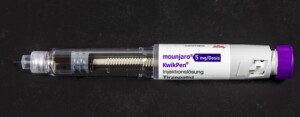
©Raimond Spekking
Yes, the commercials are numerous. But so what? Fast-forward through them or mute the remote.
In my day, the “incessant” weight loss commercials consisted of SlimFast, Jenny Craig and Nutrisystem.
There are also incessant commercials for auto insurance and pain pills. I hate the Liberty Mutual jingle and am quick to hit the mute.
I’m sure that those easily unsettled influencers and their vulnerable followers are equally quick to hit the mute or fast-forward, but I’m also inclined to believe that many will watch through the entire Wegovy commercial, seething and rumbling.
It’s a fact of life that a game-changing class of drugs is going to make it to Incessant TV Commercial Land.
That’s the way the cookie crumbles in the U.S., and you must learn to deal.
Celebrity Endorsement of GLP-1 Medications
Why is this so disturbing to influencers with body positive and mental health platforms?
Celebs have been endorsing all sorts of body related products for decades.
The furor in the influencer culture is that Serena Williams endorses the GLP-1 drug Ro. Again, so what?
Whatever happened to “what a woman does with her body is none of my business”? Yet these influencers and their gullible followers can’t get enough of discussing their “disappointment” with the tennis champ’s multi-media endorsements for how Ro helped her lose weight.
- Are these critics her doctor?
- Do these critics know what medical history she has for which her doctor thought it best to prescribe the drug?
- Have they not considered that Serena has avoided posting pics of herself at her heaviest, creating the illusion that she didn’t need the drug?
Ads for GLP-1’s Are Disheartening
This is the sentiment carried by these influencers and throngs of followers.
They’re quick to believe that a young girl, viewing the commercials, will end up thinking they need to lose weight because weight loss is promoted as a positive change.
Now, when I was growing up, at no point did I think, “Golly gee, I need to lose weight because that commercial made it look like a good thing to do. So I’m gonna skip breakfast, have only a green salad for lunch, and count calories at dinner.”
Nobody knows just what percentage of girls, tweens and teens decides to lose weight simply because they saw a TV commercial.
The decision of “I need to lose weight” is far more likely to come from real life experiences such as the following:
- Visible excess fat
- Difficulty with movement, athletic performance or stamina due to excess weight
- Comments from family members or friends
Now certainly, family members and friends should never make demeaning comments. However, it makes a whole lot of sense when a decision to lose weight is spurred on by a comment (which is real world, real life, reality), rather than watching a TV commercial.
Secondly, when a comment is made, the recipient usually already knows they’re on the heavy side.
When I was growing up, an older sister kept telling me, “If you keep eating that way, you’re gonna get fat.”
I wasn’t overweight at those moments, but the volume of food I ate would get her attention. She wasn’t shaming or ridiculing me. She was stating a logical outcome.
It’s worth noting that her comments #1) never made me eat less, and #2) had absolutely NO effect on my self-worth.
It’s unrealistic to assume that the actual decision to lose weight is brought on by a GLP-1 commercial, or Marie Osmond pitching Nutrisystem for that matter. It’s ridiculous.
However, the choice of weight loss product, once the decision to lose weight is made, can most certainly be determined by advertising.
Some women will ask their doctor about a GLP-1; some will check out Nutrisystem; some will join the gym they saw advertised on a commercial break; some will try Weight Watchers; some will see an online ad for a weight loss app and try that.
But the decision to lose weight is already in place.
Pretending that Tons of Influential People Aren’t Using GLP-1’s
Influencers like to put out there that many celebs and media stars are using these drugs strictly for weight loss.
We don’t really know how many, though. But apparently, Elon Musk once made a comment that he was using a GLP-1. Again, so what?
Many celebs and stars also go under the knife to change their looks. So why should it be surprising that this demographic would take a GLP-1 to lose weight?
The outcry over celebrities and Instagram influencers taking a GLP-1 for weight loss is totally out of proportion, when we consider that many film stars, recording artists and influencers take illegal drugs, have a drinking problem, and/or have gained large amounts of excess body fat.
Nobody was concerned when Delta Burke began gaining a large amount of weight during her run on the sitcom “Designing Woman.” (She finally lost the weight after a diagnosis of type 2 diabetes scared her into action.)
But heaven help us if a retired tennis star takes a GLP-1 to lose excess abdominal fat.
Being Skinny Is the Favored Body Type – NOT!

Freepik/wayhomestudio
This is another wild claim by influencers. Well, SEZ WHO?
Seems to me that only a very low percentage of actresses in lead roles, in sitcoms, drama shows and movies, are literally “skinny.”
Easily manipulated women will conclude that thinness is the beauty standard simply because they saw “Wicked.”
No. Thinness was the beauty standard for whoever hired Ariana Grande to play the lead.
In fact, who’s to say that her body even played into her landing the role at all? Maybe the casting agent simply wanted this particular recording artist for the role of Glinda, and the thinness just happened to come with the singer.
Instead, impressionable fans will draw the conclusion that a body like Ariana Grande’s is the “beauty standard.” This is just plan whacked thinking.
- And just because Disney makes their princesses thin doesn’t mean that society favors thinness.
When I was a personal trainer at a large crowded gym, most of my clients were overweight women who wanted to lose weight.
I’ll swear on that proverbial stack of bibles that NOT ONE OF THESE WOMEN told me they wanted to get “skinny” or “thin.”
Not a single one. Instead, they quantified their weight loss goal as a clothing size or goal amount of weight loss.
Big women told me they’d be happy to get down to a size 12 or 14. One woman said she wanted to get down to a 16.
Or, the number of pounds they wanted to lose would’ve still kept them in an overweight category.
Not a single one said they wanted to achieve a dress size in the single digits.
If you randomly ask 100 overweight women off the street what size they’d like to be, if a magic pill could grant them that size in an instant, do you really, really believe most would say a size 2?
I don’t believe that for a second. Sure, there’d be some outliers. There’s outliers for anything in life. But do you really believe most would say, “I want to have a body like Calista Flockhart or Angelina Jolie?”
Skinny being society’s favored body type is an illusion. It’s a false belief created by influencers who are out of touch with reality.
To assume that skinny is the be-all, end-all desired body type, based on the size of mannequins, is another example of deranged thinking.
Mannequins are skinny because it saves manufacturers money to make them this way! Stores want them super thin because they take up less space in confined display areas! Helloooo!
And since when do thin models, strutting down a catwalk, determine societal standards? Again, this way of thinking is demented.
If a modeling agency won’t hire anyone over a size 4, this has NOTHING to do with society. It has only to do with that particular modeling agency. Hello, hello?
Worth Tied to Size
Now, I just don’t get this. Seems to me that most of one’s self-worth is tied to how your parents spoke to you when growing up.
There’s no denying that some girls grow up with constant criticism about their heavy body from their mother.
But – naturally thin girls have been known to grow up with demolished self-worth from an overly critical mother as well.
Demeaning and denigrating comments to a child can be based on all sorts of things, and weight is only one of those many things.
Let’s use common sense. If a woman is constantly demeaning her daughter over her weight, can we easily picture this same woman being accepting of her daughter if the child were thin? I don’t see it.
A mean-spirited, nasty woman will say cruel things to her daughter regardless of her size. If the girl is heavy, then of course such a woman will frequently point this out.
But if the girl loses weight or has never been plump, a harsh parent will always find something else to henpeck her about.
This is why even the most physically attractive girl at school could be a secret bundle of nerves and decimated self-worth – because at home, she’s mistreated.
Heaviness in a child doesn’t make a kind mother mean. The mom is already an ass. It’s just that excess body weight is an easy target for a malicious mother. Or father.
Nothing Wrong with Wanting to Lose Weight
If a woman is overweight, there is nothing wrong with a goal of weight loss.
The issue becomes HOW. Often, when people decide they’re going to change their eating habits to lose excess body fat, they adopt a healthier diet. Nothing at all wrong with that; the body needs more fresh produce, more whole fruit, more fiber, less sodium and less added sugars. Fewer preservatives.
Just because some women go overboard with weight loss goals doesn’t mean that it’s inherently sinister to want to trim down the thighs, lose the love handles or melt away the muffin top.
There are far worse things that many women do to their bodies than try to “shrink” it: smoking, heavy drinking, too much sitting, avoiding exercise.
There are far worse things that many women do to their bodies than try to “shrink” it: smoking, heavy drinking, too much sitting, avoiding exercise.
I’d explain to my personal training clients, “There’s nothing wrong with your body. In fact, your body is working correctly, based on what’s happening to it: It’s getting too much energy in the form of food, and it stores that energy as fat. That is how the human body is designed to function. So the issue isn’t your body. It’s your food intake.”
I impressed upon the importance of portion control. Now for some people, counting calories is their way of portion control.
For others, the cue is visual: one helping, not two. An order of small fries, not a large. A six ounce steak, not a 10 ounce.
There is absolutely nothing wrong, nothing “fatphobic” and nothing related to brainwashing when a woman makes the decision to cut back on junk food and increase exercise to get rid of excess pounds.
To suggest that women who want intentional weight loss are the brainwashed victims of a fatphobic society and beauty standards shoved down their throat is to just as much suggest that women are weak willed, mindless automatons who can’t think for themselves. This is insulting and offensive to anyone who wants to drop some sizes.
The influencer rhetoric rings true for projection: projecting their own insecurities outward in the form of their tiresome messages about how dastardly it is to want to tone up, flatten the abs, rid the arm jiggle and lose overall body weight.
I’m all for natural ways to lose weight rather than relying on pills. But at the same time, we have to consider those individuals who’d remain morbidly obese if not for a GLP-1. And staying morbidly obese is a significant health hazard.
What about those like Serena Williams who want to lose smaller amounts of weight via these medications?
Again, if a GLP-1 is their only recourse, after failing to overcome “food noise,” crazy cravings and other psychological factors that drive them to overeat, then let them be without the bashing, as they, hopefully and effectively, navigate the pros and cons — namely, potential side effects of this class of drugs.
They should not be shamed or made to feel like a traitor to the body positivity movement. Stop calling them out. ARE YOU THEIR DOCTOR?