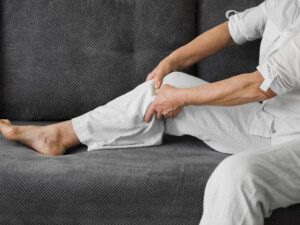
Inactivity will quicken disability if you have knee osteoarthritis, while exercise will greatly delay the need for a total knee replacement.
Stiff or aching knees are often brushed off as normal signs of getting older.
But osteoarthritis — the most common joint disease in the world — is frequently not treated the way research suggests it should be.
Patients typically assume that the best thing they can do for knee pain is to “take it easy.”
But living a life of “taking it easy” will accelerate mobility problems and permit pain to rule your life.
So what should you do for osteoarthritis in your knee, short of a knee replacement surgery and knocking yourself out with pain pills?
The Best Treatment
Exercise is widely recognized as one of the most effective therapies for osteoarthritis, yet many patients are never directed towards it.
And in fact, some of the ones who are won’t even consider it.
Fewer than half of patients diagnosed with osteoarthritis are referred to exercise programs or physical therapy.
Meanwhile, more than 60 percent receive treatments that clinical guidelines do not recommend.
Around 40 percent are referred to surgeons before non-surgical options are properly explored.
Why Exercise Protects Your Joints
A major analysis published in the The Lancet estimates that nearly one billion people could be living with osteoarthritis by 2050.
Longer life expectancy, sedentary lifestyles and rising obesity rates are driving the increase.
Movement plays a critical role in joint health. The human body was meant to move, not be sedate all day in chairs looking at screens.
Modern technology has gone a long way at encouraging a sedentary lifestyle, which is just so bad for joint health and function, be it the knee, hip, back or shoulder.
Cartilage — the smooth tissue that cushions the ends of bones — does not have its own blood supply. Instead, it depends on movement to stay nourished.
It can be said that a sedentary lifestyle literally starves cartilage.
When you walk or place weight on a joint, cartilage compresses slightly and pushes fluid out.
When the pressure releases, the tissue draws fluid back in, bringing nutrients and natural lubricants with it. Every step helps maintain the joint.
Because of this, describing osteoarthritis as simple “wear and tear” can be misleading.
Joints are not like tires that inevitably wear down over time. Osteoarthritis is better understood as a long process of breakdown and repair, and regular movement supports that repair cycle.
Osteoarthritis Is a Whole Joint Disease
Osteoarthritis does not affect cartilage alone. It involves the entire joint.
This means the underlying bone, ligaments, joint fluid, surrounding muscles and even the nerves that control movement.
Exercise can address many of these components at the same time.
Muscle weakness is one of the earliest warning signs of osteoarthritis. Strength training can help reverse that weakness and improve joint stability.
Research shows that weak muscles increase the risk of developing osteoarthritis and can also speed up its progression.
Exercise for Osteoarthritis Treatment
Specialized programs have been created specifically for people with hip and knee osteoarthritis.
One example is GLA:D® (Good Life with osteoArthritis: Denmark).
These programs usually involve supervised sessions led by physical therapists and focus on improving balance, strength and movement quality.
Participants frequently report less pain, better joint function and improved quality of life lasting up to a year after completing the program.
Exercise also benefits the body in broader ways, and one of those ways is that of weight management.
Obesity is one of the biggest risk factors for osteoarthritis. The fact that thin people can get OA has absolutely nothing to do with the hard truth that obesity can lead to this degenerative condition. It’s simple physics.
However, excess body fat is also linked to higher levels of inflammatory molecules circulating in the bloodstream and joint tissues.
These inflammatory substances can damage cartilage and accelerate the progression of osteoarthritis.
A commitment to exercise time will contribute to loss of excess pounds bearing down on the knee joint and stirring up inflammatory substances.
Exercise Instead of Surgery
Currently, there are no medications that can change the underlying course of osteoarthritis.
Pain pills mask a main symptom, but ask yourself: Is that a satisfactory way to live, having to rely on pills, especially if they have side effects like drowsiness and often don’t even do much to numb the pain?
Now, joint replacement surgery can be life-changing for some people, but it is still a major procedure and doesn’t work equally well for everyone.
For instance, a knee replacement could end up as “failed” or “loosened,” necessitating a revision surgery.
Furthermore, the younger a person is when they get a TKR, the more likely they’ll eventually need a new one. The hardware doesn’t last forever.
That’s why many experts say exercise should be the first step in treatment and remain part of care at every stage of the disease.
Compared with surgery, exercise carries far fewer risks and provides wide-ranging health benefits.
Osteoarthritis is not simply about worn-out joints. It is shaped by muscle strength, inflammation, metabolism and lifestyle.
Regular, structured movement helps address many of those factors at once.
Before you consider a TKR, insist that your orthopedic doctor refer you to physical therapy first, and stick that out for at least six months — give it time and see what happenes.
Two Big Studies that Support Exercise Over Surgery
Internet‑Delivered First‑Line Exercise for Knee OA (iBEAT‑OA Randomized Trial) was a randomized clinical trial that tested an evidence‑based exercise program against routine usual care for people with knee osteoarthritis.
It found that the exercise intervention produced clinically significant improvements in pain and function without adverse effects.
The Systematic Reviews and Meta‑Analyses Showing Exercise Benefits was a meta‑analyses of dozens of randomized controlled trials.
It showed that aerobic and structured exercise programs significantly improved pain and physical function in knee OA patients.
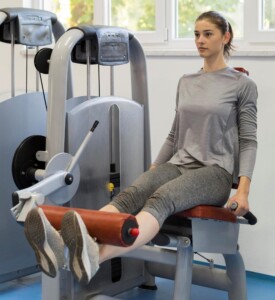
Never strength trained before?
Freepik
Don’t let this keep you from what could be a remarkable game-changer for your “bad” knee.
Before joining a gym to use its strength training equipment, or before embarking on this plan at home with weight bearing exercise, you should discuss options with your physical therapist.
You’ll likely be told there are certain kinds of exercises to avoid, such as deep squats with weights or even just body weight, as well as walking lunges or jumping.
You’ll be told what forms of exercise you can do with confidence regarding safety and improvement of your condition.
Ideally, seek out a personal trainer who specializes in clients with joint disease.