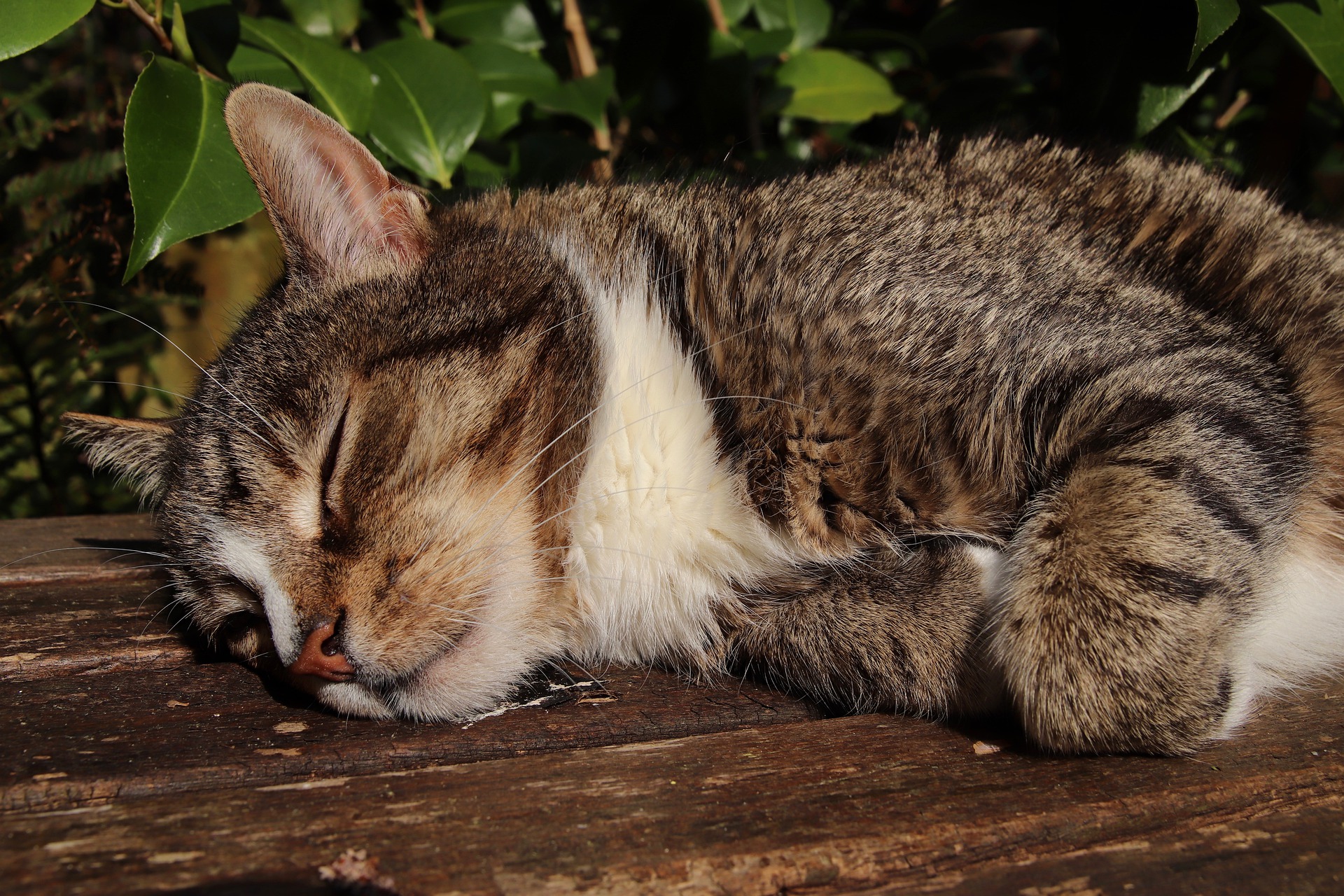
Can Cancer Cause Hair Loss on a Cat’s Ears?

Has your cat been experiencing hair loss on or near the ears, and you’re wondering if this could possibly be a sign of cancer?
It’s very important that you regularly check your kitty’s ears.
Regularly checking your cat’s ears is crucial for maintaining their health.
Recommendations of what to check for typically list redness, swelling or discharge, which can indicate infections or parasites.
But you should also check for signs of fur loss.
Can cancer cause a cat to lose hair on the ears?
“Rarely,” says Dr. Jules Benson, BVSc, chief veterinary officer with NationwideDVM, a pet insurer company.
“Hair loss on a cat’s ears can occur for a number of other reasons,” he continues.
Non-cancerous and more common causes of hair loss on a cat’s ears include:
– Parasites: Dr. Benson says that ear mites are very common, especially in young cats.
– Fungal infection: This includes ringworm, which isn’t actually a worm, but a fungus, and the ears are a common site for an outbreak.
– Over-grooming: Cats love to groom themselves. When their ears are infected with a fungus or parasite, this causes irritation, and the cat will then be inclined to paw at and scratch their ears, rubbing off the hair, says Dr. Benson.
– Skin infection: This can be a primary disease. However, a skin infection can also be a secondary condition to something such as an allergy.
– Autoimmune disease: Dr. Benson says that eosinophilic granuloma complex or vasculitis can result in not only hair loss on a cat’s ears, but crusting lesions along the ears.
“On a side note, it should be realized that many cats, especially oriental or exotic cats, can have an area in front of the ear which looks almost bald – this is called peri-auricular alopecia, and it is entirely normal for this to develop in these adult cats,” explains Dr. Benson.
Though cancer as a cause of hair loss in a cat’s ears is rare, it can happen with some types of cancer, says Dr. Benson.
However, when this is the case, it is also “more likely that ulceration or skin growths would also be more prominent,” he says.
Keep in mind, diagnosing and treating cancer can be a long, difficult and expensive process, which is why many veterinarians recommend pet insurance that covers cancers as a standard, says Dr. Benson.
He explains that pet insurance must be in effect before your pet begins displaying any clinical signs or symptoms, in order for the coverage to be available.
Thus, it’s wise to begin an insurance policy while your cat is healthy.
 Dr. Benson is regularly consulted by many media outlets including ABC, NBC, FOX, The Wall Street Journal and The New York Times to provide pet health advice to pet parents nationwide.
 Lorra Garrick has been covering medical, fitness and cybersecurity topics for many years, having written thousands of articles for print magazines and websites, including as a ghostwriter. She’s also a former ACE-certified personal trainer.

Blood in Cat’s Anus: Can Cancer Be Cause?

If your cat’s anus has blood in or around it, there’s a chance it could be cancer, says a veterinarian.
Have you noticed what appears to be blood near, around or in your cat’s anus, and wondering if this might be a sign of cancer?
Can cancer cause blood around a cat’s anus?
“Yes, bloody stool or fresh blood around the anus could be a sign of several cancerous processes, as well as other, less sinister diseases,” says Dr. Jules Benson, BVSc, chief veterinary officer with NationwideDVM, a pet insurer company.
He continues, “Gastrointestinal lymphoma and anal gland adenocarcinoma (two different types of cancer) can both cause bloody stools.”
Gastrointestinal lymphoma is the most frequently diagnosed form of lymphoma in cats.
Anal gland adenocarcinoma is uncommon, and it can spread quickly. And unfortunately, the prognosis for this condition is usually poor.
Other Symptoms of Cancer in Cats that Can Cause Blood About the Anus
Symptoms of gastrointestinal lymphoma:
- Suppressed appetite
- Lethargy, constipation
- Diarrhea
- Vomiting and what appears to be gooey tar in the stools
- As well as fresh blood in the stools.
Symptoms of anal gland adenocarcinoma:
- A mass in the rectal area, usually small
- Constipation
- Difficulty defecating
- Suppressed appetite
- Excessive thirst and lethargy.
So if you think there is blood near your cat’s anus, do not hesitate to bring your pet in for a full examination by your veterinarian.

Can blood near or in a cat’s anus have benign causes?
Yes, says Dr. Benson. He lists the following possible benign causes: inflammatory bowel disease, intestinal parasites, trauma and over-licking (which could be caused by irritation, anxiety, diarrhea or constipation).
What will happen at the vet’s office?
“To determine the cause of the blood, your vet will examine your pet and probably recommend a basic baseline of blood work, urine and fecal analyses, with the possible addition of radiographs (X-rays), ultrasound exam, endoscopy and/or specific GI blood work,” says Dr. Benson.
All of those diagnostic tests – and the treatment that your vet recommends – can add up, which is why many veterinarians recommend pet insurance to help cover these unforeseen costs, Dr. Benson explains.
He points out that pet insurance must be in effect before your cat (or dog) begins showing symptoms, so it’s wise to start an insurance policy while your pet is healthy.
Dr. Benson is regularly consulted by many media outlets including ABC, NBC, FOX, The Wall Street Journal and The New York Times to provide pet health advice to pet parents nationwide.
 Lorra Garrick has been covering medical, fitness and cybersecurity topics for many years, having written thousands of articles for print magazines and websites, including as a ghostwriter. She’s also a former ACE-certified personal trainer.
.
Sources: ncbi.nlm.nih.gov/pmc/articles/PMC3092124/; petmd.com/cat/conditions/cancer/c_ct_lymphoma#.UiqhcNKor20

Gradual Hind Leg Weakness in Older Cat Includes Cancer

Cancer is among several causes, says a veterinarian, of progressive rear leg weakness in an old cat.
There are basically four categories of causes for gradual weakness in the hind legs of an older cat, including cancer, says veterinarian Dr. Jules Benson, BVSc, chief veterinary officer with NationwideDVM, a pet insurer company.
He points out that “progressive” or gradual are relative terms, because cats can be skilled at concealing a disease that’s been building for a while, and by the time the owner notices it, it’s often very advanced.
Arthritis May Cause Gradual Back Leg Weakness in Old Cats
This is common in senior cats and can be detected by X-rays. The usual plan of treatment is pain control and joint supplements such as Cosequin and Adequan.
Cancer Can Cause Progressive Rear Leg Weakness in the Senior Cat

Dr. Benson notes that two forms of cancer can be responsible. The first is bone cancer (osteosarcoma).
This occurs less commonly in cats than in dogs, but it’s still something to consider.
It’s also usually more treatable than it is in dogs, because metastasis (spread) does not occur as commonly.
“Osteosarcoma tends to be very painful and can lead to fractures of affected bones,” says Dr. Benson.
Soft tissue cancers can also affect the spinal cord and brain, sometimes causing gradual weakness or loss of hind leg control, depending upon the site of the tumor.
“Radiographs can sometimes be diagnostic, though more advanced imaging techniques like CAT and MRI are often recommended,” says Dr. Benson.
Infection May Cause Progressive Back Leg Weakness in an Old Cat
“Several diseases can affect the brain, leading to hind limb weakness,” notes Dr. Benson. These include: taxoplasmosis, feline infectious peritonitis, Cryptococcus and tick-borne diseases.
“This is by no means an exhaustive list, but covers some of the more common conditions,” says Dr. Benson.
Early detection is key to more successful treatment outcomes.
Don’t delay medical attention if you even think you’ve been noticing that your older cat’s back legs have been progressively getting weaker.
Dr. Benson is regularly consulted by many media outlets including ABC, NBC, FOX, The Wall Street Journal and The New York Times to provide pet health advice to pet parents nationwide.
Lorra Garrick has been covering medical, fitness and cybersecurity topics for many years, having written thousands of articles for print magazines and websites, including as a ghostwriter. She’s also a former ACE-certified personal trainer.

Can a Cat’s Tail Be Double-Jointed?

If you think your cat’s tail is double-jointed, here is what a veterinarian says about this observation.
Have you ever looked at your cat’s tail and thought, “Hmm, it has to be double-jointed — or can it be?”
“There actually are no ‘joints’ in a cat’s tail, so while they may seem very flexible, they are not technically double-jointed,” says Dr. Jules Benson, BVSc, chief veterinary officer with NationwideDVM, a pet insurer company.
Anatomy
“A cat’s tail is a continuation of her spine, containing caudal vertebrae, as well as voluntary muscle, with ligaments and tendons holding the muscles and bone together,” explains Dr. Benson.
As a result, this configuration, as Dr. Benson puts it, enables a cat’s tail to be incredibly expressive, creating the illusion that it is double-jointed.
How can you tell if the tail is broken?
It can become injured or broken from different types of trauma. For starters, pulling on it too hard (as children — and even adults — may be inclined to do) can cause injury.
An obvious cause of injury would be if the tail was accidentally slammed in a door or window. Trauma could also occur if it is run over by a car or bicycle.
“Common signs of an injured or broken tail could be the cat carrying her tail low or dragging it, and minor incontinence,” explains Dr. Benson.
An injury can easily be determined with an X-ray, says Dr. Benson. Treatment will vary and is determined by the extent of the injury.
Dr. Benson explains that in the case of a broken tail, the treatment is often amputation just above the location of the break, and “once the surgery site is healed, these cats lead normal lives with bobbed tails.”
If your cat seems to be treating her tail strangely, and you should take your pet to your veterinarian for an exam and diagnosis.
Dr. Benson is regularly consulted by many media outlets including ABC, NBC, FOX, The Wall Street Journal and The New York Times to provide pet health advice to pet parents nationwide.
Lorra Garrick has been covering medical, fitness and cybersecurity topics for many years, having written thousands of articles for print magazines and websites, including as a ghostwriter. She’s also a former ACE-certified personal trainer.

Top 5 Injuries Small Dogs Get When Exercised Too Hard

A veterinarian explains the five most likely injuries that a small dog can suffer when it’s exercised too hard.
Small dogs need exercise as much as large breeds do, but this doesn’t mean that little dogs are more invulnerable to exercise-related injuries just because they have short legs and are closer to the ground.
The five most common injuries that a small dog is likely to experience, from being over-exercised, are as follows, says Dr. Jules Benson, BVSc, chief veterinary officer with NationwideDVM, a pet insurer company.
Injury #1. Patellar luxation
Perhaps the most common orthopedic injury in small and toy breed dogs that is seen by pet insurance companies is the medial patellar luxation, says Dr. Benson.
The patella is the kneecap. A congenital structural abnormality can cause the kneecap to slide sideways out of its groove, continues Dr. Benson. This can cause lameness.
“While exercise doesn’t usually make the condition worse, it’s often more noticeable when pets exert themselves; affected pets may hold a hind leg up suddenly, hop for a few steps, then often go back to normal,” explains Dr. Benson.
If this injury situation goes untreated, it will get worse, causing arthritic changes and pain in the knee, which can then necessitate surgical repair.
Injury #2. Heat stroke
A little dog exercising in the hot sun needs lots of water. Heat stroke can be life-threatening.
“A dog’s normal temperature usually peaks at around 102.5oF, but when it rises to 105-110oF, this can lead to coma, organ dysfunction and even permanent brain damage or death,” explains Dr. Benson.

Watch out for subtle but suspicious signs: restlessness, incoordination or a drunken-like movement, excessive panting or drooling.
Injury #3. Lameness
Too much exercise can cause a small dog to lose its vigor and become listless.
“Sometimes, dogs can come up lame even when there’s no visible reason,” says Dr. Benson.
“Your veterinarian may recommend radiographs (x-rays) to ensure that no bones are broken and, if all looks normal, will likely recommend limiting your dog’s movement and perhaps a course of pain-relieving medication.”
Injury #4. Broken nails
It’s not uncommon for a small dog that’s exercised a lot to get broken nails, even on soft ground.
“The end of a broken nail often needs to be removed by a veterinarian, and the biggest risk after this comes from infection of the exposed soft tissue inside the nail,” explains Dr. Benson.
The little dog with the broken nail will often need to wear an Elizabethan collar to prevent it from chewing or licking the nail area, which will need to be kept clean.
Keeping nails trimmed can help prevent breaking, but if the problem recurs, there may be an underlying condition that a veterinarian can treat.
Injury #5. Lacerations/cuts
“If we ran around in our bare feet all the time, we’d likely wind up with some cuts on our feet – the same way our dogs do,” says Dr. Benson.
Particularly in colder weather, too much wear and tear on paws can lead to cuts, abrasions or irritation, continues Dr. Benson.
Dr. Benson is regularly consulted by many media outlets including ABC, NBC, FOX, The Wall Street Journal and The New York Times to provide pet health advice to pet parents nationwide.
Lorra Garrick has been covering medical, fitness and cybersecurity topics for many years, having written thousands of articles for print magazines and websites, including as a ghostwriter. She’s also a former ACE-certified personal trainer.

Sudden Weakness in Dog’s Back Legs: 4 Causes

A veterinarian explains four possible causes of sudden weakness in your dog’s back legs, and what you must do.
When your dog’s hind legs suddenly go weak, there could be any number of causes, says veterinarian Dr. Jules Benson, BVSc, chief veterinary officer with NationwideDVM, a pet insurer company.
“Sudden hind limb weakness or paralysis can be a clinical sign of several conditions, including degenerative myelopathy, in which parts of the nerves in the spinal cord responsible for hind limb mobility degenerate,” begins Dr. Benson.
Another possible cause of sudden back leg weakness in a dog is intervertebral disc disease, says Dr. Benson.
He explains that this occurs when bulging discs put pressure on the dog’s spinal column.
Next is vertebral instability (“wobbler syndrome”), in which “the spinal canal narrows, placing pressure on the nerves affecting hind limb motor function,” says Dr. Benson.
An infection with the bacteria that causes botulism can also cause a dog’s hind legs to suddenly go weak, though this is rare, says Dr. Benson.
Accompanying symptoms of this would be excessive drooling, slack jaw and dilated pupils.
Treatments
Degenerative Myelopathy
While physical therapy and vitamin therapies can help maintain a better quality of life, Dr. Benson says unfortunately there’s no treatment or cure for the condition.

Intervertebral Disc Disease and Vertebral Instability
The faster these cases are caught and treated, the better the prognosis, says Dr. Benson.
He adds, “Mild cases of IVDD will respond well to anti-inflammatories and muscle relaxers, while more severe cases will require surgery to allow the affected pet to return to normal function.
Botulism
Pets are treated with an anti-toxin and supportive therapy, including IV fluids. Paralysis or extreme weakness in your dog’s back legs for more than 24 hours?
Dr. Benson says the prognosis here is poor. With wobbler syndrome, surgery is usually needed, in addition to anti-inflammatory drugs.
A pet insurance plan may pay over $8,000 for a required advanced imaging (MRI) and surgery, according to Dr. Benson.
Other Possible Causes of Sudden (Acute) Hind Limb Weakness in a Dog

©Lorra Garrick
Dr. Benson explains that hip and knee problems, such as cruciate ligament injury and hip dysplasia, can present with what appears to be sudden-onset weakness in a dog’s back legs.
You must contact your veterinarian immediately if you notice this kind of symptom.
Dr. Benson is regularly consulted by many media outlets including ABC, NBC, FOX, The Wall Street Journal and The New York Times to provide pet health advice to pet parents nationwide.
Lorra Garrick has been covering medical, fitness and cybersecurity topics for many years, having written thousands of articles for print magazines and websites, including as a ghostwriter. She’s also a former ACE-certified personal trainer.
.
Top image: Dreamstime.com Waldemar Dabrowski

Is a Fish-Based Diet Healthy for Dogs?

Read what a veterinarian has to say about feeding a dog a fish-based diet.
Like many devoted dog owners, you may be wondering if a fish-based diet is a good idea or healthy for your beloved furry pet.
Here is what a veterinarian has to say about a fish-based diet for dogs:
“As long as your dog isn’t allergic to fish, then offering a well-balanced diet based on fish can be fine,” says Dr. Jules Benson, BVSc, chief veterinary officer with NationwideDVM, a pet insurer company.
What kind of fish is the best choice?
When it comes to choosing which fish, exactly, to offer, Dr. Benson has some suggestions:
“Salmon, albacore tuna, sardines and other oily fishes are ideal, as they have high levels of healthy omega-3 and omega-6 acids,” he says.
This means that if you stop by your local fishmonger to pick up some fresh salmon for your family, why not also pick up some extra filets for your dog?

But before you do so, Dr. Benson advises that anyone wishing to add fresh fishes to their four-legged family member’s diet should discuss this with their veterinarian before “diving in” – literally!
“Look for wild and freshly caught fish, rather than farm-raised, when possible,” says Dr. Benson.
Wild-caught fish are generally considered better than farm-raised due to their natural diet and environment, which often result in leaner meat and higher omega-3 levels.
They’re also less likely to contain antibiotics, artificial feed or contaminants common in some aquaculture systems.
Additionally, wild fish typically have a lower risk of disease and may offer superior flavor — even though, that last point may not make a difference to your dog, being that dogs love any kind of fish!
If you are currently not buying wild-caught salmon due to its price, then you can feed your dog albacore tuna (water-packed in a can), fresh sardines or cod.
While fish might seem like an expensive entrée for a pet, serving it properly could actually help improve the health of some dogs.
“Fish-protein based diets are often used for pets that have allergies to one of the main three proteins (chicken, pork or beef),” says Dr. Benson.
With your veterinarian’s approval, you can feel good about feeding your dog a fish-based regimen.
Dr. Benson is regularly consulted by many media outlets including ABC, NBC, FOX, The Wall Street Journal and The New York Times to provide pet health advice to pet parents nationwide.
Lorra Garrick has been covering medical, fitness and cybersecurity topics for many years, having written thousands of articles for print magazines and websites, including as a ghostwriter. She’s also a former ACE-certified personal trainer.

Daily Calcium Requirements for Dogs

How much calcium does your dog need every day?
Daily Calcium Needs for Dogs
“There are two important elements to consider: the amount of calcium and its proportion to the amount of phosphorus in your dog’s diet,” says Dr. Jules Benson, BVSc, chief veterinary officer with NationwideDVM, a pet insurer company.
He further explains that young dogs need almost twice as much of the mineral calcium as do fully grown dogs.
This means “at least 1% dry matter in young dogs versus at least 0.5% in grown dogs,” says Dr. Benson.
Phosphorous is also a mineral. Dr. Benson points out that the opinions differ among veterinarians, but the generally recommended ratio, he says, is generally 1.2 parts calcium to 1 part phosphorous (a ratio of 1.2:1).

Calcium in Commercial Dog Food
“The good news is that nutritionally balanced commercial dog foods are prepared for different life-stages, and already have the proper amount of calcium included,” notes Dr. Benson.
Your dog, then, should be getting enough calcium in his daily diet if you’re feeding him the proper portion size.
Calcium Deficiency and Surplus: Possible Fallouts
If your pet doesn’t get adequate amounts of this vital mineral, problems could result. However, too much of this mineral can also result in health ailments.
Dr. Benson explains, “A diet that is deficient in calcium can lead to weakened teeth and bones, while too much calcium can lead to a wide range of health concerns, from constipation and kidney disease to increased risk of skeletal problems such as hip dysplasia.”
Though hip dysplasia is more prevalent in certain breeds, such as the German Shepherd, this doesn’t mean that diet can’t play a role in its development.
And of course, constipation is no picnic, and doesn’t always mean that lack of fiber is the culprit.
This is why it’s important to be very tuned-in to what your pet is eating.
Dr. Benson urges people to always discuss their pet’s diet (including “treats”) and any vitamin supplementation with a veterinarian to make sure that their dog is getting proper nutrition all-around, including the right amount of calcium, in their daily menu.
Dr. Benson is regularly consulted by many media outlets including ABC, NBC, FOX, The Wall Street Journal and The New York Times to provide pet health advice to pet parents nationwide.
Lorra Garrick has been covering medical, fitness and cybersecurity topics for many years, having written thousands of articles for print magazines and websites, including as a ghostwriter. She’s also a former ACE-certified personal trainer.
.
Top image: ©Lorra Garrick

How to Warn Girls of the Teen Model Lure by Strangers

Your teenaged daughter may be too old to fall for the lost puppy ruse, sick mommy ruse and offers-of-candy ruse by a pedophile.
But this doesn’t mean she’s out of the woods as far as being a potential target for a sex offender.
The “I’m a modeling scout for an agency” is a well-known ruse by sex offenders looking for teen victims. Weylin Rodriguez* was such a predator, posing as a modeling scout, even using fake business cards.
Though the modeling agency lure is becoming increasingly frequent in online social media, it still takes place person to person. Shota Mgeladze** posed as a modeling scout and convinced a teen girl to actually get into his car.
What can parents say to their teens so that their kids simply will not fall for the modeling scout ruse?
“Parents need to explain to teens that the offers they receive — luxury travel, exotic islands, free clothes, all kinds of money, fame and fortune are all too good to be true,” says Robert Siciliano, CEO of Safr.Me.com and an expert in fraud prevention and personal safety.
“Remind them that these offers are no more real than the Easter bunny or Santa Claus.”
Make sure your teenager knows the following tell-tale signs that the “modeling scout” or the “rep from a modeling agency” is actually a predator:
#1. The chance meeting with him is odd or suspicious. In the case of Rodriguez, he’d pretend to accidentally drop his business card near an attractive teen girl, banking that she’d politely retrieve it and notice the modeling agency information on it. He’d then tell her, “Oh, just keep it…” and the ruse would be well underway.
#2. The man has no business card.
#3. The man just happens to come along in his car and asks the teenager to get in, after promising her the world, or even just a simple modeling shoot.
#4. The man makes no mention of first meeting the teen’s parents before arranging any modeling shoots, and instead, right away wants to take her to his studio.
#5. Tell your daughter that the predator may be accompanied by a woman, who’s part of the ruse, and that just because the “scouts” include a female, doesn’t mean they can’t be predators.
If your teenager wants to be a model, tell her you’ll support her dream by going through the proper channels, and that means off-the-street “modeling scouts” are off-limits.
 Robert Siciliano is a private investigator fiercely committed to informing, educating and empowering people to protect themselves and their loved-ones from violence and crime — both in their physical and virtual interactions.
Lorra Garrick has been covering medical, fitness and cybersecurity topics for many years, having written thousands of articles for print magazines and websites, including as a ghostwriter. She’s also a former ACE-certified personal trainer.
Sources:
* dailymail.co.uk/news/article-1390861/Sex-offender-posed-modelling-agent-lure-girls-seedy-world-prostitution-beatings.html
**http://losangeles.cbslocal.com/2011/12/06/police-la-predator-posing-as-modeling-scout-may-have-more-victims/
IDTheftSecurity.com

Why Women Take Rides from Strangers: Poor Impulse Control

Find out why a personal safety expert believes a full grown woman would accept a ride from a stranger in perfect weather.
It keeps happening: Woman accepting rides from strangers even though the weather is beautiful, her destination isn’t too far off, and she’s not in pain or injured.
I’ll be honest: I’m nothing short of alarmed, and maddened, that so many women continue accepting rides from strangers even though:
1) Over the past decade there’s been an explosion of media attention on the dangers of this practice, including women found murdered by the stranger-man whose car she had voluntarily gotten into, and 2) These women had a perfectly good pair of legs to get them to their destination.
Why do grown women voluntarily get into cars with strangers?

I asked this to Robert Siciliano, CEO of Safr.Me.com and an expert in fraud prevention and personal safety.
When I say “stranger,” I mean a driver who pulls up alongside the pedestrian woman — a man she’s never seen before, as well as someone she “just met” at a bar.
“There is a certain rebellious thrill that is achieved by getting into a stranger’s vehicle,” says Siciliano. “There is also the ‘It can’t happen to me’ syndrome that some have.”
This points to lack of impulse control. Though this doesn’t apply to EVERY woman who accepts a ride from a stranger, it seems to explain it for some of them. Natalee Holloway comes to mind!
A transcript excerpt from the Dec. 24, 2010 airing of “Nancy Grace” reads:
Police say some of her classmates asked her to leave with them [from the bar], but she chose to get in a car with three young men, all locals.
What?!
What could possibly compel a grown woman (Holloway was 18) to get into a car with not one, but three strangers?
“All locals” means yes, they were very much strangers — even if she had chatted a little with them at the bar beforehand. And three of them!
“I’ve encountered many young woman over the years who have done this,” says Siciliano, referring to women taking rides from strangers, and “with the majority nothing happens. Some are victimized and others engaged in consensual sex.”
Yes, the majority live to tell about it. But it’s Russian roulette. What percent of women, who get into a stranger’s car, survive the experience without being victimized? This percentage is not known.
However, here’s the thing:
Getting into a car with a stranger is an extremely elective process, even if it’s raining.
By the time the stranger offers a woman a ride who’s walking in the rain, she’s probably as wet as she’ll get.
The vast majority of woman who are offered rides by strangers are not limping or bleeding profusely, nor is the temperature 17 degrees or 105 degrees.
It takes absolutely NOTHING to avoid being in that percentage of women who end up murdered by the driver. Simply keep on walking!
Tell the driver you’d rather walk, and make your announcement with authority. How hard is that? If you can’t speak with authority, then keep walking anyways!
Some women in these circumstances, says Siciliano, have the same mindset as a risk-taking young man:
“This is no different than an 18 year old boy getting in a car or on a motorcycle and doing 120 miles per hour. I’ve done it.”
Rational thought is when the woman pedestrian, upon being approached by that car with a nice-looking fellow inside offering her a ride, wonders if sitting in a stranger’s car could really be more comfortable than a planned (or even unplanned) walk.
After all, what if the guy’s car is a mess and stinks?
What if he has foul breath or awful body odor? What if he has so much cologne on it will gag her once inside the vehicle?
She can’t tell any of that from outside the car. What if he expects her to be a dazzling conversationalist or keeps talking about his grandmother’s hemorrhoid surgery or won’t stop telling racist jokes? Or … what if he wants to rape her?
Doggone it, don’t these things course through a woman’s mind upon being offered a ride by a stranger?
“Emotion and impulse often fly in the face of rational thought,” says Siciliano. “We know something is bad, or not good for us, but we do it anyway. Maybe we think the consequences aren’t all that detrimental or we think ‘It can’t happen to us.’ We generally have plenty of information to make well-informed decisions, but sometimes impulse gets the best of us.”
The prospect of the bad breath alone should be enough to motivate a woman to say NO THANK YOU to a stranger offering a ride.
Robert Siciliano is a private investigator fiercely committed to informing, educating and empowering people to protect themselves and their loved-ones from violence and crime — both in their physical and virtual interactions.
Lorra Garrick has been covering medical, fitness and cybersecurity topics for many years, having written thousands of articles for print magazines and websites, including as a ghostwriter. She’s also a former ACE-certified personal trainer.
.