
Can Breast Cancer Cause a Bruise-Like Area on the Skin?

An especially aggressive form of breast cancer can cause the appearance of bruising on the breasts.
So how do you tell the difference between the bruise-like area of this kind of cancer and that of a benign bruise from skin trauma?
“This sign tends to happen in a less common and aggressive forms of cancer called inflammatory breast cancer, and the skin change is caused by the tumor cells blocking proper lymphatic drainage in the skin,” explains Mylaine Riobe, MD, founder of Riobe Institute of Integrative Medicine.
Dr. Riobe, board certified in OB/GYN and integrative medicine, is the author of “The Answer to Cancer.”
“It can also make the skin appear like an orange peel and this is called “peau d’orange,’” says Dr. Riobe.
A bruise from skin trauma (e.g., bumping into something, getting bumped into, impact from a ball, child’s playful hand, or adult hand in a karate class) follows a predictable course.
The skin that covers the breasts is no different than the skin that, say, covers your legs.
A bruise on your breast from an external source will progress and appear the same as bruises on your legs, butt or arm.
Bruising from External Trauma
- 0-2 days: pinkish or “red”
- 2-5 days: blue and/or purple
- 5-7 days: green
- 7-10 days: yellow

Normal bruise. Shutterstock/Stephane Bidouze
It can take about two weeks for a typical bruise to vanish, though big “ugly” ones from more forceful trauma will take longer – but they’ll still follow a predictable course.
Inflammatory breast cancer affects one percent of all BC cases in the U.S. yearly. This means about 2,300 new cases/year, making it a rare disease.
Bruise of Inflammatory Breast Cancer vs. Benign Bruise
Inflammatory breast cancer can visibly progress over a matter of days, even hours.
It’s not likely that a bruise on your breast that’s progressing according to the color guide above is a sign of IBC.
The bruise as the only symptom – over a period of time – is a reassuring sign, but keep an eye on it to see if it does – or doesn’t – follow the color progression of a harmless bruise.
If it’s still there after two weeks and doesn’t seem to be following the color progression, AND if it’s gotten bigger for no apparent reason, see a doctor.
Other Symptoms of Inflammatory Breast Cancer
• Redness covering a large surface area of the breast; may come and go.
• Swelling, which may involve only part of the breast.
• Unusual warmth, aching or tenderness.
• Appearance of hives, welts or bug bites.
• Unusual inversion or flattening of the nipple.
• Any other frightening (usually sudden onset) appearance of the skin, including a surface that resembles an orange peel.
Trust your gut if you begin feeling uneasy at what you’re seeing. It’s reassuring if you recall a recent collision of something with your breast.
Keep a close eye on any new bruise for suspicious changes.
Inflammatory breast cancer is sometimes misdiagnosed as eczema!
Get a second opinion if this is your diagnosis and your gut is doubtful.

Dr. Riobe has helped thousands of patients overcome difficult illnesses by addressing root causes, not just masking symptoms. The Riobe Method focuses on the prevention of disease, not the prevention of death from disease. She has 20+ years’ experience using integrative techniques to treat diverse patients.
 Lorra Garrick has been covering medical, fitness and cybersecurity topics for many years, having written thousands of articles for print magazines and websites, including as a ghostwriter. She’s also a former ACE-certified personal trainer.
.
Top image: Shutterstock/Olympus Digital Camera
Discomfort Behind Breast when Swallowing: Cancer May Be Cause
Can a Dermoid Cyst in the Ovary Ever Turn into Cancer?

In a very small percentage of cases, a dermoid cyst in the ovary can turn into cancer.
This isn’t the same as CAUSE cancer; it actually becomes cancer.
What exactly is a dermoid cyst?
“Derm” refers to skin. A dermoid cyst, then, typically contains skin related tissue such as flesh, hair follicles, sweat glands and sometimes hair.
They may also contain fat, bone, cartilage and even teeth tissue.
Another name for a dermoid cyst is mature cystic teratoma (MCT). These benign tumors originate from the three germ cell layers that give rise to different types of tissue.
Usually, dermoid cysts are found by accident when a woman’s pelvis is being imaged for something unrelated. However, these teratomas can also cause abdominal or pelvic pain.
Dermoid Ovarian Cysts Can Turn into Cancer
The transformation is not overnight. These benign tumors actually grow about one to two millimeters per year.
Rate of Malignant Transformation of an Ovarian Dermoid Cyst
“Malignant transformation of a benign teratoma is rare – one to three percent of all mature cystic teratomas,” says Mylaine Riobe, MD, founder of Riobe Institute of Integrative Medicine. Dr. Riobe, board certified in OB/GYN and integrative medicine, is the author of “The Answer to Cancer.”
Another type, called struma ovarii, has a cancer transformation rate of 0.3 to 10 percent. However, this variant comprises 2.7 percent of all ovarian dermoid cysts.
“The most common tissue in a cystic teratoma to transform is squamous cell tissue,” says Dr. Riobe.
“Tumor markers may detect this type of transformation preoperatively, but it’s usually made on pathological diagnosis.”
Other cancer types recorded include basal cell carcinoma, melanoma, adenocarcinoma and sarcoma.
If you’re told that you have a dermoid cyst in your ovary, do not panic and think, “It’s going to turn into cancer; get it out of me!” Especially if you’re premenopausal.
Depending on the size, the only treatment is surveillance. It can take 15 to 20 years for a malignant transformation to occur from the time of discovery in younger women.
When an ovarian dermoid cyst transforms into cancer, the patient is typically postmenopausal.
It’s believed that cancerous transformation is associated with prolonged exposure to carcinogens in the pelvic cavity – hence why few malignant transformations occur in young women.
It’s difficult to determine with imaging if a suspicious mass is a malignantly transformed dermoid cyst. A definitive diagnosis is done post-surgical removal.
Signs that are highly suspect for cancer:
• Nodular, papillary or cauliflower shaped growths that protrude into the cyst cavity
• Nodules or plaques within cyst walls
• Adhesion to pelvic wall
• Fluid buildup in the abdomen (ascites)
• Dead tissue in the cyst
• Bleeding in the cyst
Risk Factors for Dermoid Ovarian Cyst Turning into Cancer
“Advanced age (postmenopausal), elevated tumor markers [CA-125], large solid tumor on the ovary,” says Dr. Riobe.
Fear of Dermoid Cyst in Ovary Becoming Cancer
• Get yearly ultrasounds.
• Don’t smoke; smoking exposes the pelvic cavity to carcinogens.
Dr. Riobe has helped thousands of patients overcome difficult illnesses by addressing root causes, not just masking symptoms. The Riobe Method focuses on the prevention of disease, not the prevention of death from disease. She has 20+ years’ experience using integrative techniques to treat diverse patients.
Lorra Garrick has been covering medical, fitness and cybersecurity topics for many years, having written thousands of articles for print magazines and websites, including as a ghostwriter. She’s also a former ACE-certified personal trainer.
.
Top image: Shutterstock/Rocketclips, Inc.
Sources
ncbi.nlm.nih.gov/pmc/articles/PMC4663225/
radiopaedia.org/articles/mature-cystic-ovarian-teratoma#nav_epidemiology
Sweating Only Behind Knees Overnight During Peri or Menopause

Are you in perimenopause, menopause or post-meno and suffer from excess sweating ONLY behind your knees overnight?
You frequently awaken in the middle of the night to find that behind your knees is warm and very clammy from excess sweat, but oddly, you’re not sweating much elsewhere. (more…)
What Does Discharge from Bacterial Vaginosis Look Like?

Bacterial vaginosis often causes vaginal discharge that typically has a certain appearance.
“Bacterial vaginosis (BV) is a gynecologic infection that is due to a change in normal vaginal flora that results in a higher level of bacteria than is normally seen,” explains Hilary Morgan, PhD, CNM, Jacksonville University, Director, Nursing Doctoral Program.
“These physiological changes may or may not be bothersome to the woman,” continues Dr. Morgan.
“Many women will complain of both a vaginal discharge and odor.”
Appearance of Vaginal Discharge from BV
“The color of the discharge may be off-white or grey,” says Dr. Morgan. “It is generally reported as thin and homogenous.”
Being white, off-white, greyish-white or a very light grey are the typical possible colors of discharge from bacterial vaginosis.
It’s never thick, clumpy or appearing mixed with other textures or colors (heterogeneous).
It does not have the consistency of egg whites nor can be described as “mucusy.”
Webmd.com states that “Some women describe the discharge as ‘yellow.”
Mayoclinic.com says, “Thin, gray, white or green vaginal discharge.”
Additional Features of Vaginal Discharge from BV
Uptodate.com states “…vaginal discharge that is more noticeable after sexual intercourse.”
Patient.info.com says that “The discharge tends to be heaviest just after a period, or after sex.”
The most notable feature of the vaginal discharge from bacterial vaginosis is the smell.
Dr. Morgan says, “Women may report a fishy odor that is more noted after intercourse or during their menstrual cycle. Rarely does BV alone cause any vaginal irritation or burning.”
The odor has also been described as just a general foul or stale mustiness.
Bare in mind that BV doesn’t necessarily produce any symptoms at all.
 Dr. Morgan’s interests include women’s health. She is a retired Navy Nurse Corp Captain.
Lorra Garrick has been covering medical, fitness and cybersecurity topics for many years, having written thousands of articles for print magazines and websites, including as a ghostwriter. She’s also a former ACE-certified personal trainer.
.
Top image: Freepik.com
Sources:
webmd.com/sexual-conditions/tc/bacterial-vaginosis-symptoms
mayoclinic.org/diseases-conditions/bacterial-vaginosis/symptoms-causes/dxc-20198414
uptodate.com/contents/bacterial-vaginosis-beyond-the-basics
patient.info/health/bacterial-vaginosis-leaflet/symptoms
medicinenet.com/bacterial_vaginosis_causes_symptoms_treatment/article.htm
What Makes Pap Smear Return to Normal after Being Abnormal?

An abnormal Pap smear can return to normal on the next test in many cases. (more…)
What’s this Black Stuff in My Cat’s Smelly Ear?

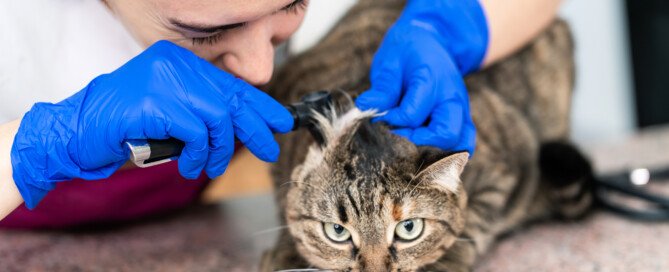
That black gunky stuff in your cat’s stinky ear should never be ignored.
A buildup of black “stuff” in a cat’s ear needs immediate medical attention – because most likely, it’s being caused by bugs – as in very tiny mites – tons of them.
Cancer
However, what appears to be black “stuff” in a cat’s ear can also be caused by cancer. (more…)
Can Cancer Cause Black Scabs on a Cat’s Face?

If you’re wondering if cancer can ever cause what looks like black scabs on a cat’s face, the short answer is yes.
However – this is not a likely cause. (more…)

Sagging Droopy Belly in Your Cat: Benign Cause or Cancer?

A sagging or drooping belly in a cat can be an alarming symptom to many cat lovers, and it’s only natural to suspect cancer as a possible cause – such as cancer of the bowels or stomach. (more…)

Black Gums in an Old Cat: May Be Normal but Can Be Cancer

Black or very dark gums in an old cat can be a sign of cancer, but can also signal dental problems.
The older the cat, the more likely that very dark gums are related to cancer. (more…)

Cat’s Lower Lip Droops on One Side: Cancer, Stroke May Be Cause